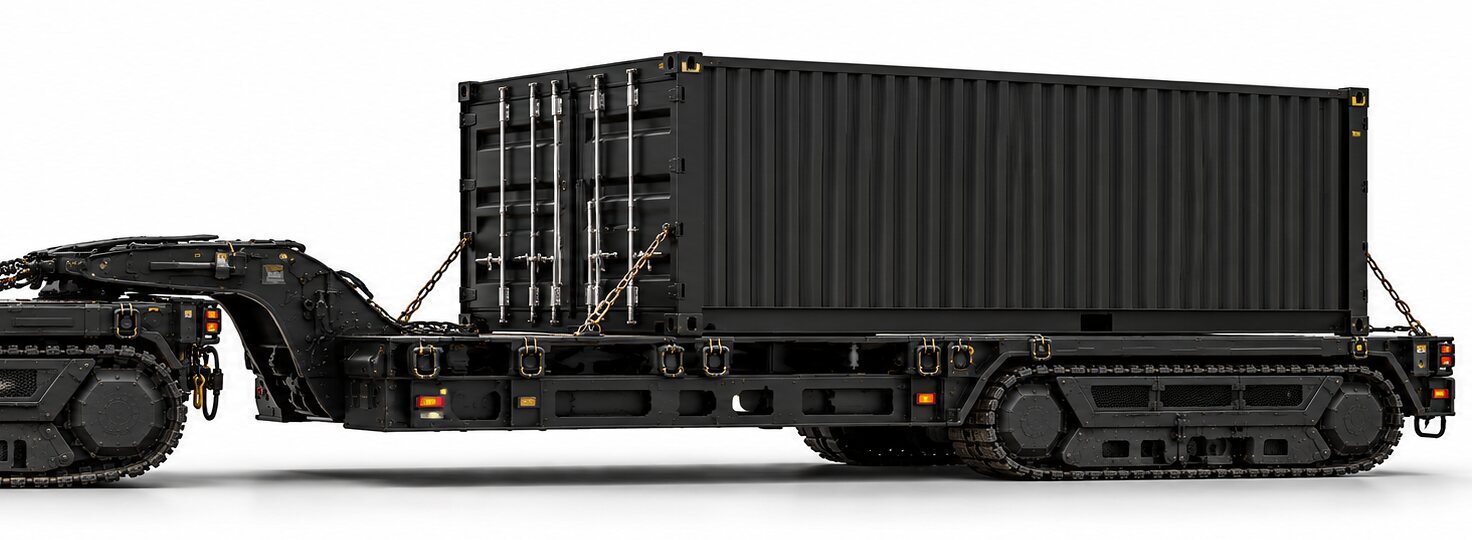
A package leaves the shop finished. Everything inside its skin was built with the drawing in hand, tested and recorded. Then a crane sets it on a pad beside other packages, on ground that was graded, trenched and bolted by a site crew working to the site's own set, and those people have since gone home. The interconnect is the only thing that touches both sides of that seam. This kit is the interconnect and everything a crew needs to land it, built so that the site's only job on the day is to connect.
The rest of the industrial plant and remote sites line depends on it. The remote site package makes the power and the control. The skid and modular assemblies consume them. The pre-terminated enclosures are where the tails land. Plant power and control is the same discipline inside a building. Between all of them, on open ground, is this.
The mechanism
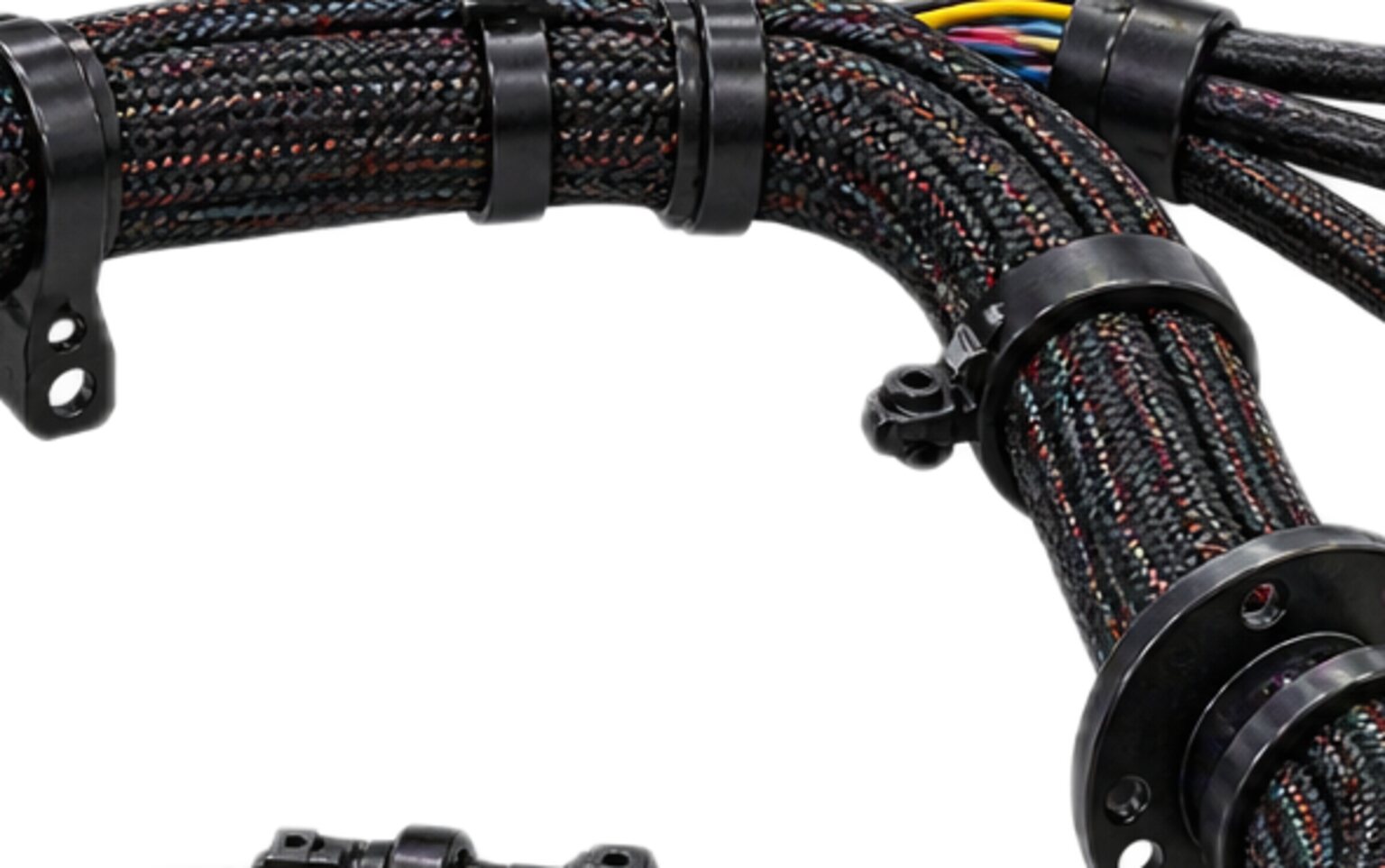
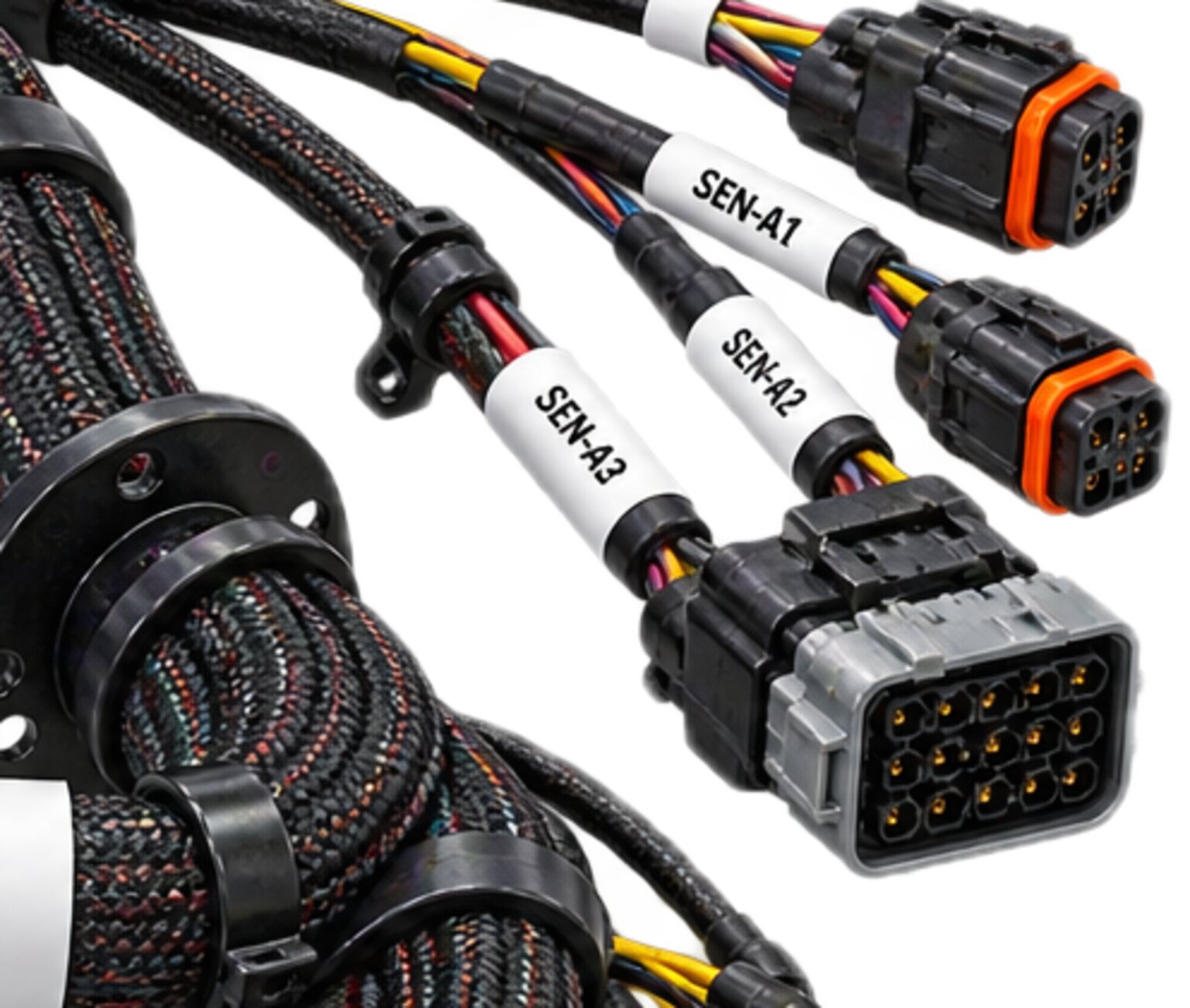
The kit is a set of cables, each one a finished assembly, and the hardware that carries each of them from one package to the next. A cable in the set is the type the drawing calls for where that run lies, armoured on grade, tray-rated in tray, jacketed for the cold everywhere, cut to a length somebody walked and terminated at both ends before it is coiled.
- The termination is whatever the package presents.
- Where the drawing has a receptacle on the package wall, the cable carries the mating plug, keyed and capped for transit, chosen as connectors sets out.
- Where the drawing has a terminal strip inside an enclosure, the cable carries a gland and a tail: the conductors stripped, ferruled, marked with the terminal each one lands on, and cut to the route from the gland to the strip, so the crew trims nothing.
- Where the drawing has a bonding point, the cable carries a lug made for that stud.
- A tail is made for one enclosure, on one package, at one entry.
The topology across the pad is a tree with the control package at its root. Power runs from the power package to the control package and outward from there to each skid, one cable per feed. Control and signal run from the control package to each skid, one cable per interface. The emergency stop and interlock chain runs between packages as its own cable in its own gland and shares nothing with power, which is a rule that holds in every line we build: safety circuits never share a bundle, a splice or a shell with power. That is segregation. Bonding conductors are their own set, drawn as a set. Nothing branches in the open. Where a run has to divide, it divides inside an enclosure, where the record can name it.
Around the cables is the kit that lands them. Glands and entry plates, fitted where the enclosure is ours and on a plate for the wall where it is not. A cap on every plug and a bag over every tail, because a termination that arrives full of grit fails at the pad. A coil tag on each cable naming it, its two ends and its length. And the landing sheet and the per-assembly record, in a pouch on the outside of the crate, found before anything is opened.
What it is engineered to
The landing is the seam this kit serves. Each package was built inside its own drawing, and each makes a promise to the others across the interconnect. The power package promises that a given outgoing terminal is a given feed. The control package promises that a given terminal is a given signal, and that the interlock chain is complete at its end. A skid promises that its strip has the terminals the interface list says it has, in the order they are drawn. The interconnect promises the same thing at both ends: that a terminal on one package is that terminal on the other, and that nothing between them has changed the signal, dropped the feed or opened the chain.
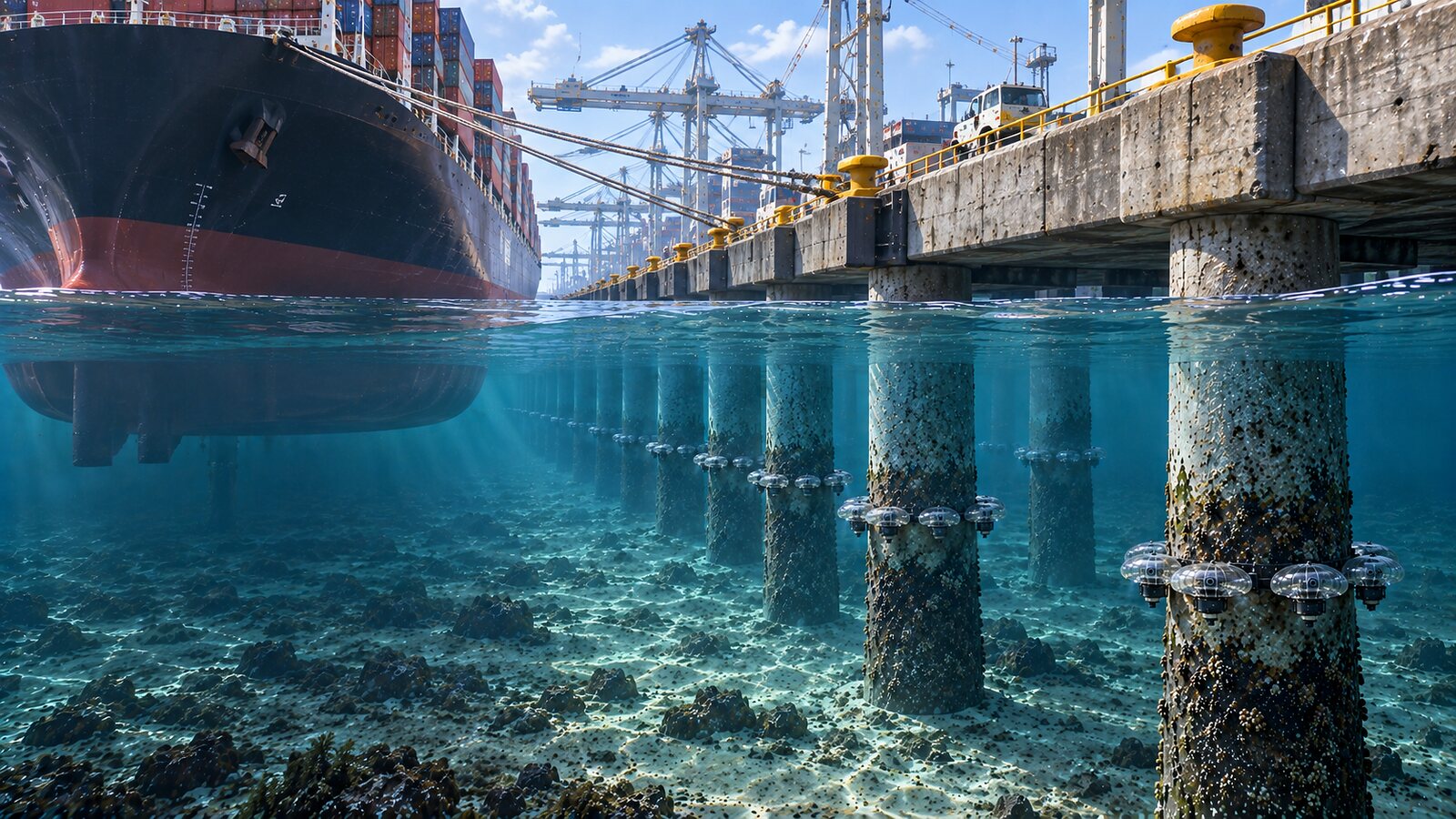
Those promises are an interface list before they are copper, and a mismatch is meant to show on that list or on the landing sheet, not at commissioning with the crane gone. If a package changes its strip, the list changes and the tail is remade to it, not dressed to fit at the pad.
A cable on a pad has to survive things a cable inside a building never meets. In transit it is coiled and shaken on a road for the length of the trip, so the coil is no tighter than the cable allows and nothing hangs a plug from the weight of its cable. Under a truck, a cable that lies where anything drives is crushed, so the run is placed where nothing drives or the crossing is protected by armour meant for that. In winter the cable is laid and landed in the cold by a person in gloves, so the jacket is one that stays workable cold and the sweeps at each entry are formed at the gland in the shop rather than bent by a crew at temperature.
In a thaw, water and the ground both move. A gland that is not sealed fills, freezes and splits. An entry from above catches water and carries it inside. A cable cut with no slack across the gap between two packages goes tight when one of them heaves, and it pulls the gland, the strip or the plug. So every entry is from below or through a drip loop, every gland is sealed to its cable, and every walked length carries a service loop at each end and a drape across the gap. A cable with no slack is a cable the ground will pull.

Safety circuits never share a bundle, a splice or a shell with power.
The discipline applied to this harness
Every conductor carries its circuit identity, end to end. Every cable carries its number at both ends and along its length, and every conductor in a tail carries its identity and the terminal it lands on. The number on the cable is the number on the drawing, the interface list, the landing sheet and the record, and on a pad that identity is the only thing that ties one enclosure to another across open ground. The method is on labelling and traceability.
Protection is at every edge and every entry. A cable does not cross a skid edge without protection on the edge. It does not enter an enclosure without a gland that seals to it and takes its strain, so a terminal carries a conductor and never the weight of a cable. Armour is terminated in a fitting made for it, not a gland that happens to fit.
Bonding is drawn rather than assumed. A bonding conductor exists where the drawing has one, lands where the drawing shows it, and lands nowhere else. A shielded signal cable has its shield landed at the end the drawing names, and at the other end the shield is cut back and insulated inside the tail so there is nothing for a crew to land. A shield grounded at an end the drawing left floating is a loop carrying current nobody designed, and it presents as noise on a signal nobody can hold still long enough to find.
Lengths are walked on the pad and never taken from a model. The model has the packages where the drawing put them. The pad has them where the crane set them, with the stair the site added and the trench where the ground allowed. The difference is a length that is not in a kit cut from the model. So a person walks each run with the packages set, along the route the cable will take, up the wall and in through the entry to the strip, adds the loops and the drape, and writes the length down against the cable number. The cut is made from that sheet. Where a walked length cannot be had yet, that cable is not cut. That is the sentence the shop runs on: a value nobody measured never reaches a wire.
Labelling survives a glove and a season. A tag is mechanical, marked so a summer of sun and a winter do not blank it, and fixed so grating does not take it. It reads at arm's length to a person on one knee in a headlamp and gloves, and the same at both ends. An adhesive label lifts and fades where a mechanical tag does not, so a pad gets the tag.
The test is on the bench and the check is at the landing. On the bench, every finished cable is proven end to end: every conductor continuous to the right pin and to no other, every pair of circuits that must never meet shown separate, the shield open where it floats and continuous where it lands, the bond continuous, the plug pinned as drawn. What each test is set to is stated on that assembly, by the engineer responsible for it, in its record. At the landing the check is the sheet: coil tag against entry label against row, the bond landed and proven package to package, the emergency stop chain proven across every package before power is applied, not after.
A landed kit fails when a length is guessed, and it fails as a truck roll. Everyone has cut a hose to reach a tap and found it a hand short once the coil straightened; on a pad, there is no store. The cable is short by the stair it had to go around, the crew finds out at the last landing, and the fixes are a splice in the open, which the drawing does not allow, or a new cable, which is the shop, the road and the crew's day again. A long cable is a lesser failure and still one: a coil at an entry is heat, a trip and a snag. Neither is fixed by adding margin to a guess. Both are removed by walking the pad.
How it is bought
The kit is built from the issued set and a walked pad. The set is the interconnect drawing and cable schedule, the interface list for every package, the terminal drawings at both ends of every run and the pad plan with the routes on it. The walk is the length sheet, signed by whoever walked it, with the packages set or their footprints staked. From those we produce the shop drawing for the kit: every cable with its type, terminations, walked length, entries, protection and bonding. Nothing is fabricated until that drawing is signed. A change to a package after signature is a change to the drawing and a new signature, not a note on the crate.
An interconnect is an assembly when it leaves us and part of an installation when it lands, and CSA and the Canadian Electrical Code between them govern both. The components we specify carry their own certification. The approval route for a finished, project-specific assembly is confirmed with the certifying body for that assembly before it is built, and we tell you where yours sits before we build it, not after. How the code sits on our work is on its own page.
Two documents ship with every kit. The per-assembly record names every cable by number, with its walked and cut lengths, its terminations, its material and the certification that material carries, what was proven on the bench and by whom, and the drawing it was built to. The landing sheet tells a crew what connects to what in the order it is done: bonding first, then the emergency stop chain, then control and signal, then power, with the chain proven before any feed is landed. Every row has a check column, and the sheet signed at the pad is the kit's acceptance.
To start, send the issued set, or the interface list and the pad plan if the set is not finished, and the date the packages are due to be set, so the walk can be booked. The enquiries page says what we need to see first.
- The kit refuses three things.
- We do not cut a cable from a model; every length on the record was walked.
- We do not ship a tail the site has to make up; where a tail is landed at the pad it arrives stripped, ferruled and marked with the terminal each conductor lands on, so a site connects and does not strip, crimp or guess on our behalf.
- We do not land a bond the drawing did not draw.
- If any of those cannot be had, the cable stays on the bench and the crate waits.