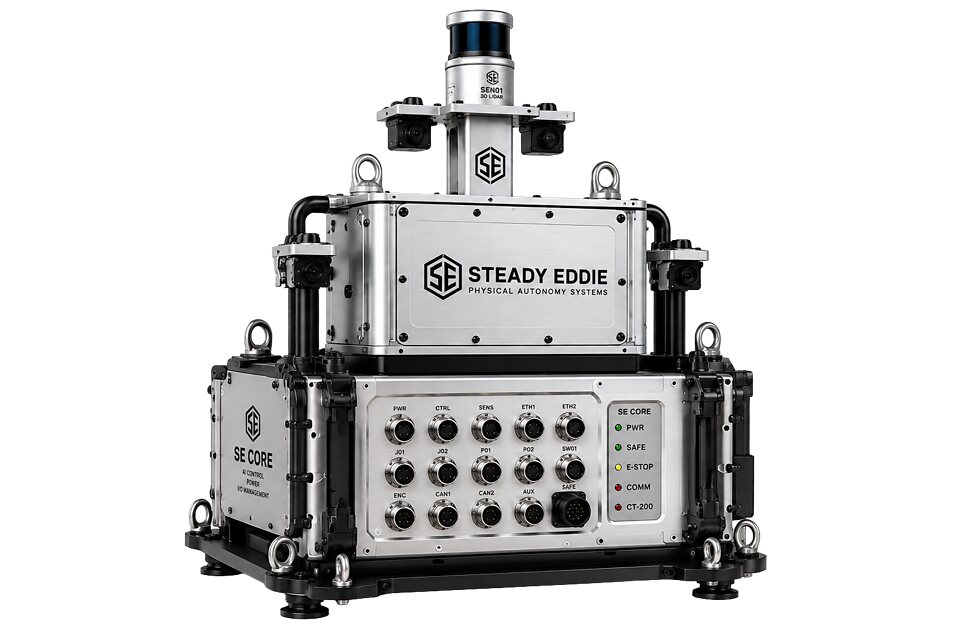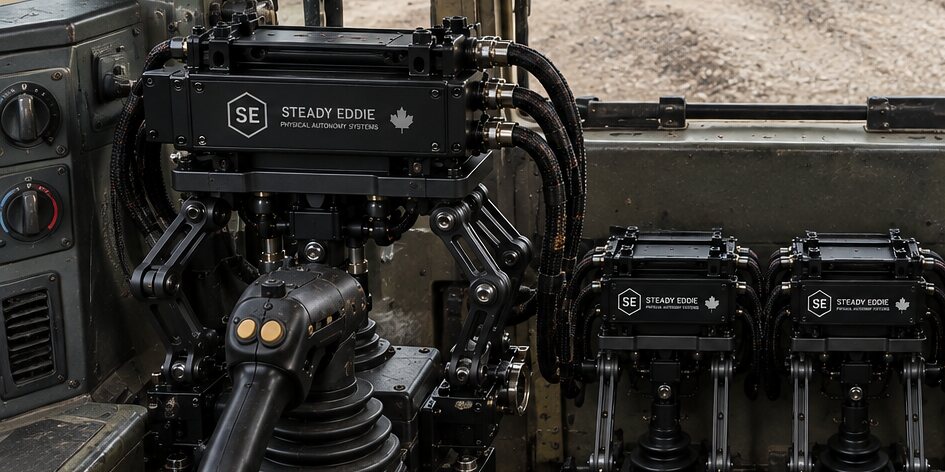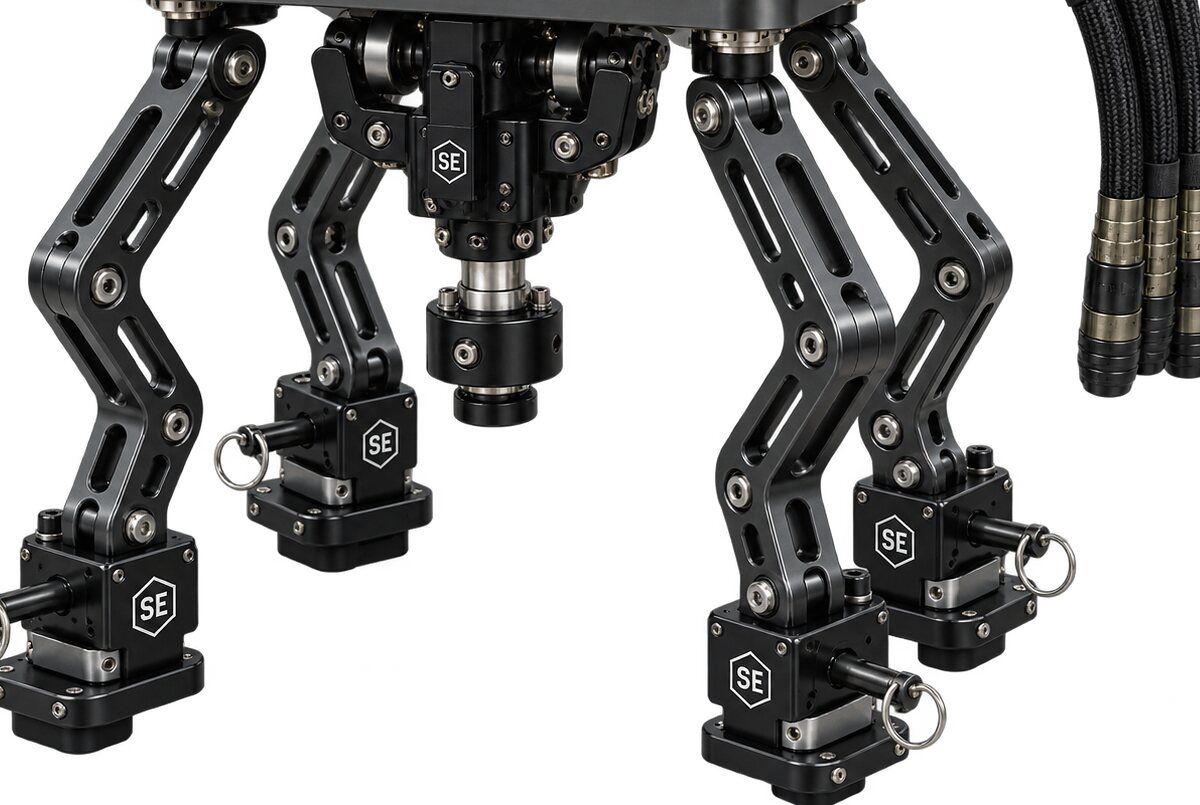
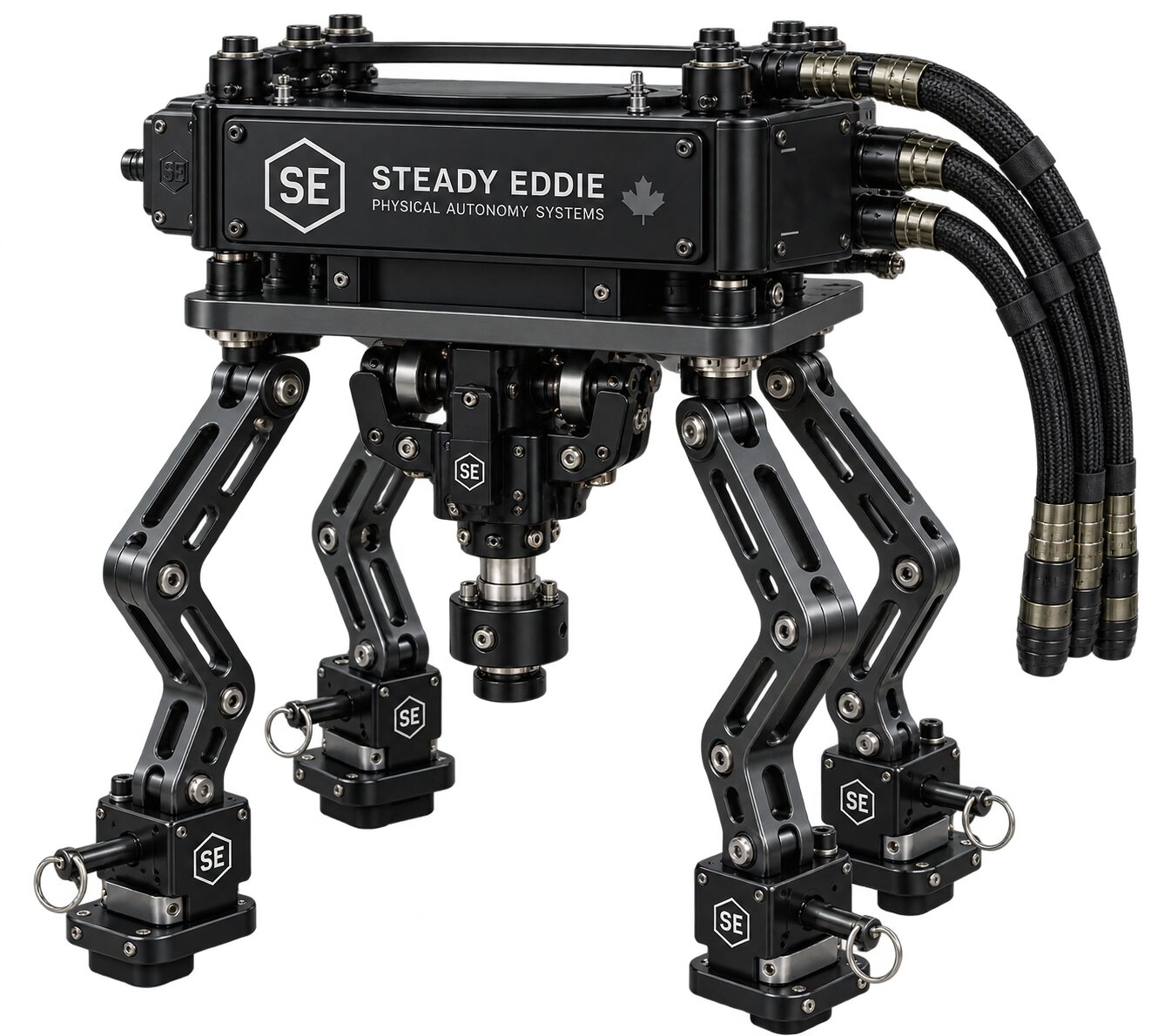
A host machine was designed around a person. There is a seat, a lever under a hand, a pedal under a foot, a gauge in the eyeline and a key the person turns. Every circuit on that machine was drawn on the assumption that the person is there. The autonomy kit removes the person. It takes over the actuators the hands and feet were working, reads the sensors the gauges were reading, and adds a stop chain that has to bring the machine to rest whether the fault is in the kit or in the host. The person can still be put back in the seat, and the machine has to work for them as it did before.
Every one of those functions crosses from the kit to the host and back. The loom that carries them is the retrofit loom. It is built after the machine, by people who were not in the room when the machine was drawn, and it is the part of the retrofit that no software update can reach once the machine has left the shop. It is right in copper or it is wrong in the field.
The seam behind the seat
The machine's own harness was drawn to serve one consumer. Its fuses, its ground returns and its sensor lines were sized and placed for the machine alone, and its fieldbus carries the traffic its own nodes agreed on. Nothing about that harness was told to expect a second consumer beside it, drawing from the same battery, listening on the same bus and pulling the same valves.
The kit is that second consumer. It has its own controller, its own enclosure, its own actuators on the levers or plumbed into the pilot lines, its own sensors where the machine's are not enough, and its own idea of when the machine must stop. The seam is the line between what the kit owns and what the host owns, and the retrofit loom is the only thing that crosses it.
Four things cross. Power crosses from the host battery to the kit and its actuators. Motion crosses from the kit's drives to the actuators and comes back as feedback. Data crosses in both directions, the kit's own network on one side and the host's fieldbus on the other. The stop chain crosses in a way none of the others do, because it has to remain true when everything else on the seam has failed.
The meeting is hard because the two sides were designed by different people against different assumptions, and the loom is where the assumptions collide. The host designer sized a circuit for a cab fan. The kit designer needs that circuit to hold up a drive that pulls hard when it stalls against a lever at the end of its travel. Each collision is settled in the loom, in a conductor size, a fuse position, a shield termination, a splice allowed or refused. The seam page gives the general case.
The topology of a retrofit loom
A retrofit loom is not one bundle. It is four bundles that share a route, and the discipline of the line is to keep them four all the way along it.
The power distribution bundle starts at the host's protected feed point and ends at the kit's enclosure, where the kit's own protection sits. From there it branches to each actuator drive and to the kit's controller, and each branch is protected where it leaves the enclosure. Power is drawn once from the host, at one place, through one protective device the host's drawing knows about, never from whichever terminal in the cab was nearest.
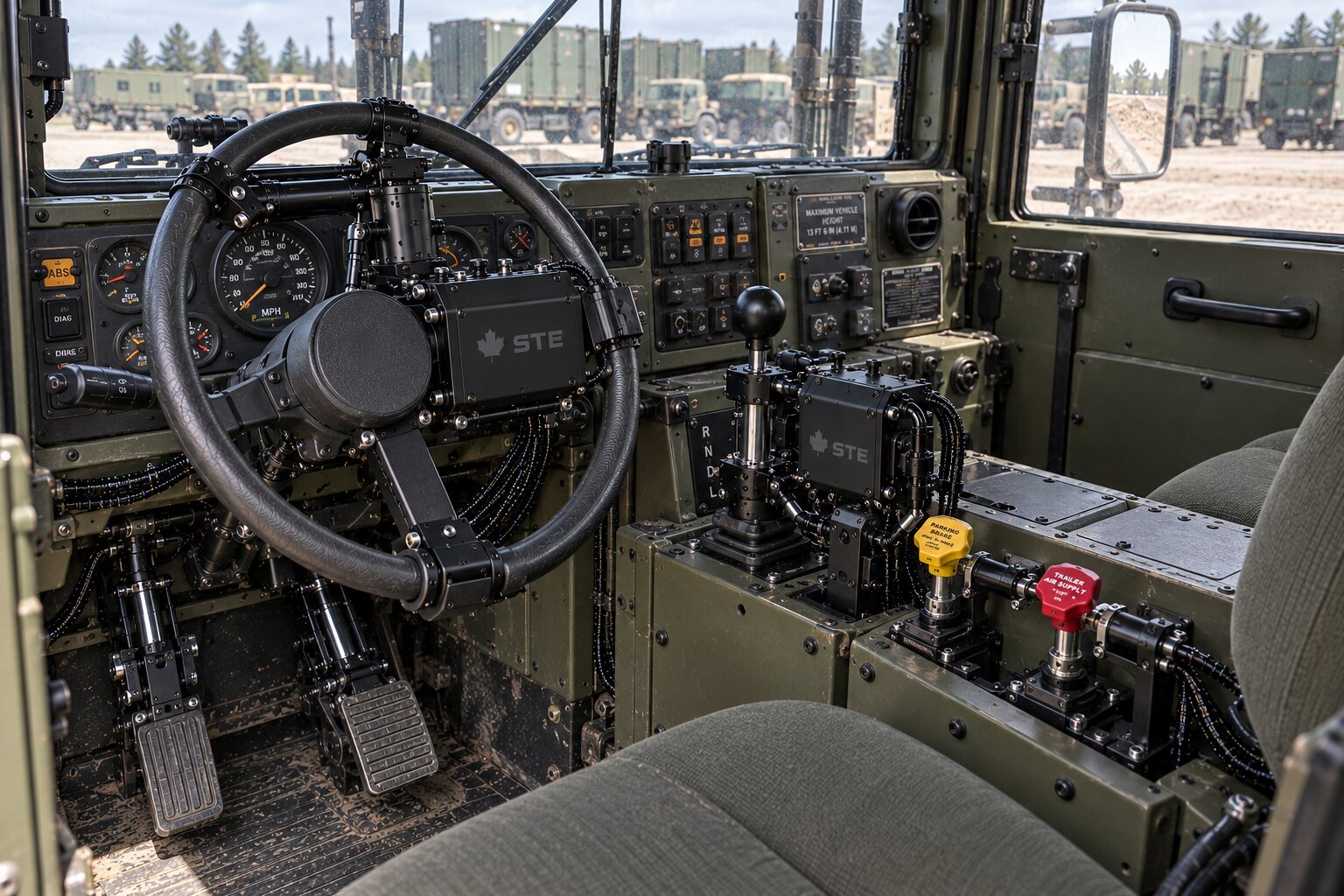
The actuator bundle is really two. The drive to each actuator is a high-current, switched, noisy pair. The feedback from that actuator is a low-level signal that reports where it went. Drive and feedback run as separate bundles along the same route, the feedback shielded and the shield terminated as the drawing says, and they land on separate connectors or in separate cavities the drawing has assigned. How far apart they run is decided by the noise the drive makes and the sensitivity of the signal that has to survive it, and that decision is the drawing's, not the shop's.
The network bundle carries two networks that must not become one. The kit's own network joins its controller to its drives and sensors. The host's fieldbus joins the host's controller to the host's own modules. The kit listens on the host's fieldbus, and speaks on it only through a gateway the drawing shows, at a tee the drawing places, with a termination the drawing has accounted for. A fieldbus that has acquired an unplanned stub, a second terminator or a length nobody drew works in the shop and fails on a hot afternoon.
The stop chain is the fourth bundle and the one the others are kept away from. It carries the emergency-stop buttons, the safety interlocks, the kit's stop output and the host's stop input, in a loop that is closed when the machine may run and open when it may not. Safety circuits never share a bundle, a splice or a shell with power, and on a retrofit loom that sentence is the whole design. The stop chain is laced, sleeved and labelled separately and lands on its own connector. The segregation page explains why that is not a preference.
The function of each conductor decides which bundle it belongs to, and the function is fixed at the drawing. Every conductor carries its circuit identity end to end, so a technician on a cold morning knows which bundle they are holding from its label. Labelling and traceability is how that identity is carried.
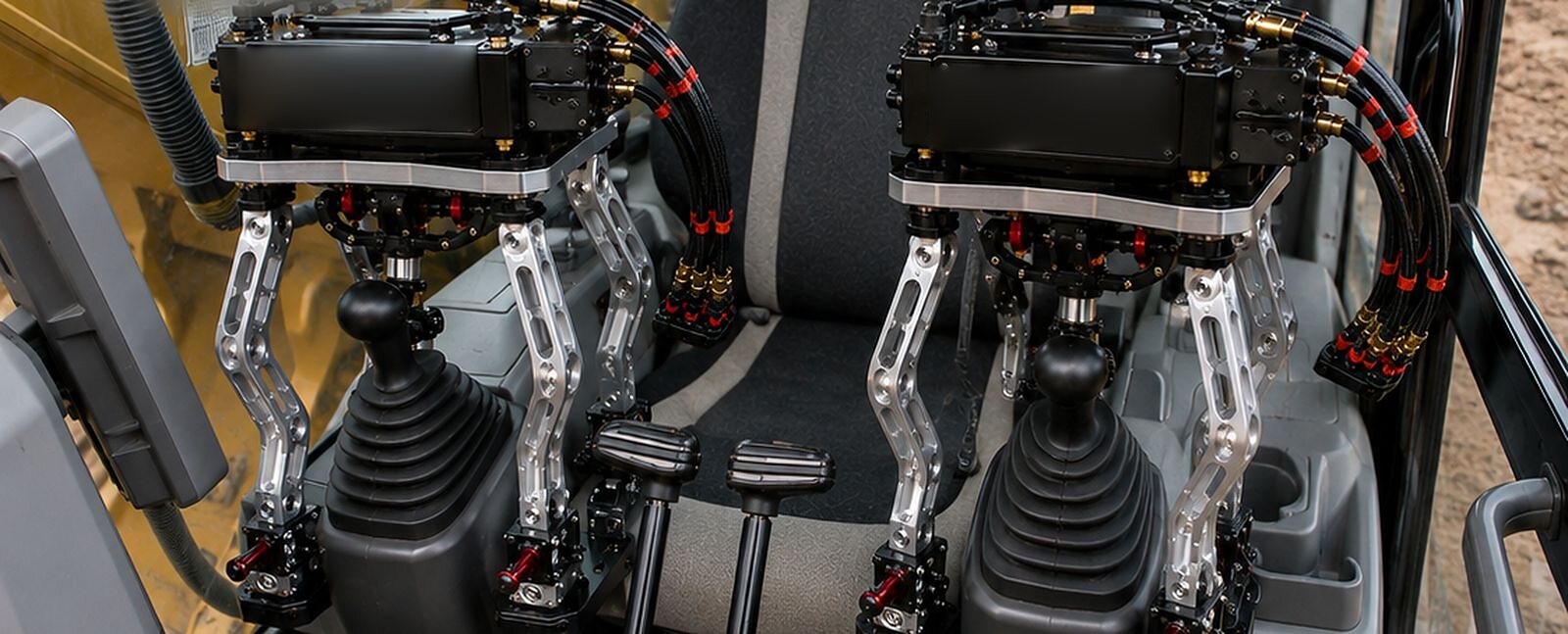
Nothing is fabricated until the drawing is signed.
What the joints have to survive
Everything above is drawn on a flat sheet. It is built onto a machine that shakes everything bolted to it.
Shock comes through the frame. A machine working ground passes every impact into its structure, and a loom clamped to that structure feels each one as a tug on every termination. A crimp with a strand outside the barrel, or no strain relief behind the contact, opens on some impact a season later and closes again when the machine settles. That is the intermittent nobody can find, and it was a crimp that was wrong the day it was made. Workmanship is where the shop's crimp discipline is set out.
Wash-down arrives at the end of the shift. A pressure washer finds every connector that was mated by hand and every grommet pushed through rather than seated. A connector that is sealed on the drawing is sealed in the shop only when the correct seal is in each cavity and every unused cavity is plugged. Drip loops are formed so that water running down a loom runs off before it reaches a connector.
A boot lands on the cab floor, because the levers and pedals are in the cab and the loom has to reach them. The route keeps it out of the walkway or under a guard the drawing calls for, and where it cannot, the sheath is chosen for the boot and the clamp spacing so the loom cannot be lifted by the toe of one.
A hand pulls on it. A technician in the engine bay moves the nearest thing out of the way, and the nearest thing is often the retrofit loom, which went on last and sits outside the machine's own trunking. A loom clamped at the intervals the drawing sets, with each branch taken out at a clamp rather than in free air, survives being used as a handhold. Connectors are mated by a gloved hand, in the dark, at the back of a machine, so the family the drawing chooses keys, latches with a positive click and cannot be forced into the wrong mate. The connectors page is about that choice.
A bulkhead has one hole. Between the cab and the engine bay there is a wall, the machine designer put through it exactly the penetrations the machine needed, and the retrofit is usually granted one more. Four bundles that must stay apart now cross through one opening. The answer is to ask for the openings the separation needs rather than to squeeze the separation into one. Where the wall allows it, each bundle gets its own sealed bulkhead fitting. Where it does not, the stop chain takes a bulkhead shell of its own and the rest take a second, and the bundles separate again on both faces of the wall before the first clamp. What is refused is a single grommet with four bundles pushed through it and the gap filled with sealant, because that is a chafe point the day it is made and a water path a season later.
The routing page sets out the route as a discipline, with every clamp, bend and sheath chosen for what the loom will sit in. On this line the route is also walked on the actual machine before the first cut, because a route that looks clear on the sheet passes through a hydraulic line on the frame.
What each side promises the other
- A retrofit loom is a contract between two design authorities, and each side promises the other a set of things.
- The host promises a protected feed point that can carry the kit's load, and says on its drawing where it is.
- It promises that each actuator the kit takes over has a known range, a known force and a known rest position.
- It promises that each sensor the kit reads delivers its signal in a stated form, and that the form does not change without the drawing changing.
- It promises a fieldbus with a known set of nodes and a known termination, a chassis ground at a point it names, and a stop input the kit can open.
- The kit promises not to draw more than the host's feed point was protected for, and not to back-feed the host's circuits when its own supply is present and the host's is not.
- It promises to read the host's sensors through an input high enough in impedance that the machine's own controller still sees what it saw before.
- It promises to speak on the host's fieldbus only where the drawing says it may, and to be silent otherwise.
- It promises to release every actuator to the person when the person is back in the seat.
- And it promises that when its stop chain opens, the host's own stop path opens with it, by a contact that no processor can hold closed.
Then one side changes. A host firmware release renames a message on the fieldbus. A new actuator arrives with a different feedback device. A later variant of the host puts the feed point on the other side of the engine bay. Each change moves the seam, and the loom has to move with it. The programme that owns the retrofit, usually the company building the kit and sometimes the machine's maker, owns the design and the drawing master, so when the seam moves, the master moves, the set is re-issued, and the loom is built to the new issue. A loom quietly adjusted in the shop to suit a change the drawing has not caught up with no longer matches its record, and cannot be repaired by anyone who reads that record. The record page explains what the record holds.
How a bad retrofit loom presents, and who pays
The failures of a retrofit loom arrive late and present as something else. A stop chain with a poor crimp opens on a bump. The machine stops in the field for no reason anyone can find, and the crew learns to reset it and carry on. That is the good outcome, because the chain failed open. A stop chain wired through a relay whose coil shares a bundle with a drive, or brought into the kit's controller as an input rather than kept as a contact, can fail closed. Then the machine does not stop when the button is pressed, and nobody learns that until it matters.
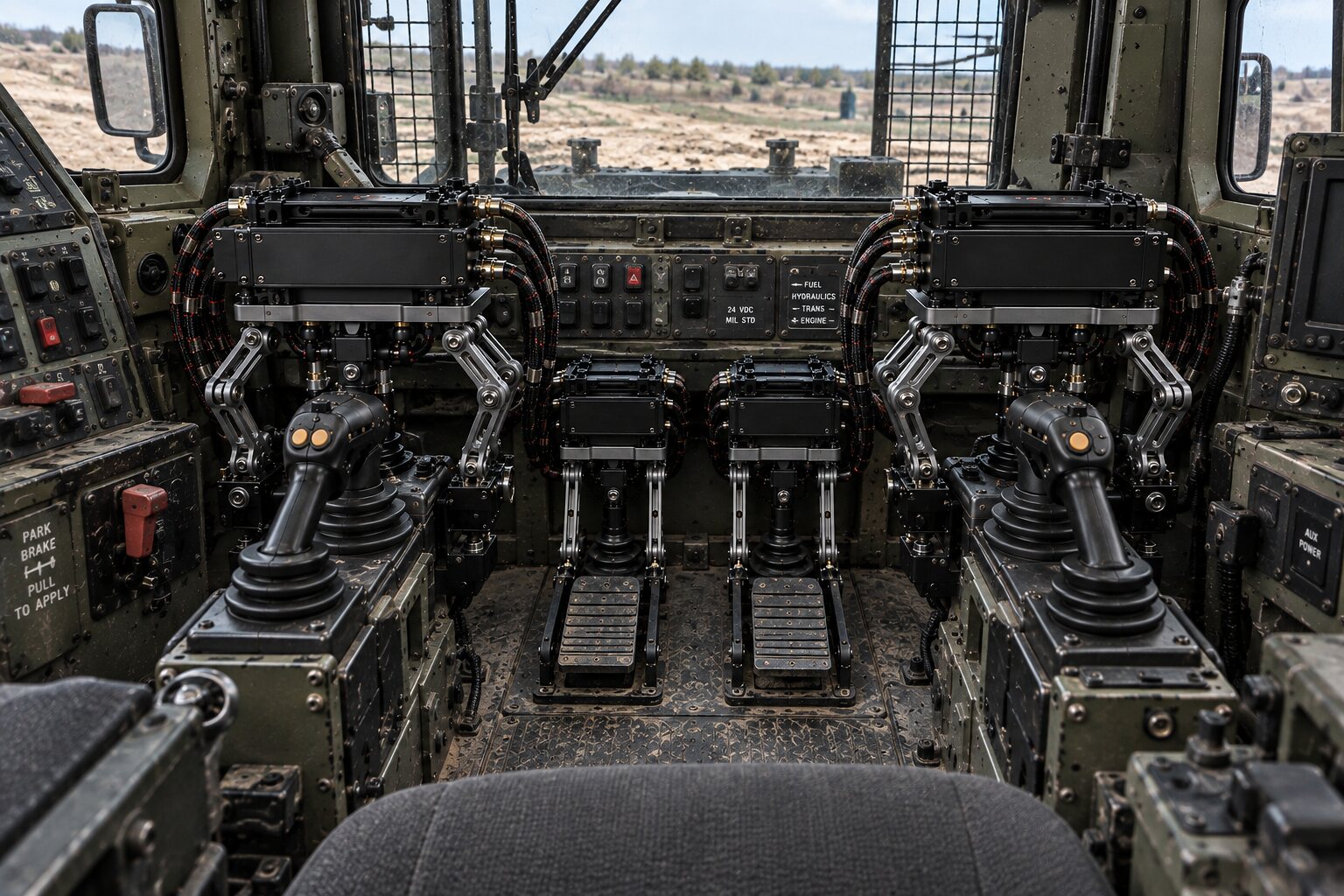
Feedback that shares a bundle with drive picks up the drive's switching, and the actuator hunts around its target. On the machine it looks like a bad actuator, so a good one is swapped in and hunts the same way. A fieldbus with an undrawn stub throws errors in the heat. The host's controller logs bus faults, the kit's controller logs the same faults from the other side, and each supplier blames the other. The cause is a length of cable, and nothing in either controller can see it.
Power picked up from the wrong point sags when the kit boots alongside the host on a cold start. The kit's controller resets during the crank, the drives come up in an unknown state, and the machine is never quite trusted again. A ground made at two points, one at the kit's enclosure and one at a convenient bolt near an actuator, makes a loop through the frame, and the kit's low-level signals ride on the machine's own return current. Shielding and bonding explains what a second ground costs and when the drawing calls for one anyway.
Chafe at the bulkhead takes a season. Water in a connector takes one wash-down and one frost. Two kits pinned differently because two drawings disagreed take one careless swap between machines. Every one of these presents on a machine that is working, far from the shop, on the day the crew can least spare it.
Who pays
A retrofit loom is a small part of a retrofit and it is where a large part of what the retrofit costs in the field is decided.
An intermittent pays in a truck roll to wherever the machine is, and then another one, because the first found nothing. A bus fault pays in the time of two engineering teams each proving it is not theirs. A hunting actuator pays in a good part thrown away. A sagging supply pays in a machine a crew will not leave working alone, which puts a person back in the seat, and putting a person back in the seat is the one outcome a retrofit exists to avoid. A stop chain that fails closed pays in a currency that has no exchange rate.
The instructor's pedal
A driving instructor's car has a second brake pedal on the passenger side. It is a plain mechanical linkage to the same brakes the learner is using. It does not ask the learner's pedal for permission, it does not go through the car's electronics, and it works whether the fault is in the learner or in the car. That is the emergency-stop and safety-interlock chain on a retrofit. It is a contact in a loop, the loop opens the host's own stop path as well as the kit's, and no processor in it can hold it closed. The instructor's pedal is always there, and always direct.
The harness briefs of this line
The Autonomy line is described in five harness briefs, each built the same way, from the seam to the refusal.
Machine power distribution is how a kit draws power from a machine that was never told it would have a second consumer, where the protection sits on each side of the seam, and why one feed point through one known protective device is the rule.
Actuator motor and feedback is the drive to each actuator and the signal that reports where it went, kept apart along the same route, with the shield terminated as drawn and the two landed so that a swapped actuator cannot swap them.
Network and fieldbus is the kit's own network and the machine's fieldbus, joined where they must be and kept separate everywhere else, with the tee, the termination and the gateway placed by the drawing rather than by whoever had the crimper.
Emergency stop and safety chain is a stop that works whether the fault is in the kit or in the host, with no software able to hold it closed, built as a contact loop that opens both sides at once.
The full machine set is every loom the retrofit needs, built to the machine programme's issued set, with the manufacturing detail returned to it.
Every other line's briefs are in the harness library.
How a set is bought
A retrofit loom is built to an issued set. The programme owns the design and the drawing master. It issues the set, with the routing, the connector assignments, the conductor identities, the shield terminations and the acceptance test for each assembly. That is what we build to, and nothing is fabricated until the drawing is signed.
From that set we build the full shop pack: the material takeoff, the cut list, the formboard, the crimp schedules, the labelling schedule and the acceptance record for every assembly, as described on formboards and manufacture and test and acceptance. Every value in that pack was measured, on the machine or on the drawing, and traced to its source. A value nobody measured never reaches a wire.
When the assemblies leave, the full manufacturing detail goes back to the drawing master with them, down to the cut length of every conductor and the cavity of every contact. We do not hold a private copy. The programme holds the master, and the next time a loom or a repair is needed, its own record is the record. How to engage sets out how the issued set arrives and how the pack goes back.
The Canadian Electrical Code and CSA govern any electrical assembly built for sale or installation in Canada. The components we specify carry their own certification. The approval route for a finished, project-specific assembly is confirmed with the certifying body for that assembly before it is built, and we tell you where yours sits before we build it, not after. The CSA and the Code page states that position in full.
An acceptance test on a retrofit loom asks three things. Whether the bundles that must never meet, the stop chain against power and the feedback against drive, are in fact separate. Whether every conductor lands where its identity says it lands. And whether the stop loop opens both stop paths when any contact in it is opened on a shop fixture. It is run on every finished assembly before it leaves. What each test is set to is stated on that assembly's drawing, by the engineer responsible for it, and nowhere else.
What this line refuses
No stop chain that depends on software. A stop is a contact in a loop. It may be read by a processor so that a log knows it happened, but it is never routed through one so that the stop depends on the processor being awake. If a drawing brings the stop into a controller input and nowhere else, the drawing goes back.
No loom to a drawing that has not been walked on the machine. A route that exists only on a sheet has not met the hydraulic line on the frame, the boot or the one hole in the bulkhead. The route is walked, on the host, with the drawing in hand, and the drawing is corrected before the first cut.
No private copy of the customer's master. The programme owns the design and the drawing master. We build the full shop pack and return the manufacturing detail. We keep the test records and the formboards our own quality record requires, and no copy of your design, and the master lives where it belongs.
No design authority we were not given. Where a drawing is wrong on the machine, we say so, in writing, and the programme decides. We do not fix it on the bench and tell nobody. A retrofit loom that has been quietly improved is a loom whose record nobody can trust, and such a loom belongs on no machine that is working without a person in the seat.