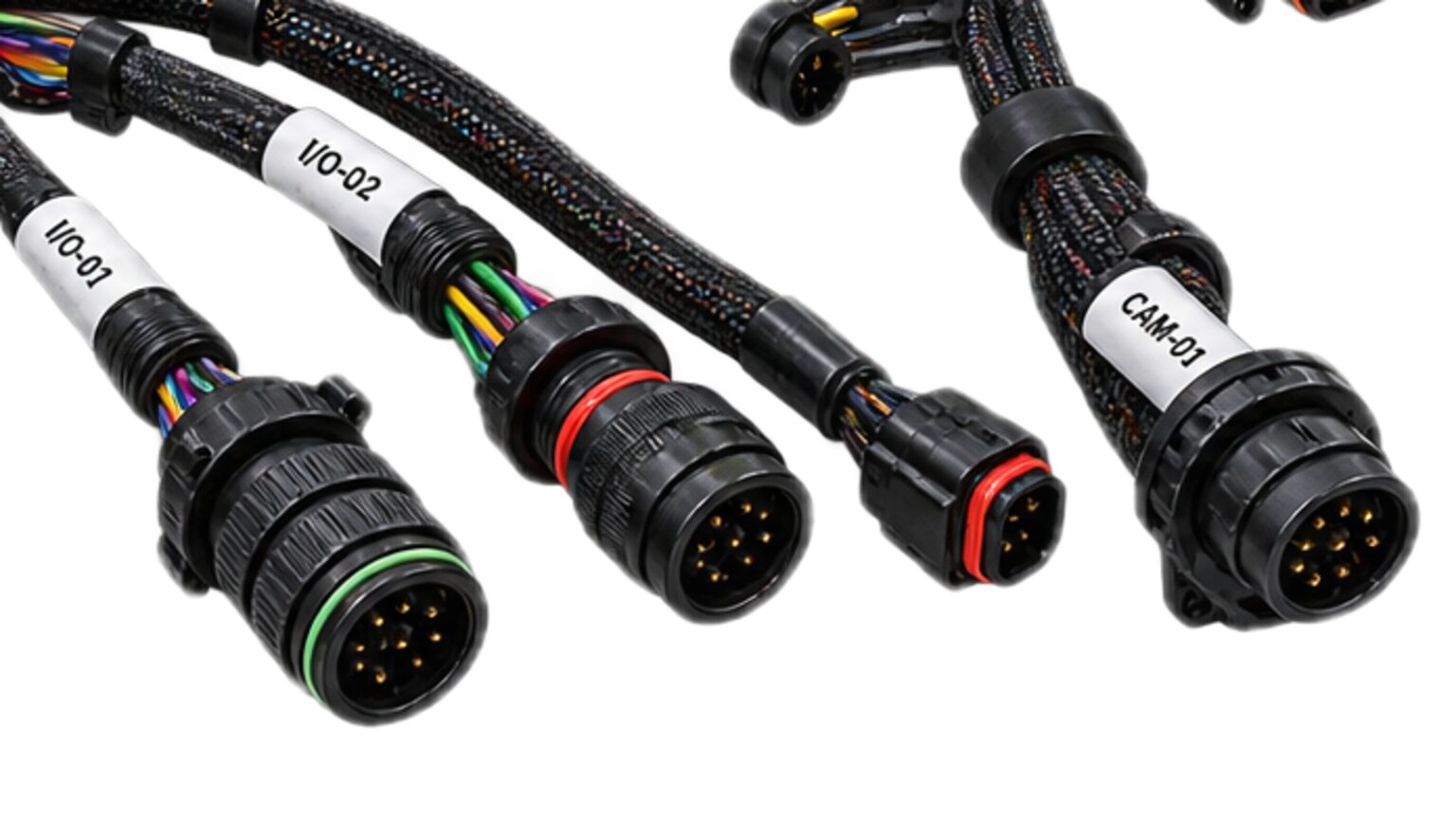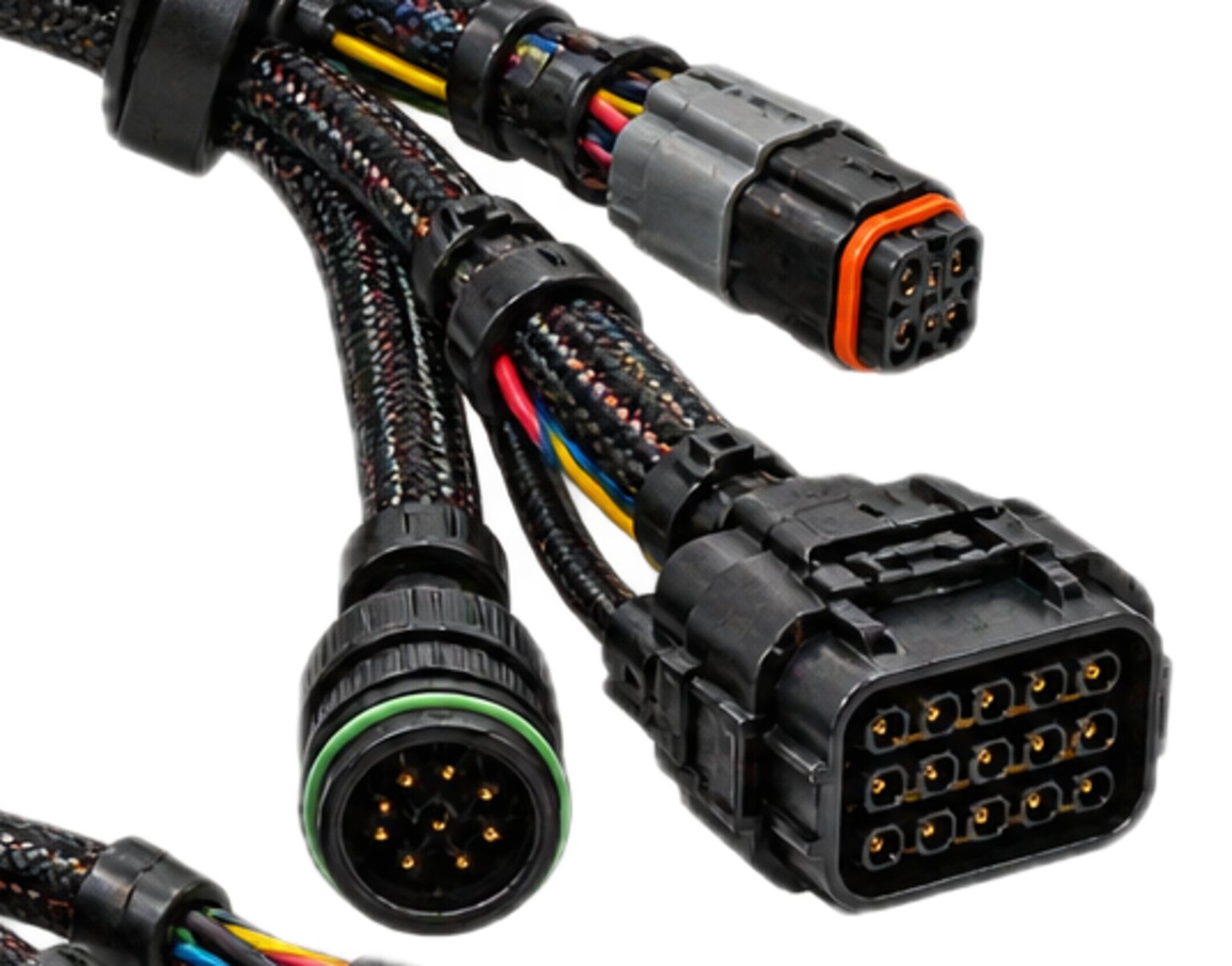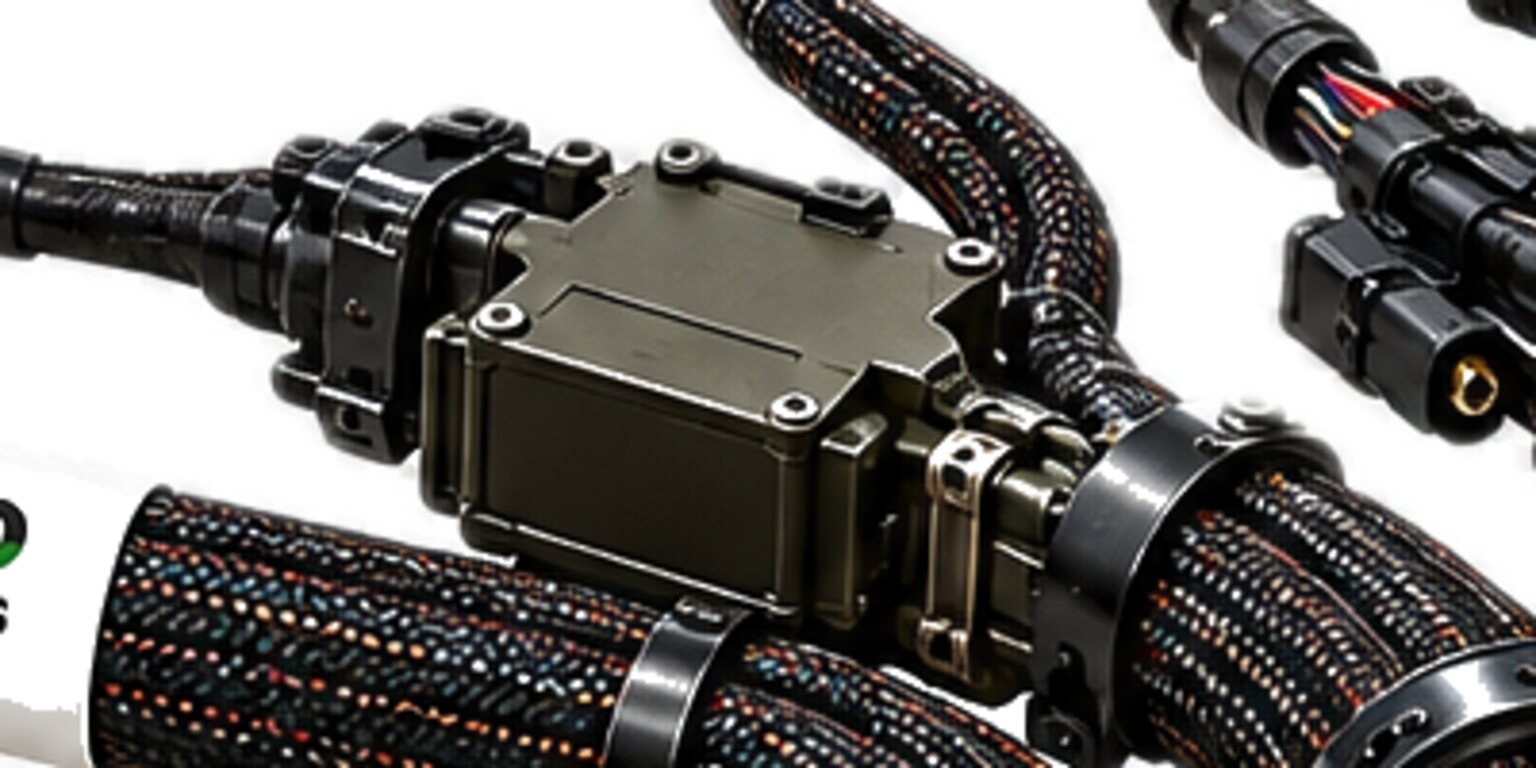
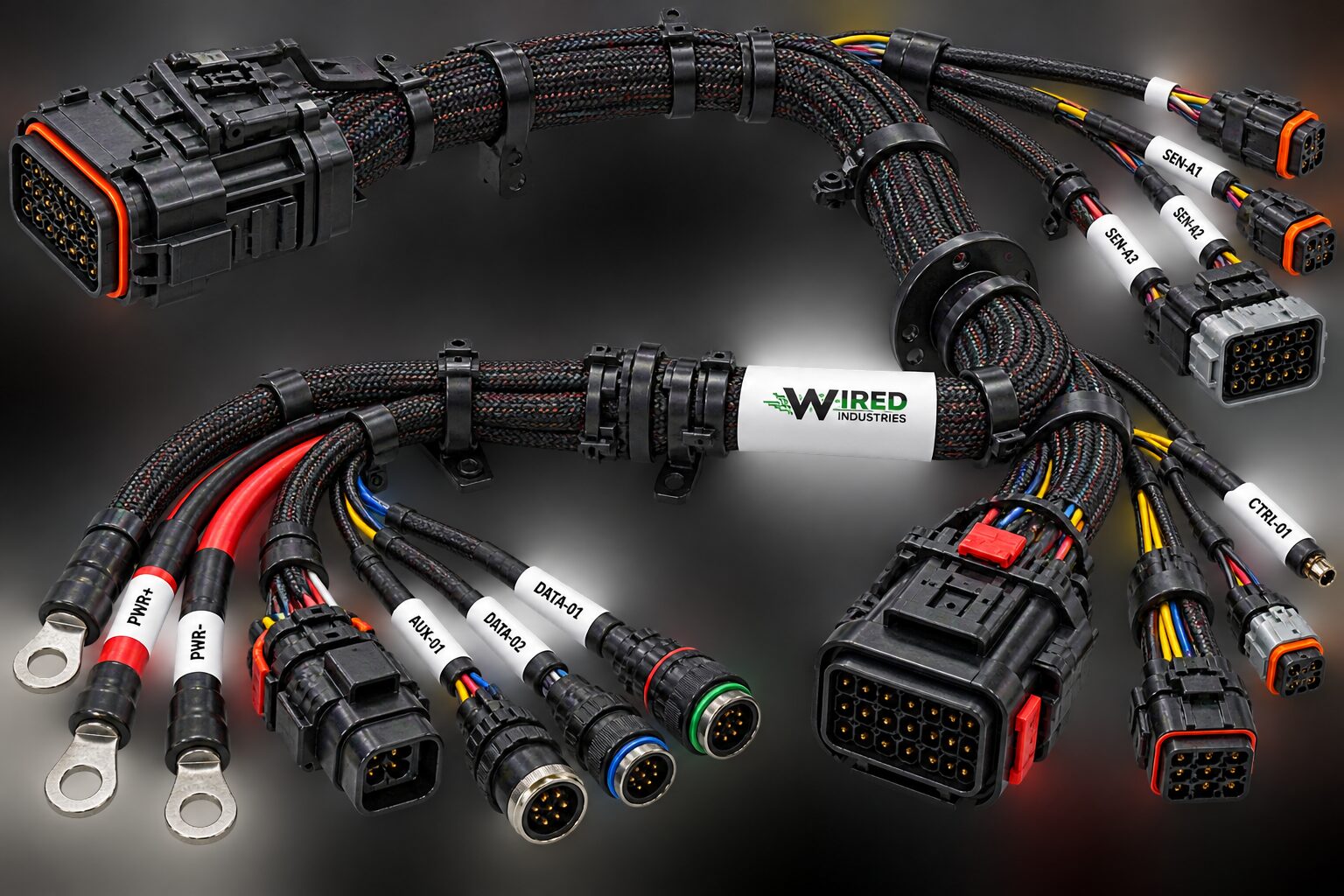
We build to a customer's issued set and we return the manufacturing detail. That sentence decides what an enquiry has to carry. Without the set there is nothing to build to, and without knowing what you need returned there is nothing to scope. An enquiry that carries all of the items below gets a short list of questions and then a scope, rather than a long list of questions and nothing else.
The machine or the plant, and what it does
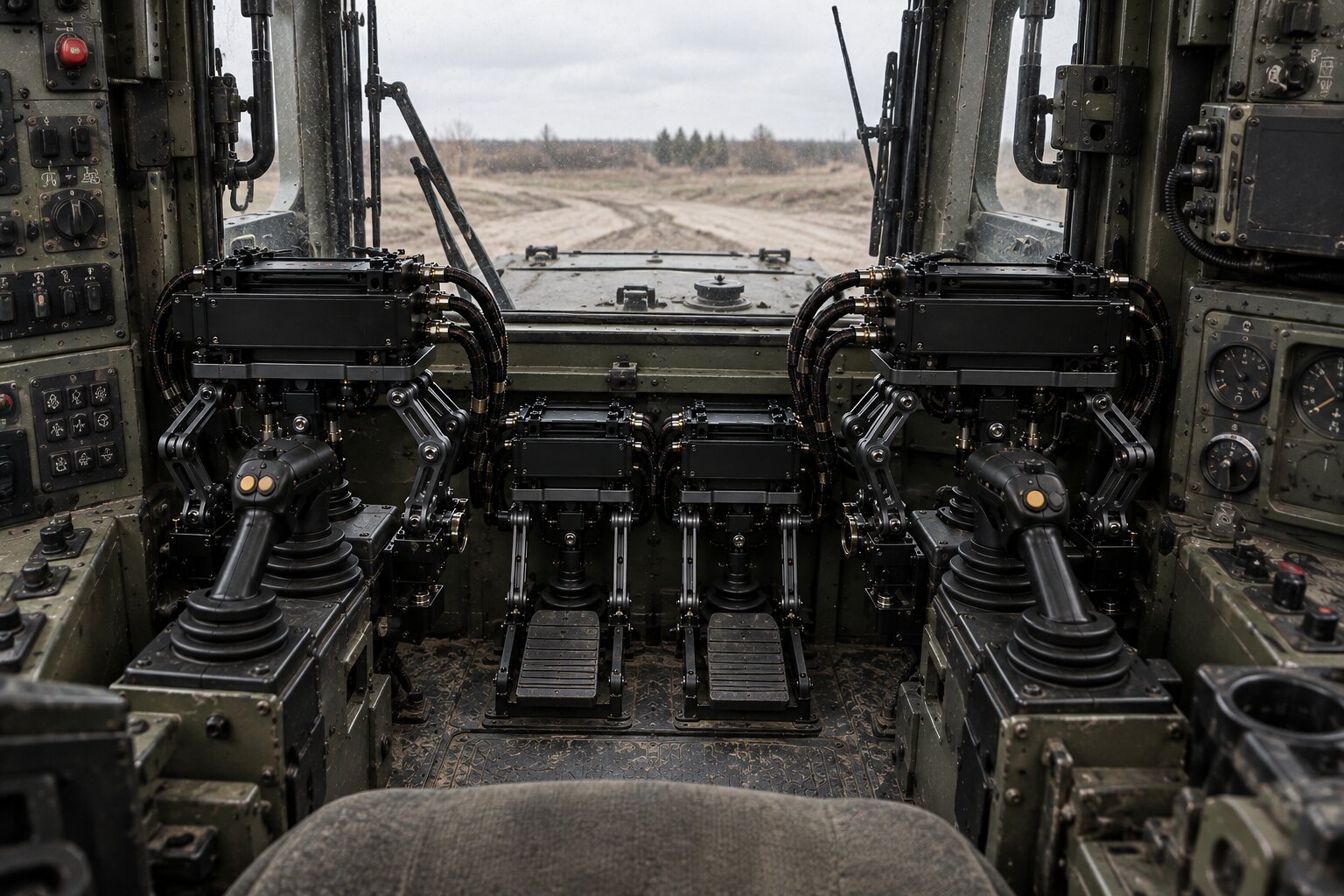
Say what the harness lives on: a payload on a carrier, a retrofit loom behind a removable operator, an instrumentation rig that measures a person at the controls, a skid for ground with nobody on it. Then say what the machine does when it is working, because the work decides what the loom has to survive. A harness on a machine that vibrates all day is built differently from one in a cabinet that never moves, and the difference is in every joint before it is in any conductor.
The drawing set or the interface specification, at its stated revision
Attach it. Do not describe it. A set at a stated revision is a thing we can read, take off and draw a shop drawing from; a description is a thing we can only ask about. Say which revision you are sending and whether it is the one the build will be made to. If another revision is on its way, say so, because a takeoff against a superseded sheet is work done twice.
An interface specification does the same job from the other side: it says what each side of the seam promises the other, and a matched set is built to that promise. If you hold neither, say so. We build to an issued set, and the useful conversation is then about what yours has to contain. How we take on work is set out on how to engage.

Nothing is fabricated until the drawing is signed.
Where the assembly will be installed, and who has jurisdiction there
The place decides which rules govern. An assembly installed in Canada must satisfy CSA certification and the Canadian Electrical Code, and the authority with jurisdiction at the site has the last word on how it is accepted. Tell us the province or territory, whether the site is a plant, a machine, an airframe or ground with no labour on it, and who inspects there.
The components we specify carry their own certification. The approval route for a finished, project-specific assembly is confirmed with the certifying body for that assembly before it is built, and we tell you where yours sits before we build it, not after. We can only do that if we know where it is going. CSA and the Code carries the position in full.
The seam it crosses, and who owns the definition of it
Every harness crosses a seam: payload to carrier, controller to actuator, instrument rig to the machine it must not touch, skid to the plant around it. Somebody owns the definition of that seam, and it is usually not us. The machine programme owns its interface, the payload owner owns theirs, and the definition lives in a document one of them has issued. Tell us which document defines the seam, who issued it, and which side of it you are asking us to build.
If nobody owns the definition, say so. It is the most useful thing an enquiry can tell us, because it changes what has to happen first. There is more at the seam.
What you need back, and when
A matched set is the harnesses for one seam, engineered together so that the power feed, the data bus, the safety-interlock set and the bond arrive as one thing rather than as parts that happen to share a shell. A full shop pack is the manufacturing detail: the shop drawings, the cut lists, the board layout, the labelling schedule and the test record, owed back to the programme that owns the design. A landed package is a plant or site assembly shipped complete and pre-terminated, ready to connect. Say which you need, and say when, and say what the date is tied to, because a date tied to a commissioning window is a different constraint from a date tied to a budget year.
What happens after we read it
We answer with questions before we answer with anything else. The questions are about what the set leaves open: a length that depends on a route nobody has drawn yet, a circuit that appears in the schematic and not in the interconnect. A set with no open questions is rare, and a set in which we find none is a set we have not read carefully enough.
- Then we agree the scope, and the agreed scope controls.
- It says which sheets we are building to, which seam we are on, what we return and what is out.
- It says what is priced and how: the takeoff and the walk, the board and the first article once, and the assemblies after it.
- It says what is chargeable if you stop, and what a repeat build costs against the same signed drawing.
- Everything after it is measured against it.
Then we draw the shop drawing and quote against it. The quotation is a statement about that drawing, at that revision, and about nothing else. If the set changes, the shop drawing changes and the quotation changes with it.
Then somebody signs. Nothing is fabricated until the drawing is signed, and the signature is what opens the floor. Until then no material is cut and no board is laid. After it, every conductor carries its circuit identity end to end, and the record opens with the signature.
What we refuse to do by email
We will not state a test value for a class of assembly. What a test proves we will describe at length, and test and acceptance already does. What a test is set to is stated on a specific assembly, by the engineer responsible for it, against that assembly's own specification. Asked for it by email, we will say so and stop.
We will not price from a sketch. A sketch is a description with lines on it, and a harness is not built from one. The price is written against a shop drawing, the shop drawing is drawn from your set, and the set is what an enquiry carries.
We will not accept a seam that nobody owns. If no document defines the interface and nobody is willing to issue one, there is nothing for a matched set to match. We will tell you what the definition has to contain, and we will build to it once somebody has put their name to it.
The form below
The form below composes an email in your own mail application. Nothing you type into it is sent from your browser and nothing is kept here; the message exists in your mail application until you send it. Attach the set or the interface specification to that email at its stated revision, and if it is a folder rather than a file, or larger than your mail will carry, say so in the message and we will arrange another way to send it. Privacy says what the site keeps and what it does not.