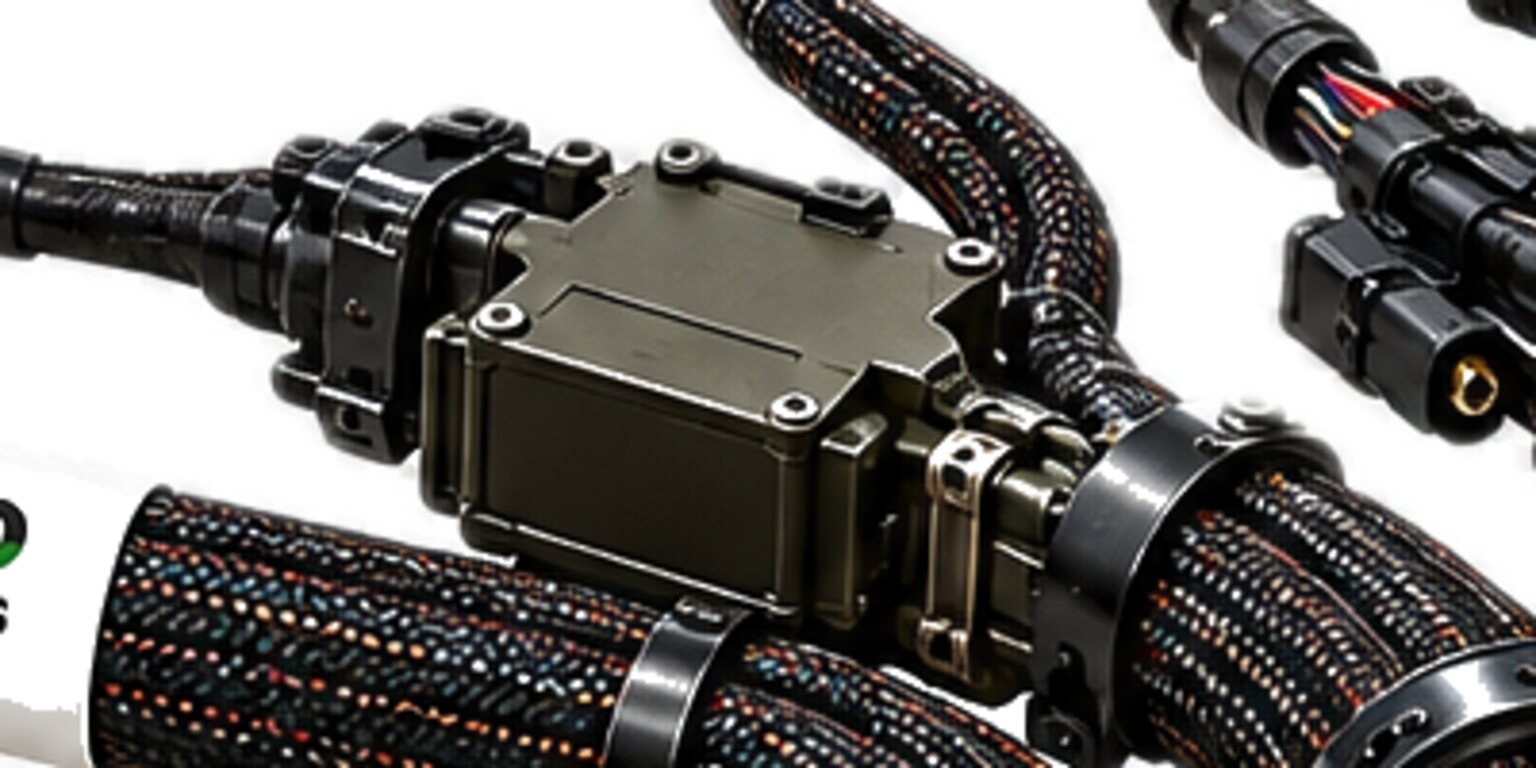
A harness shop is laid out in the order a harness is made, and the drawing walks the floor ahead of the wire. Intake sits at the door where the drawing set arrives. The cutting and marking station comes next, because nothing else can start until wire has its identity. The formboards take the middle of the floor. The crimp and termination bench sits beside them, the test bench beyond, and kitting and packing at the far door. A harness moves one way across that floor, and its record moves with it. Nothing on the floor is being built to a drawing that did not get there first. How it is built follows the harness. What follows here is the floor it is built on.
Intake of the drawing set
Intake is a desk, not a bench, and it is the cheapest place on the floor to catch an error. The drawing set arrives: the schematic, a wiring diagram or a from-to list, the connector and contact specifications, the routing drawing that shows where the harness lives on the machine, and whatever interface specification governs the ends. Intake reads all of it together before anyone reads any of it alone. The takeoff follows: every conductor listed by circuit identity, from terminal to terminal, with its wire type, its colour where the drawing calls one, its shield and where the shield lands, its cavity at each end and the contact that goes into it. From that list the shop pack is written: the cut list, the formboard drawing, the termination table for every connector, the kit list, and the test plan written against the assembly's own specification.
Where the drawing is silent, the shop pack says so, in a query list that goes back to the design owner. A bend the routing drawing does not show, a shield with no ground point named, a spare cavity with no stated function, a revision that references a sheet not in the set: each is a question, and the answer comes from the drawing owner, not from the bench. Nothing is fabricated until the drawing is signed, and the signature goes on the shop pack as well as the set, so the thing being signed is the thing being built.
Material is sourced against the takeoff and received against the drawing. Wire comes in on reels carrying the maker's identity and lot, and the reel identity follows the wire to the assembly it goes into. Connectors, contacts and backshells are checked against the part on the drawing, not against the part that fits. For an assembly going to a Canadian site, CSA certification and the Canadian Electrical Code govern, and the approval route is part of the intake review. The components we specify carry their own certification. The approval route for a finished, project-specific assembly is confirmed with the certifying body for that assembly before it is built, and we tell you where yours sits before we build it, not after.
Intake refuses a sketch. It refuses a verbal change. It refuses a set whose revision it cannot confirm. And it refuses to release a cut list before the pack is signed.
The cutting and marking station
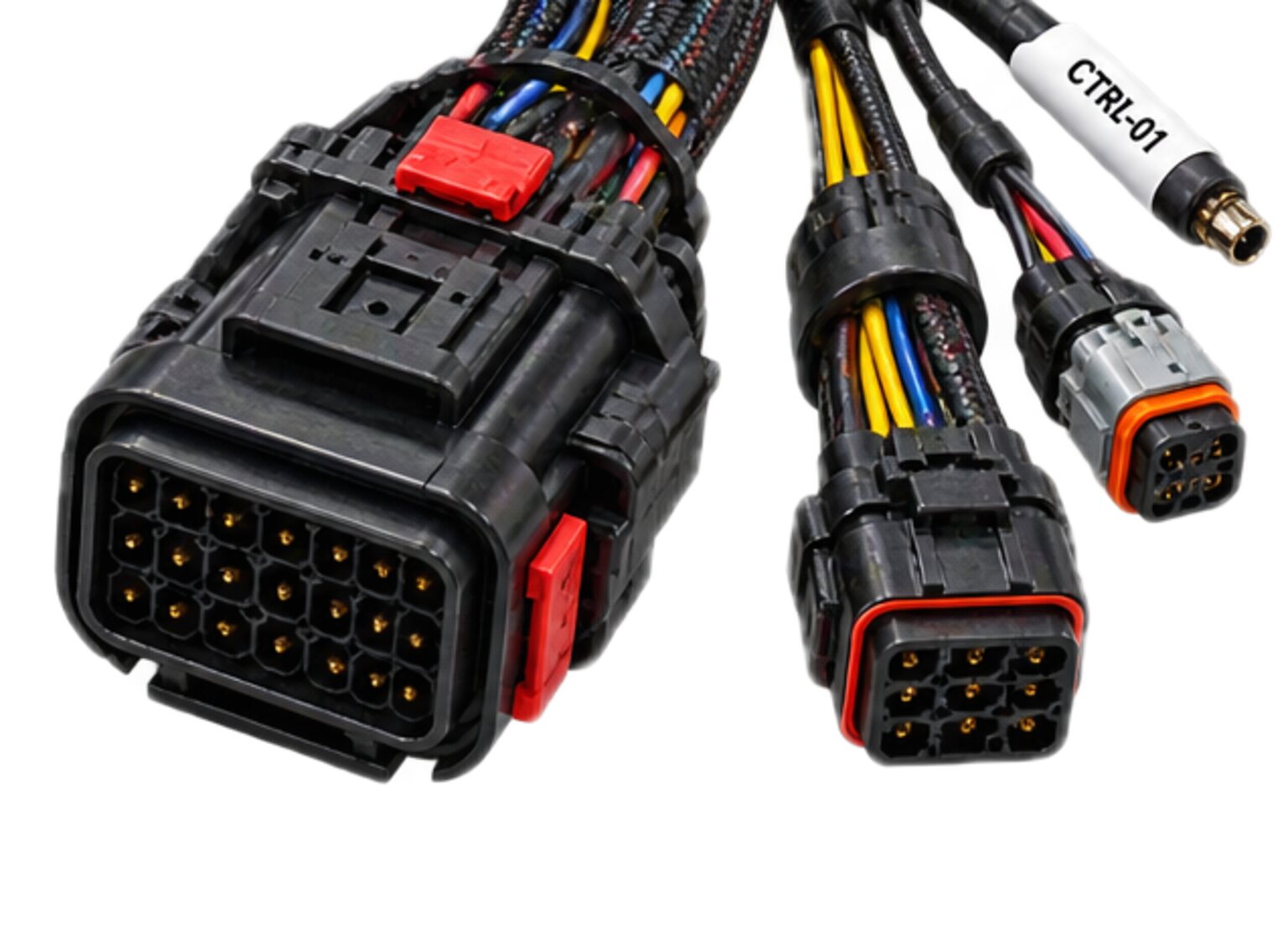
Wire is cut to the signed cut list and to nothing else. The station holds the reels the takeoff called for and no others, so the wrong wire is not on the bench to be picked up. Each conductor is cut to its list length and marked with its circuit identity before it leaves the station: at both ends, and along its length at intervals, so that a conductor pulled from the middle of a finished loom, in the field, on a machine, can say what it is. Marking is by heat-shrink sleeve, by printed marker or by marking the jacket directly, as the wire type and the drawing allow. A sleeve marker goes on before the terminal, because it will not go on after.
Every conductor carries its circuit identity, end to end, and it acquires that identity here. Cut wire is bundled by assembly and by branch, tagged with the assembly identity and the drawing revision, and it moves to the formboard as a kit, not as a pile. The reel lot of every cut is recorded to the assembly. Labelling and traceability sets out the marking scheme.
The station refuses to cut from a list that is not signed. It refuses to cut a wire the list does not name. And it refuses to let a conductor leave without its identity on it, because an unmarked wire is a wire somebody will have to ring out later and might ring out wrong.

Nothing is fabricated until the drawing is signed.
The formboard
The formboard is a full-size drawing of the harness fixed to a board, with pegs, cleats and forks at every breakout, every clamp point and every connector, so that the loom is laid up on it exactly as the drawing shows. It is the master jig. Everything the drawing says about the geometry of the harness lives on the board as a physical thing. A branch length is the distance between two pegs. A breakout angle is the angle a fork is set at. A clamp point is a mark the bench hand ties a lacing knot on. The bench does not measure the harness with a tape. The board is the measurement.
That is why a change to the harness is a change to the board first. If a revision moves a breakout, the peg moves and the board is re-marked with the new revision before a single wire is laid on it. A board that does not carry the current revision is not a board a loom can be built on, and it is turned to the wall until it does. The board carries the assembly identity and the revision it represents, and the record of every loom built on it names the board.
The lay-up runs from the trunk out. The longest conductors go down first, along the trunk to their farthest breakout, and the branches are added in the order the formboard drawing gives them. Twisted pairs are twisted before they go down. Shielded conductors are laid with their drain reaching the end the drawing names and cut back at the other. The safety chain goes down as its own bundle on its own track, and the board has that track wherever the drawing separates the chain from power. When every conductor is down, the bundle is laced or sleeved, the breakouts are dressed to the angle of the fork, and the loom comes off the board carrying the shape the machine needs. A formboard is the story pole of a harness: every dimension is on it once, and everything is built from it rather than from a tape and a memory. Formboards and manufacture sets out how a board is made from a drawing.
The formboard refuses a wire that is not in the kit for that assembly. It refuses a lay-up to a superseded revision. And it refuses a branch dressed to a length that looks right rather than to the peg.
The crimp and termination bench
Every crimp on the floor is made with the tool the contact maker's data pairs with that contact and that wire, and with no other tool. The tools carry their own identity and their calibration record. Each has a full-cycle ratchet that does not release until the stroke has completed, so a crimp abandoned half way is not one of the ways a bad joint leaves this bench. At the start of every shift, at the start of every run, at every change of contact or wire, and at intervals until the run is finished, the setup is proved on a sample: a pull test to confirm the crimp holds the wire, and a crimp-height check against the tooling data. The values those checks are made against are the contact maker's, for that contact and that wire. They are never a shop number, and they are never averaged across contacts.
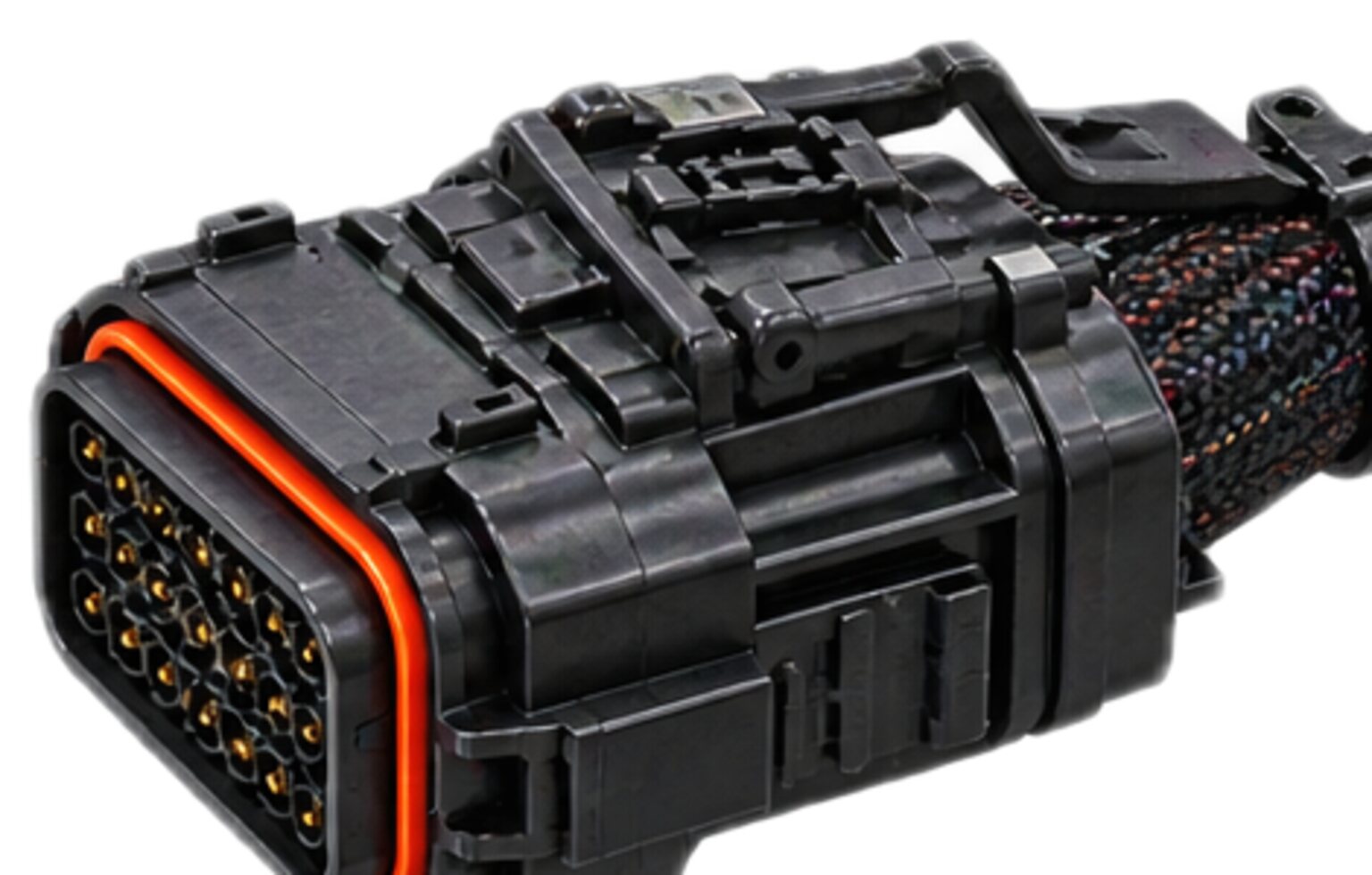
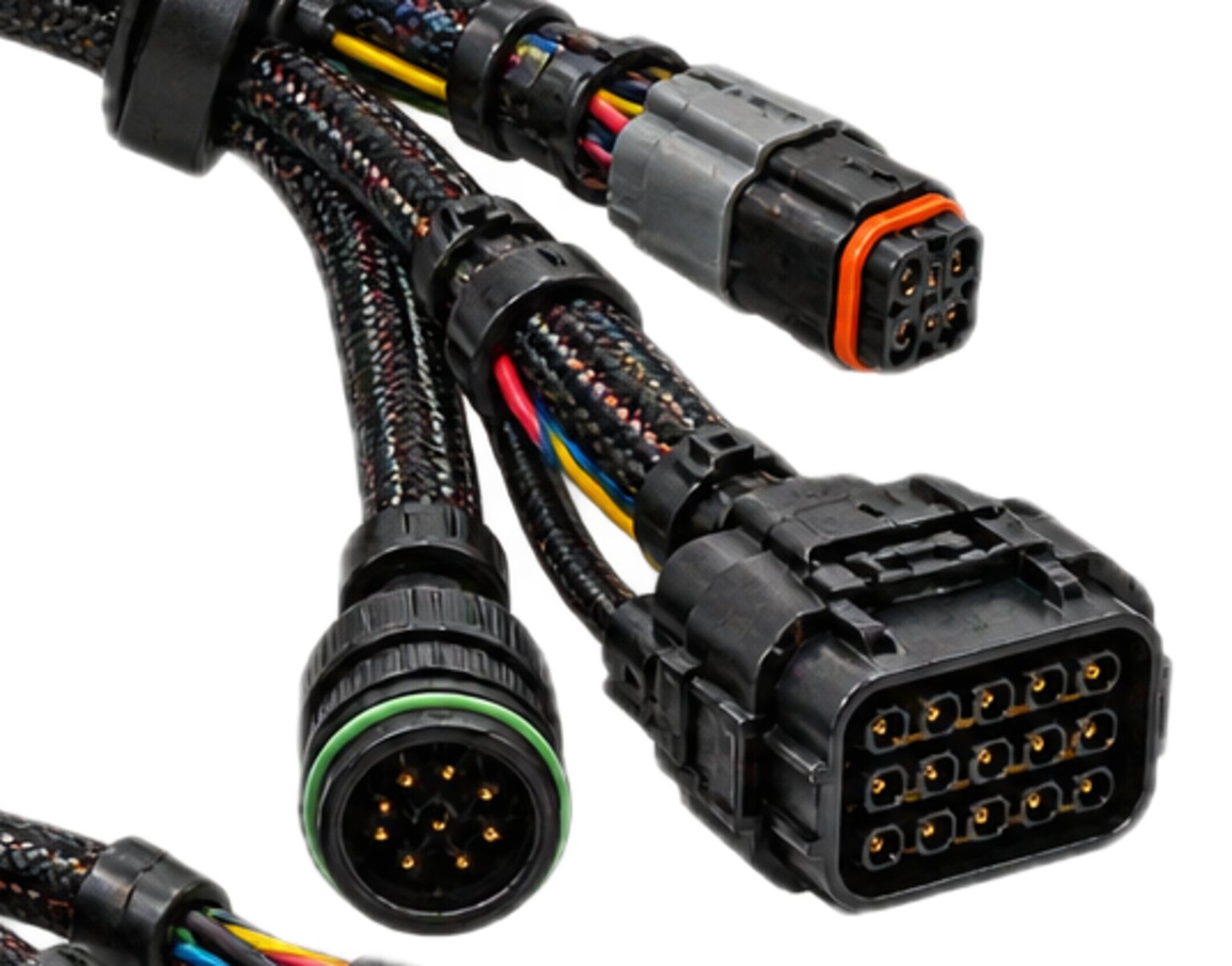
Termination follows the table for that connector. Strip length is set for the contact, and the strip is inspected so that no strand is cut and no insulation sits under the crimp. The contact is crimped, inspected at the inspection window where the contact has one, and inserted into the cavity the table names. Every inserted contact is pulled back to prove its retention clip is holding, because a contact that is not seated holds on the bench and lets go on the machine. The backshell goes on with its strain relief gripping the jacket, not the conductors. A shield is terminated where the drawing says it lands, to the backshell all the way round or gathered to the pin the drawing names, and it is cut back and insulated where the drawing says it floats. Shielding and bonding sets out which end a drawing grounds and why. A sealing plug closes every cavity the drawing leaves empty. Solder is used where the drawing calls for solder and nowhere else. Connectors and workmanship set out the stack and the standard the bench works to.
- The bench refuses an unmatched tool.
- It refuses a crimp made with pliers.
- It refuses to reuse a contact that has been removed.
- It refuses to terminate a conductor that has no identity on it.
- And it refuses to fill a spare cavity with a conductor the termination table does not show.
The test bench
The test bench asks the finished harness whether it is the drawing. A continuity test asks whether every circuit goes from the terminal the drawing names to the terminal the drawing names, and only there. An isolation test asks whether two circuits that must never meet are in fact separate, and it is run on every finished assembly before it leaves. A bond test asks whether a path the drawing intends to be metal is metal, and whether the shield reaches the end it is meant to reach and stops where it is meant to stop. The keying proof, last and on the closed assembly, offers every plug to every receptacle it could reach and takes a refusal from all but its own. On a capture rig, a further test asks whether the rig and the host harness are electrical strangers, and the answer has to be that they are.

The test program is written from the signed pack, and the pack was checked against the drawing at intake, so the bench proves the harness against the pack and the intake review is what proves the pack. The values a test is run to are set by the engineer responsible for that assembly, against that assembly's own specification, and they are recorded on that assembly's test record. A value nobody measured never reaches a wire, and a value nobody stated never reaches a test. Test and acceptance sets out what each test proves.
The bench refuses to pass an open, a cross or a short, however small. It refuses to test at a value nobody stated for that assembly. It refuses a hand ring-out as a substitute for the program. And it refuses to release a harness whose record is not complete.
Kitting and packing
- A tested harness is coiled to the bend its drawing allows, its connectors capped, its labels facing out.
- The kit list for the assembly names everything that ships with it: clamps, grommets, mounting hardware, sealing plugs, spare marker sleeves where the drawing supplies them, and the door drawing for a package.
- The kit is bagged by branch and by mounting location, so that the person landing it opens the bag for the place they are standing.
- The kit list is checked against the crate by a second person, the crate is labelled with the assembly identity and revision, and the record goes in with it.
Kitting refuses a harness without a test record. It refuses a bag the kit list does not name. And it refuses to close a crate the second person has not checked.
What leaves the door
What leaves the door is the assembly and its record, and neither leaves without the other. The record carries:
- the signed drawing revision the assembly was built to, and the shop pack signed with it;
- the cut list as cut, with the reel lot of every conductor;
- the formboard identity and its revision;
- the crimp tools used, by identity, with their calibration status and the setup checks made that day;
- the termination table as terminated, with every cavity left empty noted;
- the test record for that assembly, with the tests run, the values they were run to and the result;
- the inspector's sign at each stage;
- the kit list as packed.
For a loom built to a customer's issued set, a copy of the whole pack goes back to the design owner with the harness, so the design owner holds the manufacturing detail and can have the loom built again. The record sets out the record in full.
The door refuses a harness without its record. It refuses a record without its signatures. And it refuses a harness whose drawing was never signed, because that harness does not exist. We would rather hold a finished harness on the floor than send one out that the paper cannot account for.