On a remote site the scarce thing is not the copper. It is a licensed pair of hands, and the road those hands have to travel. A wellsite, a pump station or a compressor pad at the end of a lease road is built once, by a crew that arrives, does what the drawing calls for and leaves, and every hour of electrical work done there is an hour of the scarcest trade on the project, spent in weather.
The remote site package moves that work into a shop. Power in, distribution, the controls that belong to the electrical scope and the interconnect to everything else on the pad are wired, labelled and tested as one unit and shipped complete. The crew that lands it has one electrical job: connect what the drawing says to connect, and nothing else. The seam is the landing. Everything inside the package is built in the shop to the issued set. Everything outside it is built by the site, to the site's own set, by people who have gone home by the time the package arrives.
The mechanism
The package is an enclosure, or a set of enclosures on one frame, that takes power at one point and gives it back out at every point the pad needs it. The power side is a tree. A feeder lands at the main disconnect, the disconnect feeds a distribution section, and the distribution section feeds each branch through its own overcurrent device: the motors on the pad, the heat tracing on the piping, the building heater, the lighting and the receptacle.
The control side is a star. A control transformer makes the control voltage from the power side, and its secondary is protected before it feeds anything. From there the control panel reaches every device the electrical scope owns: the starters and contactors, the selector switches and pilot lights on the door, the level and pressure switches wired at line voltage, the thermostat that runs the heat trace, the interlocks between them. Each run leaves the panel on its own conductors, with its own wire number, and comes back.
The safety side is a loop. Every emergency stop, guard switch and trip contact that has to stop a machine is wired in series through a safety relay, so that opening any one of them opens the chain, and the chain is the only thing that lets the machine run. That loop has its own bundle, its own terminals and no splice.
Inside, the conductors are dressed into wireways so each bundle can be traced by eye, every stranded conductor is ferruled before it enters a terminal, and every termination is made to the torque the component's own marking calls for.
The interconnect is where the package meets the pad, and it is built as a terminal strip, not as a device. A site cable enters through a gland at the bottom of the enclosure and lands on a numbered terminal; from that terminal the package's own conductor runs to the device. The terminal is the boundary, and the boundary is drawn. Where the package also carries a low-voltage instrumentation or building-automation section, it sits in its own compartment on its own terminals, because it belongs to whoever agreed to own it.
What it is engineered to
The landing is a pad, a crew and a list. The pad is poured to the site's drawing, with the conduits stubbed up where that drawing says. The list is the interconnection schedule: every site cable, the terminal it lands on, the identity of the conductor at each end. The package is engineered so that the crew can work from that list and from nothing else.
What the package promises the pad is that every landing exists, is labelled, is reachable with the door open and gloves on, and takes the cable the drawing calls for. What the pad promises the package is that the feeder is the one on the drawing, that the electrode is driven and tested by whoever built it, and that the conduit stubs come up under the enclosure and not beside it. When one side changes, the change arrives at the terminal strip, and a crew with no licensed electrician on it has nowhere to put it. That is why a substituted cable, a moved stub or an added load is a drawing revision and not a field decision.
In transit the package rides for hours over roads worse than anything it will see afterward. Every heavy component is braced against its mounting, the door is latched and blocked, and anything that would ship loose is restrained or crated. A breaker that walks on its rail during the ride arrives with a fault built in, and the ride is the first thing the package is built to survive.
In winter the package is landed by hands that are cold and operated by components that are colder. The enclosure carries a heater and a thermostat so that the inside stays above the dew point and the breakers, relays and displays stay within the range their own markings allow. The water that forms on a cold bus when warm air is let into a cold enclosure is a fault that appears the day after the crew leaves.
In rain and wash-down, every entry is from the bottom or through a rated gland low on a side wall, and a drip loop is left on every site cable so that water runs to the ground and not to the gland. There are no top entries unless nothing else is possible. A hole in the roof of an enclosure is a decision, and not one the shop makes on its own: where the set calls for one, it is drawn, signed by the engineer who owns the set, and sealed as though it will be rained on, because it will.
Safety circuits never share a bundle, a splice or a shell with power.
The discipline applied to this harness
Segregation comes first. Power conductors run in their own wireway, control conductors in theirs, and the safety chain in its own bundle from the first emergency stop to the safety relay, spliced nowhere. A shielded instrumentation run, where one is in scope, is routed away from the power side with its shield grounded at the end the drawing names and cut back at the other, because a shield grounded where the drawing did not ask is a loop carrying current nobody designed.
Protection is the drawing's, not the shop's. Every conductor is protected at its source at the rating the drawing gives it, and the coordination between main and branch is honoured, because a package that trips its main for a branch fault takes the whole pad down for one motor.
Bonding is done on purpose. Every metal part that can be touched is bonded with a conductor that has an identity, landed on a bonding bar: not through paint, a hinge or the bolts that hold a panel to its back plate. The bonding bar carries the lug for the site's electrode conductor, and the site provides and proves the electrode. The bonding path is on the drawing, and it is tested as a path, not assumed as a structure.
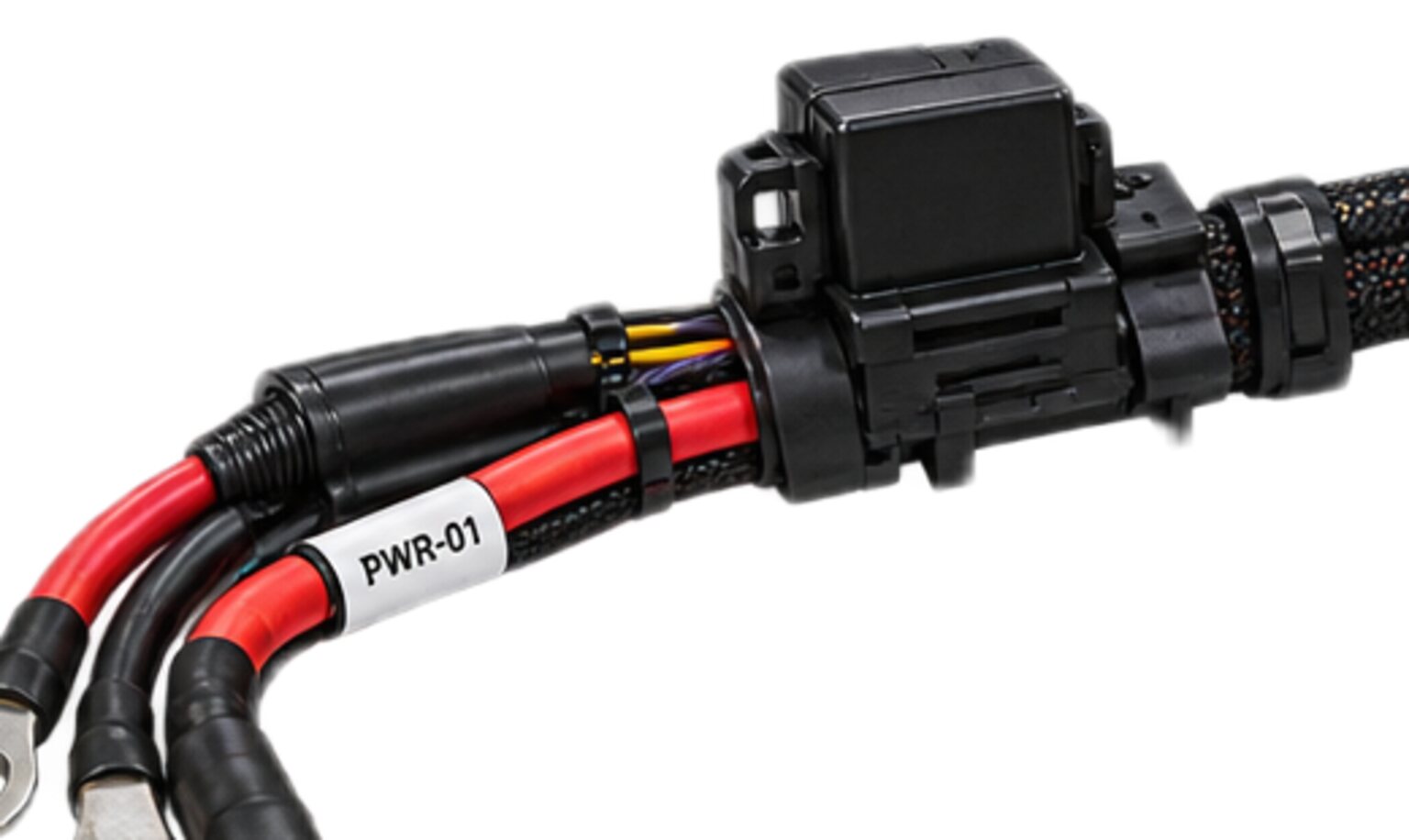
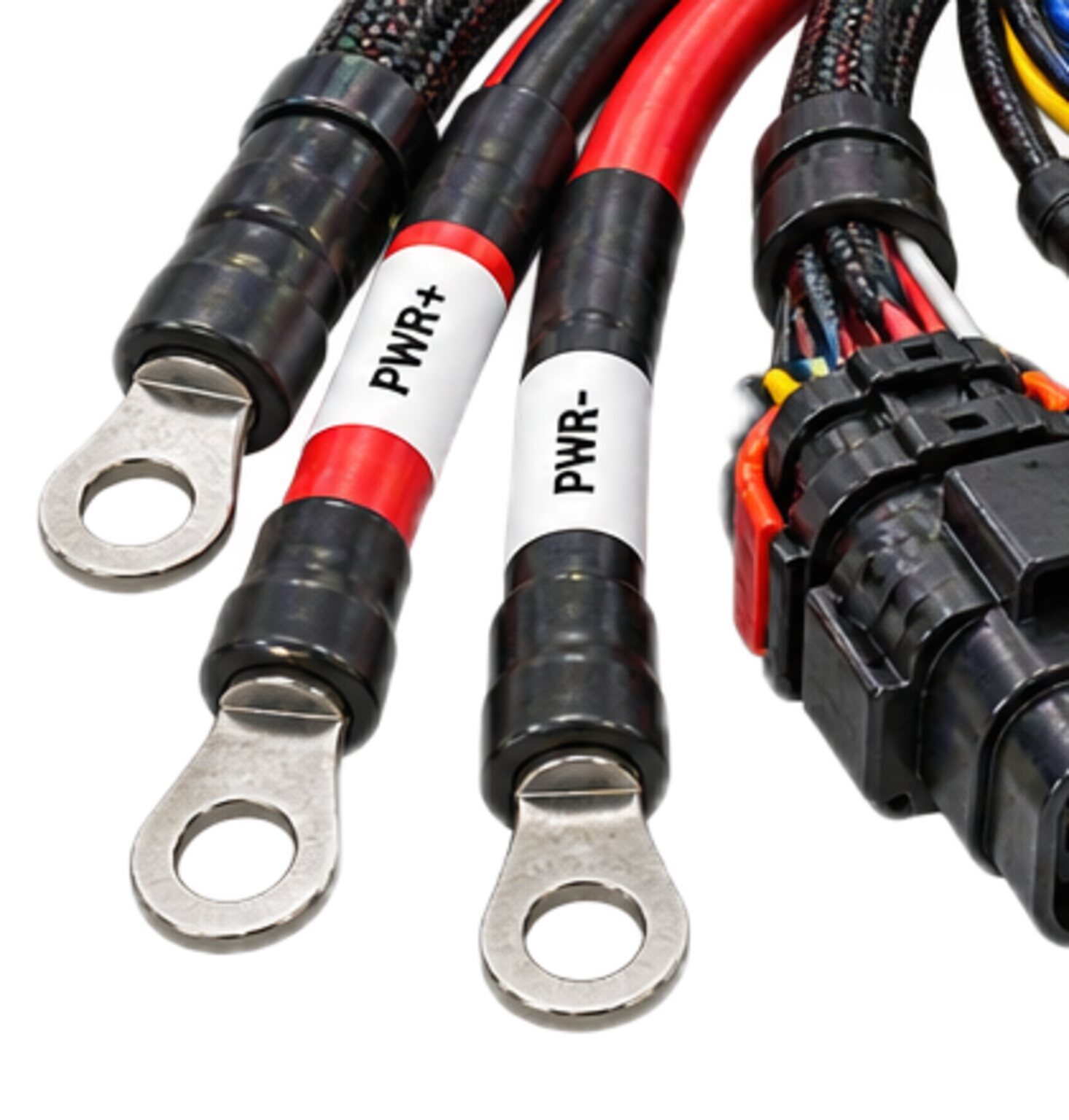
Identification is the discipline that does the most work on a remote site, and the sentence that governs it is this: every conductor carries its circuit identity, end to end. The labels are printed on a material that survives sun, cold and a hose, and none is hand-written, because a hand-written label is read wrong by the person who was not there when it was written.
Routing respects the bend radius of every conductor at every fixed end, supports every cable at its entry so that the gland is not the strain relief, and keeps every run where a person can follow it with a finger.
Test is run on every finished package before it leaves. A point-to-point continuity check asks whether every conductor on the drawing is present, lands where the drawing says, and lands nowhere else. An isolation test asks whether the circuits that must never meet are in fact separate. The safety chain is proven open and closed before power is applied to anything it controls. The values those tests are set to are stated on the shop drawing for that package by the engineer responsible for it, and they are not published for a class of assembly. A value nobody measured never reaches a wire.
CSA governs and the Canadian Electrical Code with it, and its requirements on segregation, protection at the source, bonding continuity and the identification of conductors are what the shop builds to.
Done badly, this package fails on the pad, and the failure is a truck roll. A wire number that is on the drawing but not on the wire is a fault that takes a licensed electrician a long trip to reach and very little time to find. A safety chain jumpered in the shop to get a test to pass and left jumpered is a machine that runs with its guard open. A terminal buried behind a wireway cover is a crew calling from the pad, and a package meant to move work off the site has just put it back.
How it is bought
The package is bought from the issued set. The single-line, the panel schedules, the control schematics, the enclosure layout and the site's interconnection drawing are what the takeoff is performed from, and the takeoff lists every conductor, termination, device and label before a price is stated.
The components we specify carry their own certification. The approval route for a finished, project-specific assembly is confirmed with the certifying body for that assembly before it is built, and we tell you where yours sits before we build it, not after.
Nothing is fabricated until the drawing is signed. The shop drawing for the package, with its terminal schedule, its wire list, its label schedule and its test plan, goes to you for signature, and the first conductor is cut after the signature and not before. A change after that is a revision, and the revision reaches the wire list, the labels and the test record together, or it reaches none of them.
Every package ships with its own record: the signed shop drawing as built, the wire list, the terminal schedule, the test record signed by the person who ran it, and a photograph of every compartment taken before its door was closed. That record is what lets a person a year from now, at the pad, in the dark, open the door, find the terminal the record names and read the wire number the record names. It is the map printed on the lid of a truck's fuse panel, done for a whole pad: a driver changes a fuse at the roadside at night because someone printed that map, and the next person to reach a remote site services it because the map ships with the package. Labelling and traceability is where the record comes from.
The scope on controls is agreed before the takeoff. On most industrial drawing sets, low-voltage controls and their wiring are the mechanical trade's scope, and line-voltage power and controls are the electrical trade's. We do not quote low-voltage building-automation or instrumentation harnesses as part of an electrical package without an explicit scope agreement.
To start, send the issued set and say which controls are in the electrical scope. We answer with what the takeoff needs and the scope boundary as we read it, and with what the walk has to see before a length is cut; the shop drawing follows. Enquiries is the door. We do not quote from a sketch, we do not ship a package without its record, and we do not land a site cable on anything but a terminal.