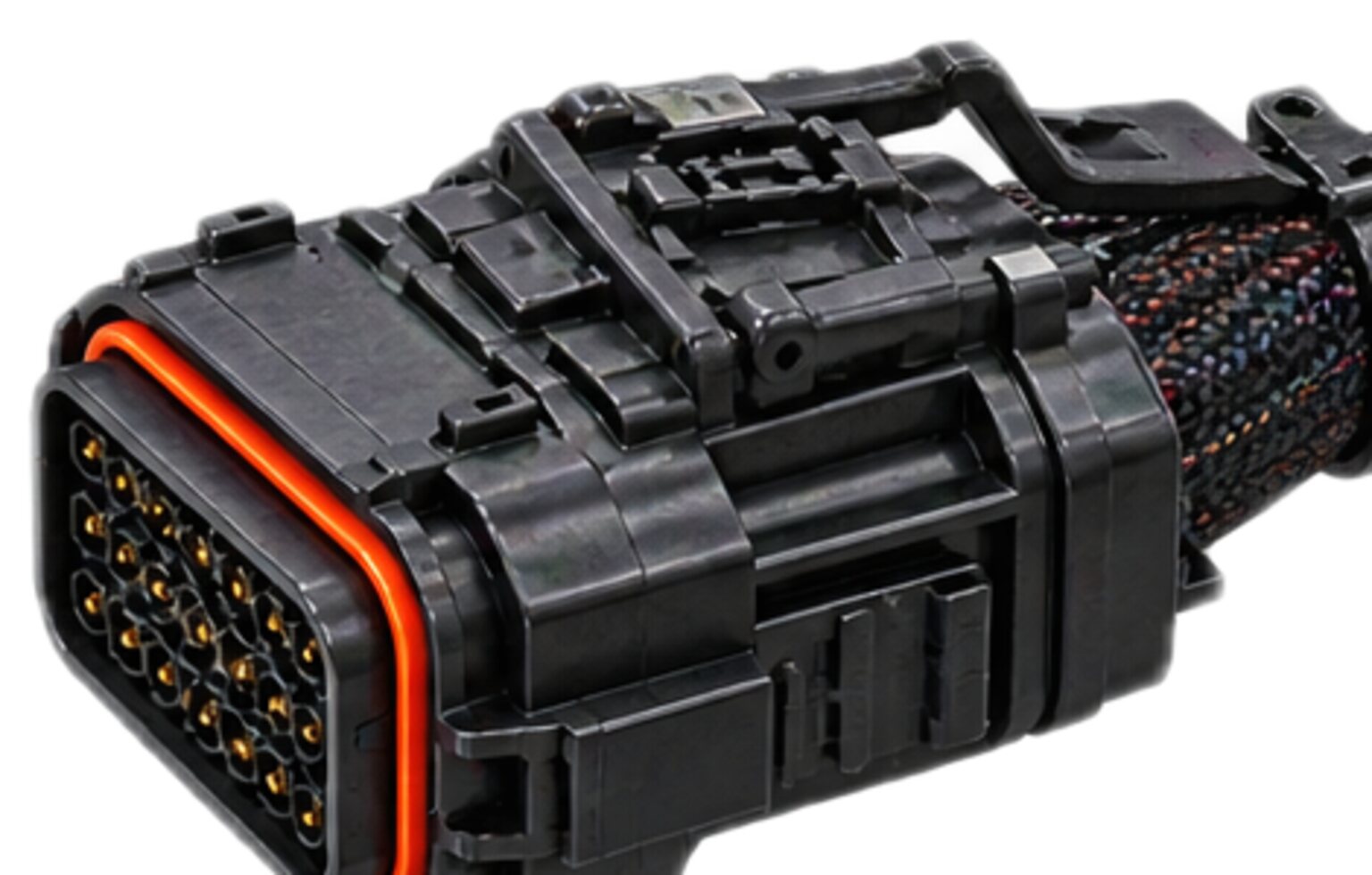
Every autonomous machine has a place where two parties' engineering meets in one physical bundle. A payload meets a carrier. A retrofit kit meets a host machine. An instrument meets the thing it measures. A skid meets the plant it lands in. On one side of that place, one engineer drew the wires. On the other side, a different engineer drew them, on a different day, to a different brief. The place where the two drawings have to agree is the seam.
The seam is where a safety circuit, a power feed and a data bus share one loom and must never touch each other. It is where a connector has to make and break safely every time a person handles it. It is decided by whoever draws the connector. It cannot be corrected in software after it ships. And on most programmes it is designed last, by whoever has time.
Four seams, one problem
On the UAV line the seam is the payload-to-carrier connection. The carrier supplies power and a data bus and expects a safety-interlock set back. The payload consumes the power, talks on the bus, and reports its own state into the interlock chain. Ground and bond have to be agreed as well, because a payload that finds its own way to ground through a shield or a mounting bolt has built a return path nobody drew. We engineer those four parts as one matched set. They are designed together, keyed together and checked together, not four items that happen to arrive in the same shell.
On the autonomy line the seam is the retrofit kit meeting the host machine. The host was designed around a person. Its harness assumes a hand on the lever and a foot on the pedal. The kit removes that person, takes over the actuators, reads the machine's own sensors, and adds an emergency-stop and safety-interlock chain that has to stop the machine whether the fault is in the kit or in the host. Every one of those functions crosses the seam somewhere. The kit draws power from a machine that was never told it would have a second consumer. It reads a feedback signal that was designed to drive a gauge. It puts a stop contact in series with a circuit drawn by someone who knows nothing about the kit. On this line we build to a customer's issued set and we return the manufacturing detail. The customer's programme owns the design and the drawing master. Every loom we build against that master goes back to it as manufacturing detail, so that the programme's copy of the seam is the only copy.
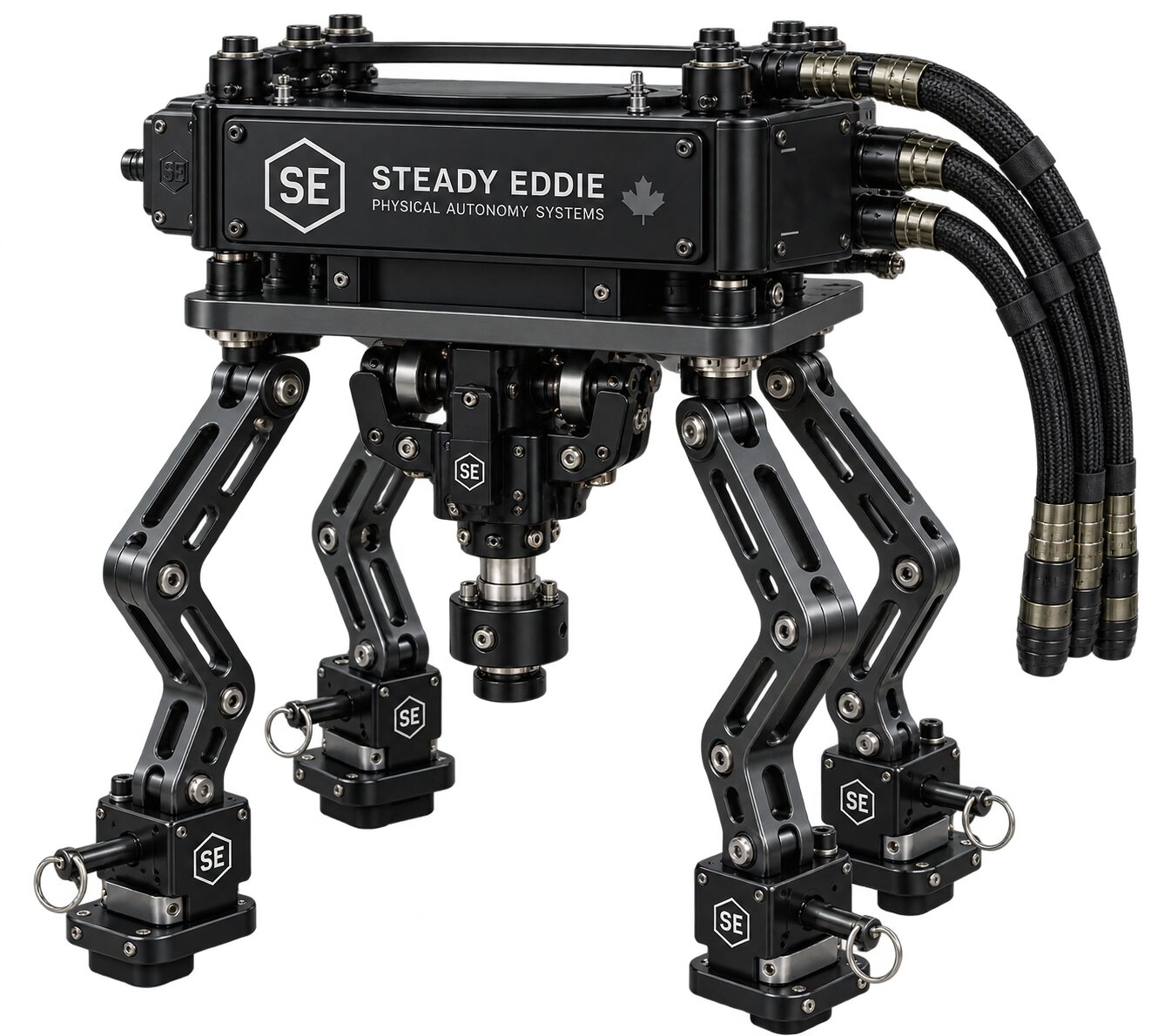
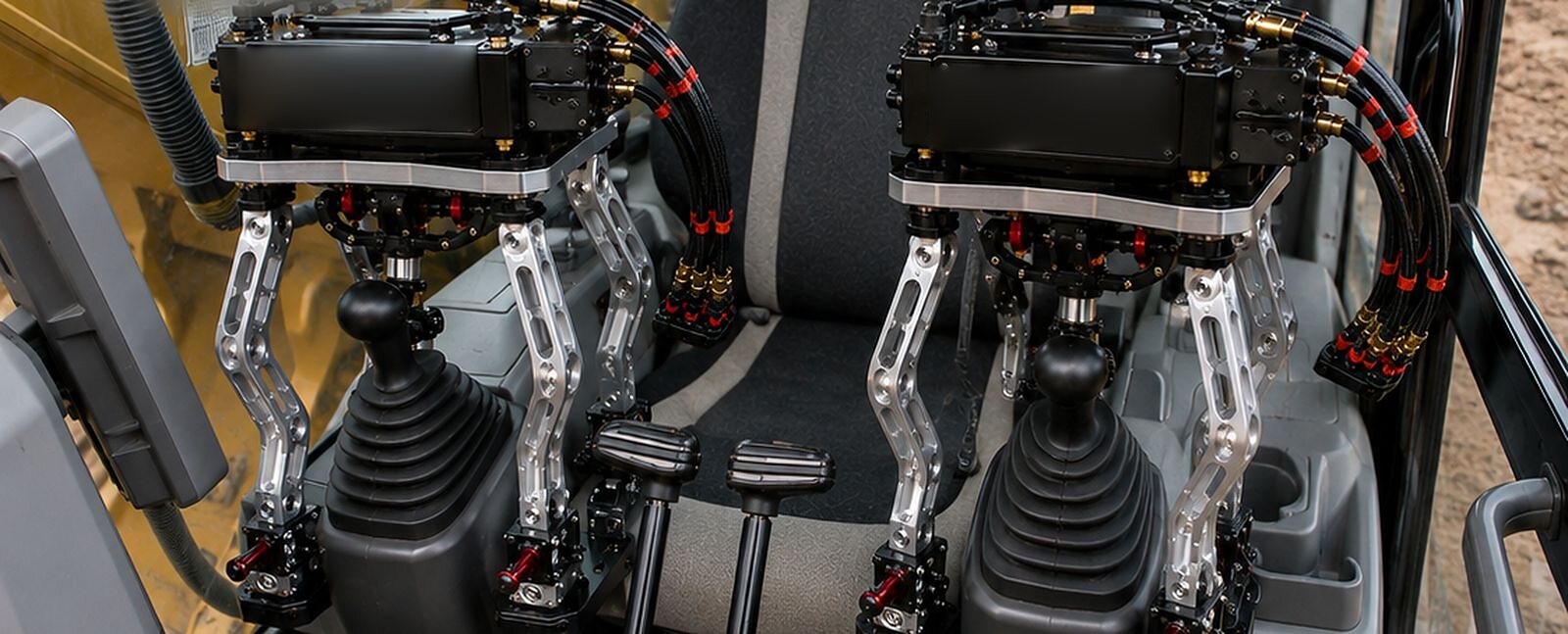
On the training-systems line the seam is the strangest of the four, because the right seam is an empty one. A capture rig measures a person working a machine. Its instrumentation loom runs sensing lines to one logger, on one clock, from one battery. It is wired to nothing on the host. It adds no force to any control, draws no power from the machine, and shares no conductor with it. A continuity check from the rig to the host harness must return nothing, and an isolation test must prove the two are separate. An instrument that touches the machine has changed the thing it was measuring. So the seam here is defined by what it must not connect, and the discipline is in checking for that absence on every rig rather than in mating a connector.
On the industrial line the seam is the landing. A pre-wired skid, a remote-site power and control package or a pre-terminated enclosure arrives at ground that has no labour and has to land plug-and-play. Everything inside the skid was built in the shop, on a bench, with the drawing in hand. Everything outside it was built by the site, to the site's own drawing set, by people who have since gone home. The seam is the terminal strip or the interconnect plug where those two sets of intentions meet, and nobody is standing there to reconcile them.
Four lines, and the same problem every time. Two parties. One bundle. A boundary that has to carry power, data and safety across it without any of the three touching the others, and that has to survive being made and broken by a person.
What the topology decides
A harness is a tree. It has a trunk, it branches, and every branch ends at a device or a connector. Where the trunk branches and what decides the branching is the topology, and at the seam the topology is doing most of the safety work.
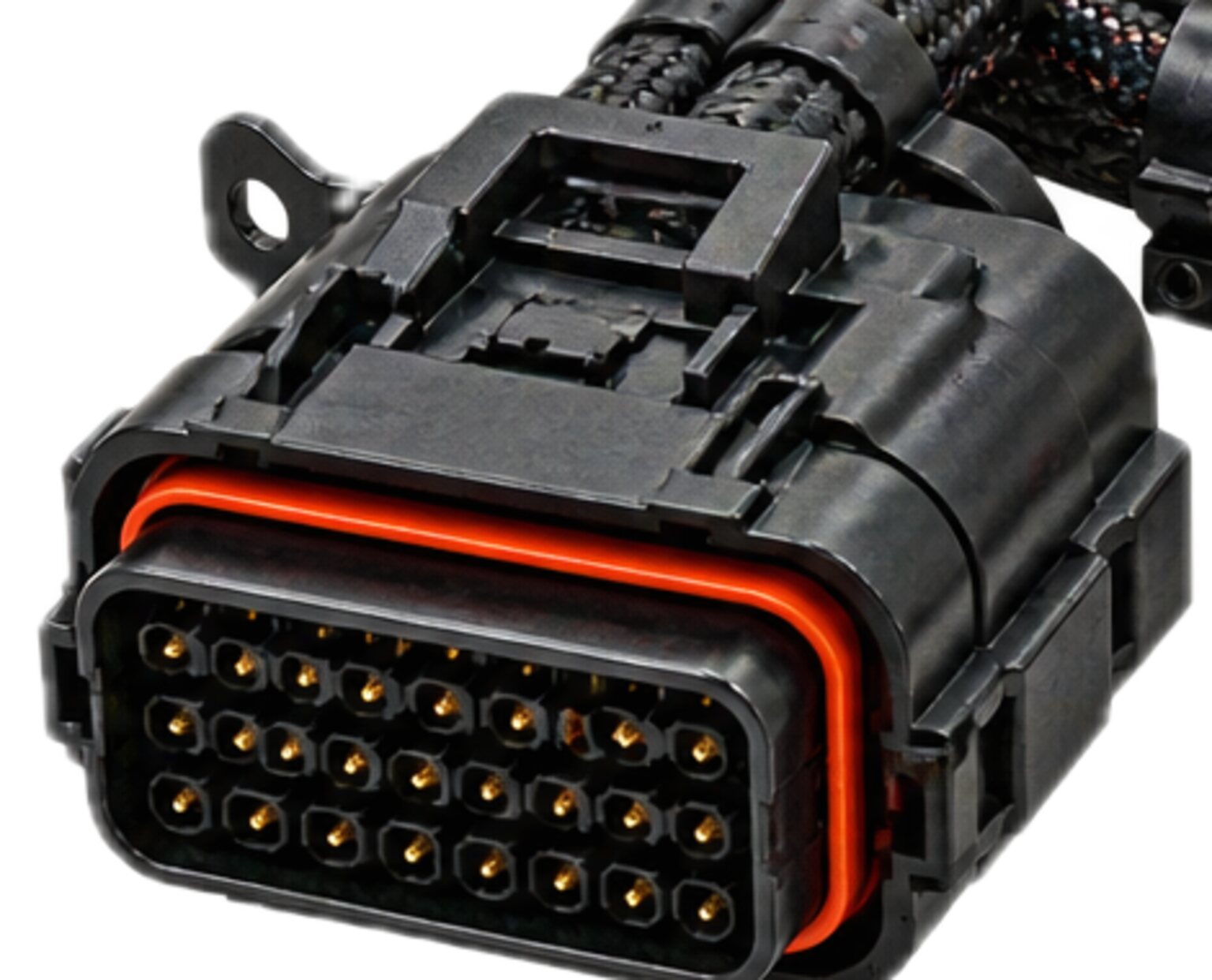
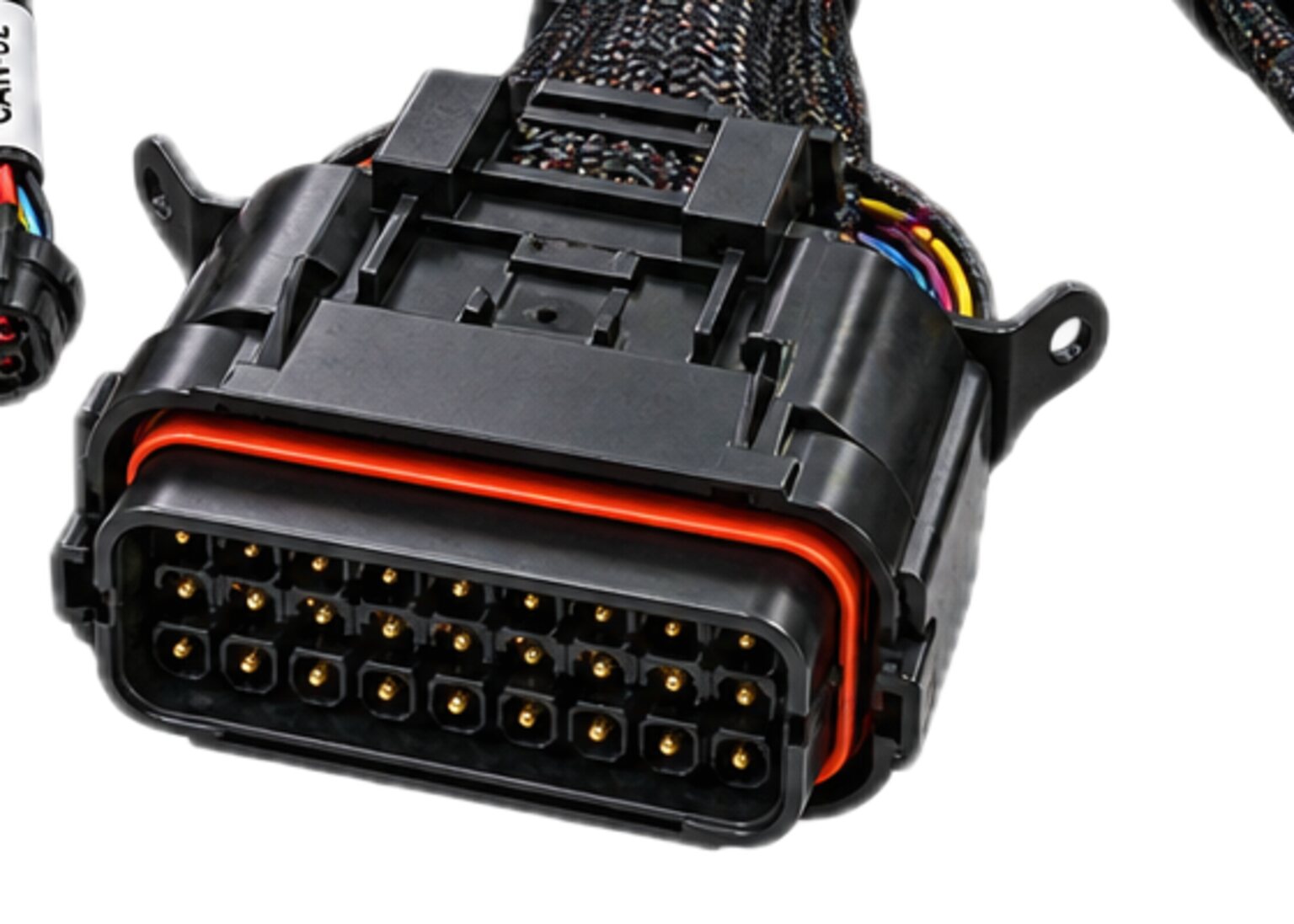
The first decision is how many shells. A seam that carries power, data and a safety chain can arrive at one connector with segregated cavities, or at separate connectors that each carry one kind of circuit. The doctrine we build to settles the hardest part of that question: safety circuits never share a bundle, a splice or a shell with power. So the safety-interlock set arrives in its own shell, on its own conductors, and it does not depend on where anything else is routed. What remains is whether power and data share a shell, and that is decided by what the data has to survive when the power beside it switches under load.
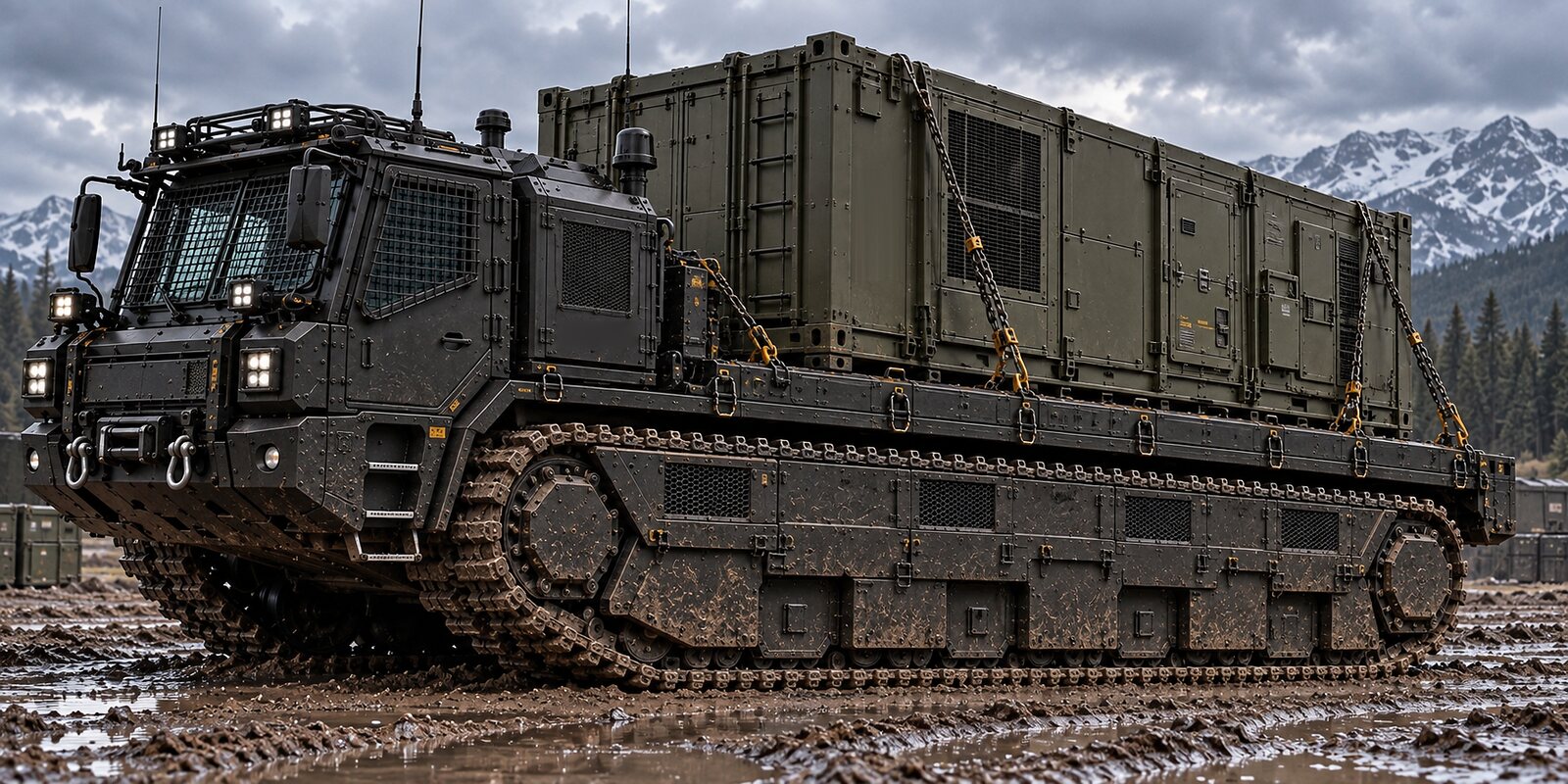
The second decision is where the bundle splits. Somewhere behind each connector the loom divides into the circuits that will land on different contacts, and behind that again it divides into the branches that go to different devices. The split point is chosen for the strain relief and the service loop, not for convenience. Split too close to the shell and every flex of the cable is a flex at the contact. Split too far back and you have a fan of single conductors with no jacket over them, in exactly the place where a hand grabs the harness to pull the plug.
The third decision is the ground and the bond. Ground is a circuit. Bond is a mechanical fact about metal touching metal. Across a seam both have to be drawn, because a payload bolted to a carrier is bonded whether anyone intended it or not, and a shield grounded at both ends of a seam that was drawn for one has made a loop that carries current you did not design. The topology has to say which side of the seam grounds the shield and which side does not, and it has to say it in a way that survives the payload being swapped for a different one.
The fourth decision is what the seam looks like when the other side is missing. A carrier with no payload fitted has a connector with live contacts facing the weather. A host machine with the retrofit kit removed has a stop chain with a gap in it. A skid that has landed and is waiting to be connected has a loom hanging in the wind. The topology has to define the unmated state, because that is the state the seam spends much of its life in while it is being installed, serviced and moved.
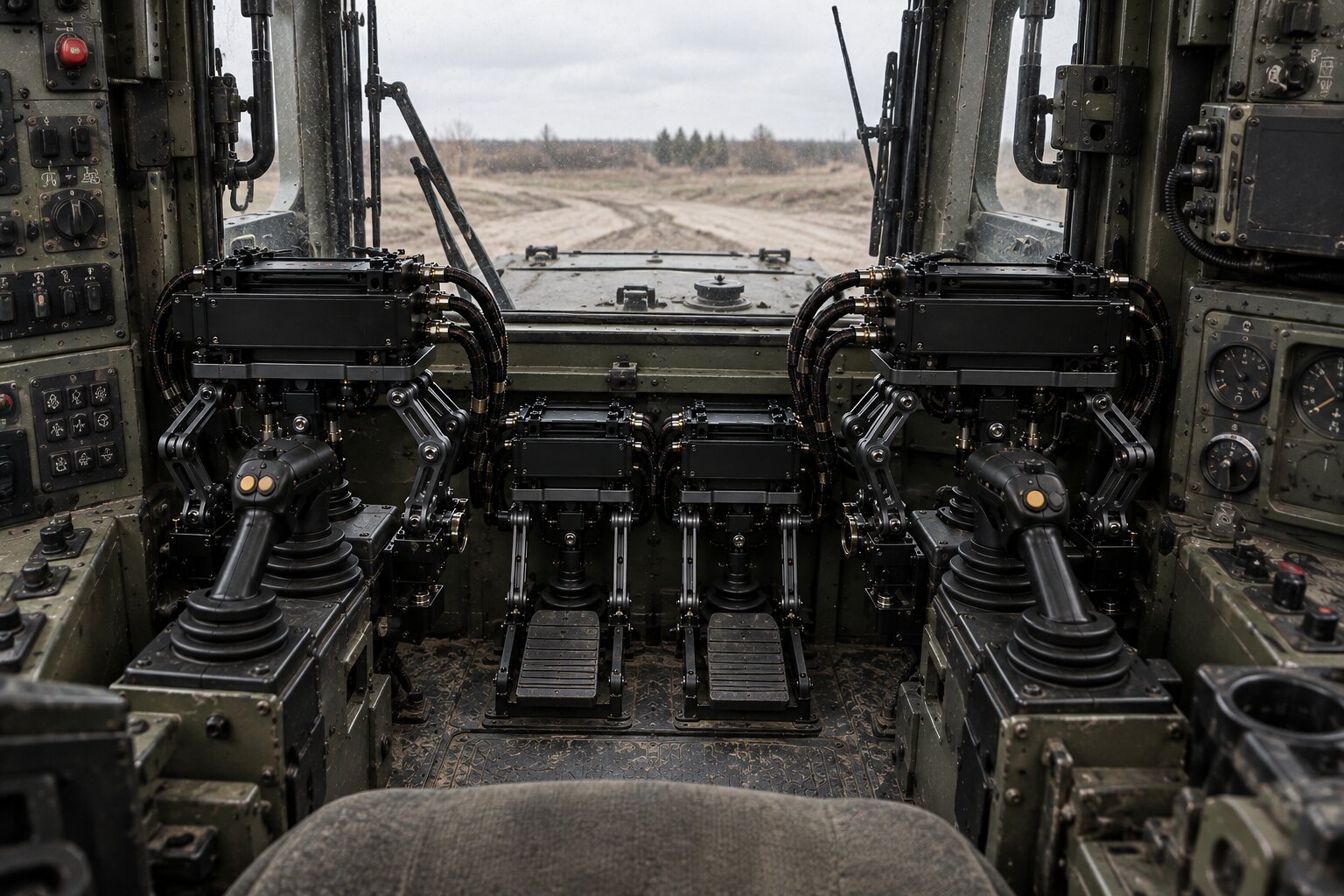
Nothing is fabricated until the drawing is signed.
What the joint has to survive
A connector at a seam is a joint that is made and broken on purpose, repeatedly, by a person. That makes it different from every other joint in the harness. A crimp is made once, in the shop, under a tool that was set for it and checked against a sample. A seam connector is made in the field, by hand, in whatever conditions the field offers that day.
It has to survive being mated in the dark, with gloves on, by someone holding a flashlight in their teeth. That means keying that can be felt and not just seen, and a latch that tells the hand it has engaged. It has to survive being pulled by the cable rather than the shell, because that is how every connector on every machine is eventually unplugged.
- It has to survive the machine.
- On a carrier, that is vibration that will work a contact loose over a season and a temperature swing between the hangar and altitude on every flight.
- On a host machine, that is the shock of an implement hitting rock, transmitted through the frame into every clamp on the loom.
- On a skid, that is wash-down, dust, and a thermal cycle every day the sun comes up.
- On a capture rig, it is a person climbing in and out of a cab, past the rig, with the rig's loom within reach of a boot.
It has to survive the count. A payload connector on a carrier that swaps payloads between flights will be mated more times in a season than most connectors are mated in their lives. A contact chosen for a short working life will wear to the point of intermittency, and intermittency at the seam is the fault nobody can find.
It has to survive the unmated state. A connector that is only sealed when mated is a connector that fills with water as soon as the payload comes off. The cap is part of the design. Whether the cap is tethered so it cannot be lost is a decision the connector drawing makes, and the machine lives with it.
What each side promises the other
An interface is a set of promises. The carrier promises the payload a power feed of a certain character, present under certain conditions, with a certain behaviour when it is lost. The payload promises the carrier that it will never source power back onto that feed, that it will hold the interlock chain open until it is ready, and that it will present a defined state on the bus when it is unpowered. The retrofit kit promises the host that removing the kit restores the host's own stop chain intact. The host machine promises the kit that a stop signal on a named conductor will stop the machine and not merely request that it stop. The skid promises the site which terminals take power in and which terminals present its own signals out, and it promises that a terminal that is not on the drawing is not connected to anything.
None of those promises is a voltage or a pin number. They are statements about behaviour at the boundary. Which side sources and which side sinks. What a contact carries when the other side is absent. What happens in the first moments after mating and the last moments before breaking. Whether a fault on one side is contained to that side or crosses over. Who is allowed to change any of it, and how the other side will be told.
Every conductor across a seam carries its circuit identity, end to end. That is not a labelling preference. It is how a promise becomes checkable. A conductor that is called one thing on the carrier side and another thing on the payload side is a conductor with two identities, and the promise attached to it has no owner. When the two halves are mated on the bench, the person checking the seam has to be able to read the same identity on both sides of the connector, or the check is a guess dressed as a check.
What a change on one side does to the other
A seam is stable only as long as neither side moves. In practice both sides move all the time, and each move on one side arrives on the other as a fault.
A carrier programme adds a sensor and needs one more contact. The obvious move is to use a spare cavity in the payload connector. Now every payload ever built for that carrier has a contact in its shell that carries something it was not designed for. If that contact is unused on the payload side it is a hazard waiting for moisture. If an older payload was using it for something else, the two sides now disagree about what the contact is, and both are correct to their own drawing.
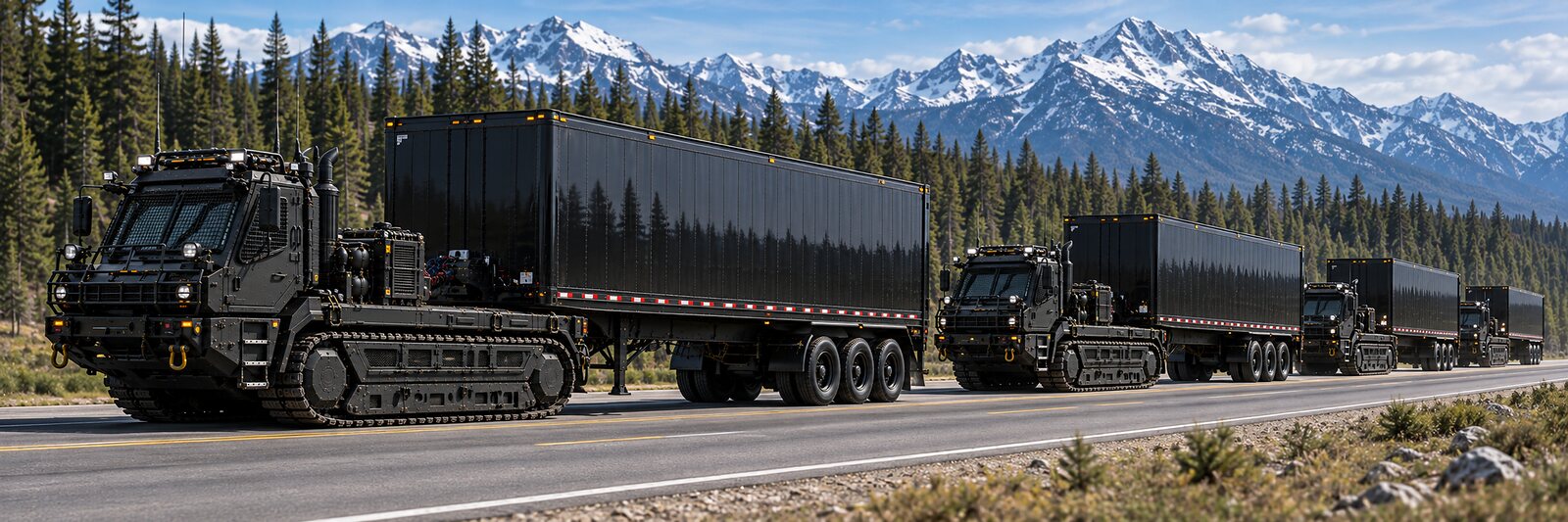
A host machine programme changes the routing of its stop chain to suit a different operator cab. The retrofit kit's stop contact was placed in series at a point that no longer exists. The kit still stops itself. It no longer stops the machine.
A site changes its control philosophy and moves a permissive signal from a dry contact to a powered one. The skid arrives with an input drawn for the dry contact. The powered signal lands on it. Whether that input survives is a matter of what its designer assumed, and the site will find out.
A payload maker starts grounding a shield at its own end, on a seam whose carrier end is already grounded. Nothing on the interface drawing changes. The loop closes on the next mating, and the bus starts to drop traffic on one carrier and not on another.
The rule that follows is that a change to either side of a seam is a change to the seam, and the seam has one drawing. That drawing has one owner, and the owner is not whichever party happened to need the change. Every conductor identity, every contact assignment and every promise about behaviour lives in that one drawing, and it is re-signed before either side builds to the new version. Nothing is fabricated until the drawing is signed. At a seam the reason for that rule is plainest. Two parties are about to spend money against the same piece of paper, and if the paper moves after one of them has cut copper, the other will discover it at integration.
A drawing is not an interface
A drawing shows where the conductors go. It shows the connector, the contact assignments, the branch points and the terminations. A good drawing shows the conductor identities. It is necessary and it is not enough, because a drawing describes one side's intent.
- An interface is what two sides have agreed.
- It says what each contact carries and what it must never carry.
- It says which side is the source.
- It says what the unmated state is and what the first moment after mating looks like.
- It says how a fault on one side is prevented from crossing, and it says who owns the definition and how a change is proposed, agreed and re-issued.
- A pinout table in the corner of a drawing says none of that.
- Two drawings that happen to list the same contacts in the same order are not an interface either.
- They are two descriptions that agree today.
There is a second sense in which a seam that exists only on a drawing is not an interface. A seam becomes real when both halves have been built to the same signed definition, mated, and checked. The check is not that the plug fits. The check is that every conductor identity reads through, that every circuit that must never meet another is in fact separate, that the unmated state is what the definition says it is, and that the safety chain opens when it should and reads open when the other half is absent. Until that check has been run on the actual halves, the interface is a hypothesis with a part number.
We treat the interface specification as the most important document at the seam, ahead of the harness drawing, because the harness drawing is derived from it. When a customer gives us a drawing set with no interface specification behind it, we ask for the promises before we ask for the pinout. If the promises do not exist yet, we say so before anything is cut, because a harness built to a pinout with no promises behind it is a harness built to a guess about the other side.
A seam that is specified and a seam that is discovered
A seam comes into existence in one of two ways. It is specified, or it is discovered. A specified seam is decided before either half is built. Both parties agree the promises. One drawing is signed. Both halves are built to it, and the two halves meet for the first time on a bench, in the shop, in front of the check described above. When the check passes, the seam is a fact, and it is a fact that can be reproduced on the next carrier, the next kit and the next skid without anyone having to remember anything.
A discovered seam is found at integration. The payload arrives and the connector is the wrong gender. The kit's stop contact has nowhere to go because the host's chain runs through a module the kit never knew about. The skid's terminal strip has power where the site expected a signal. Something has to be done that afternoon, because the machine is on the floor and the schedule is running, and the person standing there does what a capable person does. An adaptor. A jumper. A splice.
That fix becomes the seam. It is not on any drawing. It was designed by the person with the least time and the least authority on the programme, and built with whatever was in the truck. It has no strain relief that anyone specified, no conductor identity, no place in the interface definition and no owner. It will be there for the life of the machine, and it will be rediscovered by the next person to open the loom, who will not know whether it is a fault or a feature and will have nobody to ask.
The engineering effort to specify a seam is small beside the effort of building either side. It is also the effort nobody is paid to make, because it belongs to nobody in particular, and so it is spent instead at integration, in the currency of schedule, by whoever is standing there. That is why the seam is the hard part, and why so many seams are discovered rather than specified.
How a bad seam presents
A discovered seam does not usually fail on the day. It fails the way harness faults fail, which is late, intermittently, and on a machine nobody can hold still long enough to find it.
- It presents as a payload that works on one carrier and not on another, because the two carriers were wired to two readings of the same drawing.
- It presents as a bus that drops out when the power feed switches under load, because power and data were given adjacent cavities in one shell and nobody asked what the data would survive.
- It presents as a stop chain that reads healthy with the payload removed, because the unmated state was never defined and a jumper was fitted to make the machine run on the bench.
- It presents as a fault that clears when the connector is reseated, which is worn contacts on a joint that was never designed for the number of times a person would make and break it.
The dangerous case is the one that does not present at all. A conductor that carries a stop signal on one side of the seam and something else on the other does not announce itself. The machine runs. The stop button works when it is tested at commissioning, because the tester pressed the button on the side of the seam that was wired to it. The day the fault is on the other side, the machine does not stop.
Who pays
The seam is paid for once, either way. It is paid for in the shop, in the engineering hours to specify it, or it is paid for at integration, in the field, in a currency that is always dearer.
The integration currency is schedule first. A machine on the floor waiting for a seam to be discovered and patched is a machine that is not being commissioned. It is rework next: the patched seam is redrawn and the loom built to the patch is rebuilt. On a remote site it is a truck roll, and the person driving it finds out what it is when they arrive. On a carrier it is a payload that cannot fly on the airframe it was bought for until somebody makes an adaptor, and the adaptor is now the seam.
The currency under all of them is a hazard. A stop chain that crosses a seam nobody owns is a stop chain that will one day have a gap in it, and the gap will be found by the event the chain was there to prevent.
The trailer plug
Anyone who has hauled a trailer owns the analogy. The truck has a plug at the hitch. The trailer has one to match. The truck's lights, brakes and ground meet the trailer's at that plug, and the trade agreed, once, what each contact on it carries. That agreement is why a trailer and a truck that have never met can be made to work with what is in the toolbox.
Everyone who has hauled a trailer also knows what a bad seam looks like. The ground contact corrodes. The trailer still lights up, mostly, because current finds another way home, through the hitch ball, through the safety chain, through whatever touches. Then the brake lights come on when you signal, or the running lights pulse with the indicator, and none of it is repeatable. Nobody redesigns the trailer to fix that. They clean the ground contact, because the seam was specified and everyone knows what it is supposed to do. A discovered seam has no such repair, because nobody knows what it was supposed to do.
Who owns the seam
The party that owns the seam should be the party that builds it. Where that is not possible, the party that builds it owes every manufacturing detail back to the owner, so that there is still one master and one copy.
A seam has two halves, and a seam built by two shops to two readings of a shared drawing is a discovered seam in waiting. The place where the two readings diverge is invisible until both halves are in the same room. One builder, building both halves to one signed drawing, finds the divergence on the bench and resolves it on the drawing before anything ships. Two builders find it at integration, on the machine, with the schedule running.
Where a customer's programme owns the seam, our position is the one stated above. We build to a customer's issued set and we return the manufacturing detail. Every conductor identity and every termination goes back to the drawing master, so that the owner's copy of the seam is the only copy. We do not hold a private version of a seam that differs from the owner's. Where a customer asks us to build both halves, we build both halves to one drawing, and the drawing stays the customer's.
- What we refuse is the seam that has no owner.
- We do not build to a drawing set that shows our side of a connector and nothing about the other side.
- We do not build to a pinout with no interface specification behind it and no named party who owns the definition.
- We do not fit a jumper to make an unmated seam read healthy on the bench.
- We do not adopt a discovered seam from the field as a build standard until it has been drawn and signed, however long it has been working.
- And we do not take a change to one side of a seam that nobody has issued as a change to the seam itself.
- A seam that nobody owns will be finished one day by whoever is standing there, and we would rather it was finished on a drawing.