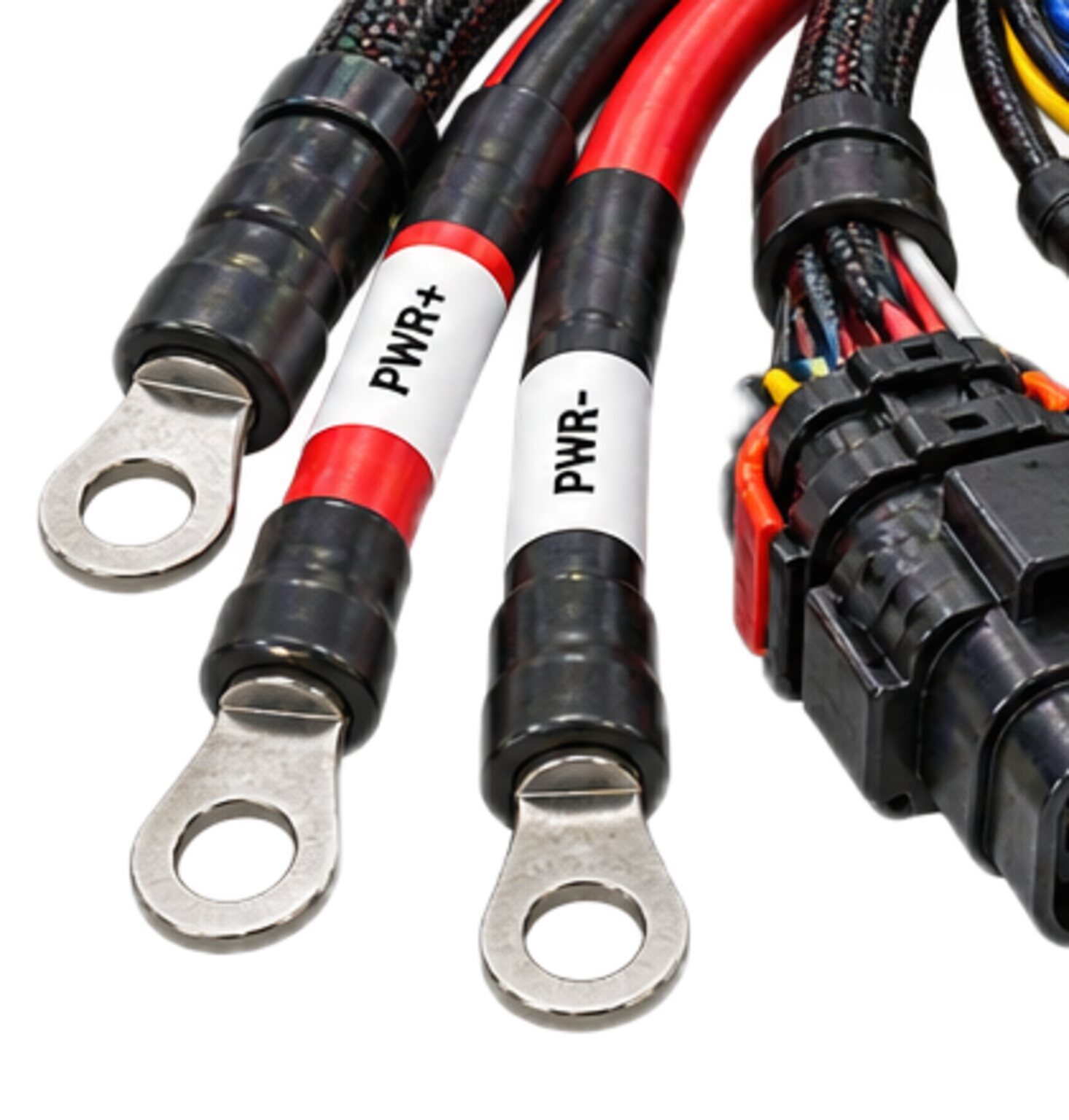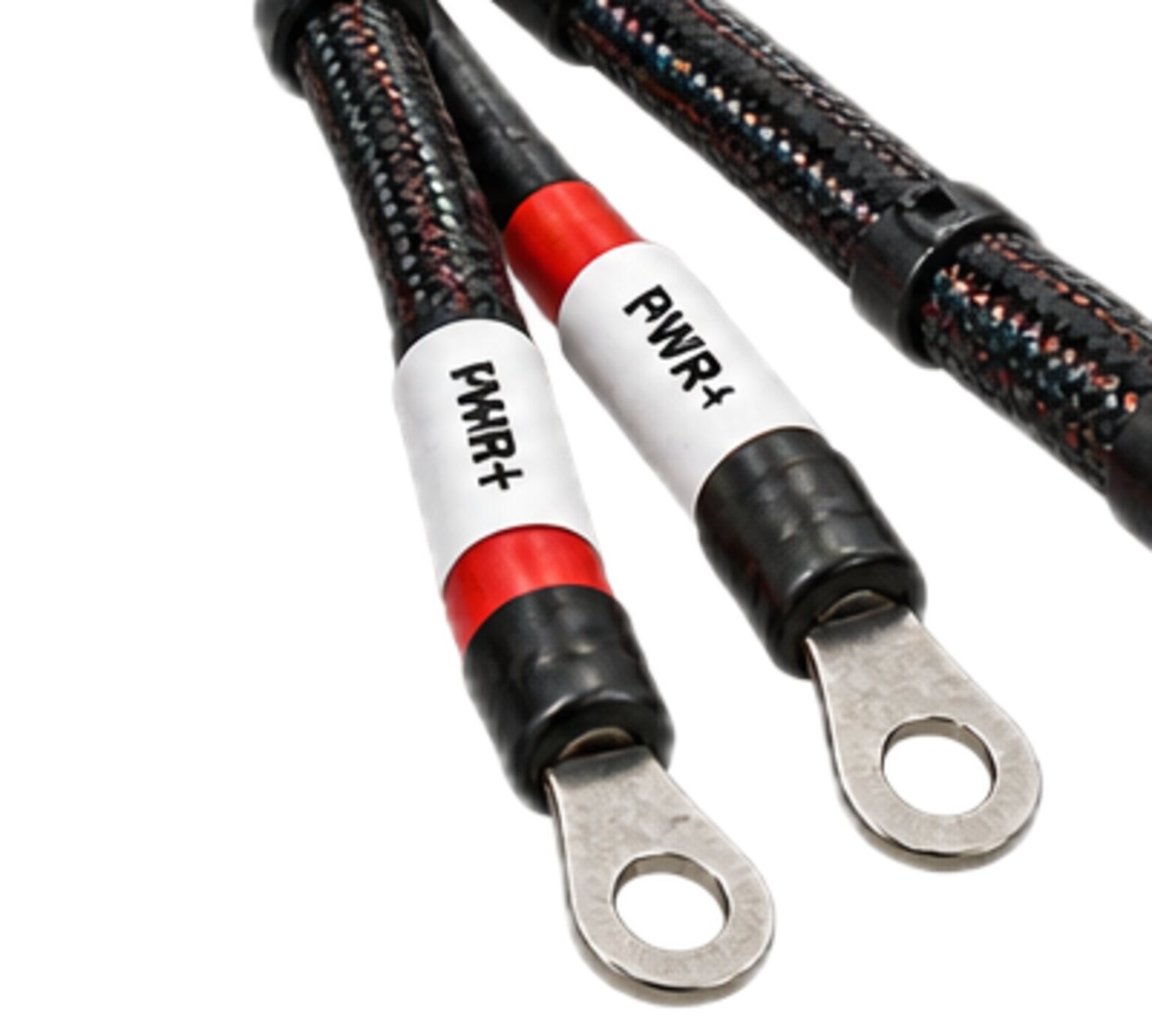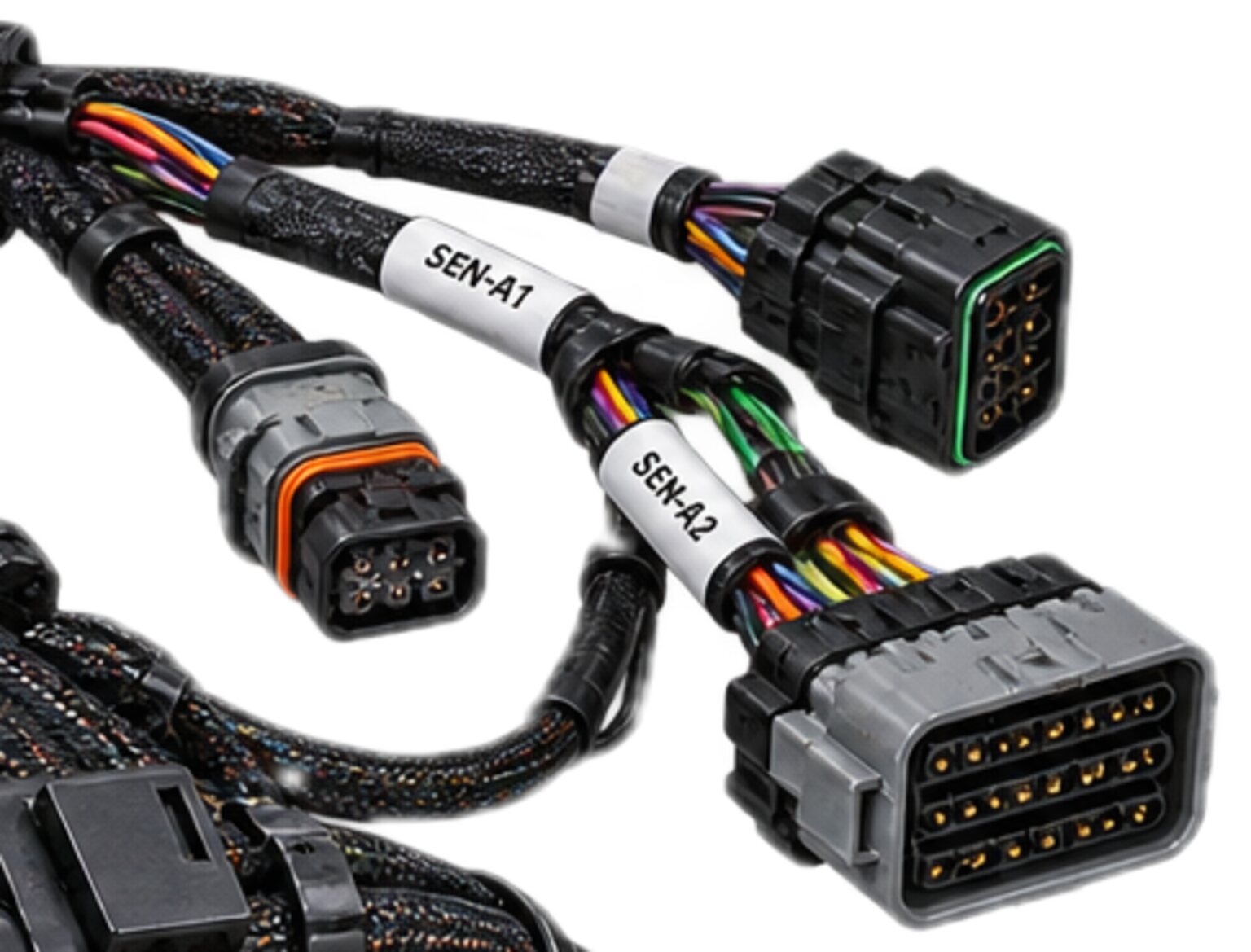
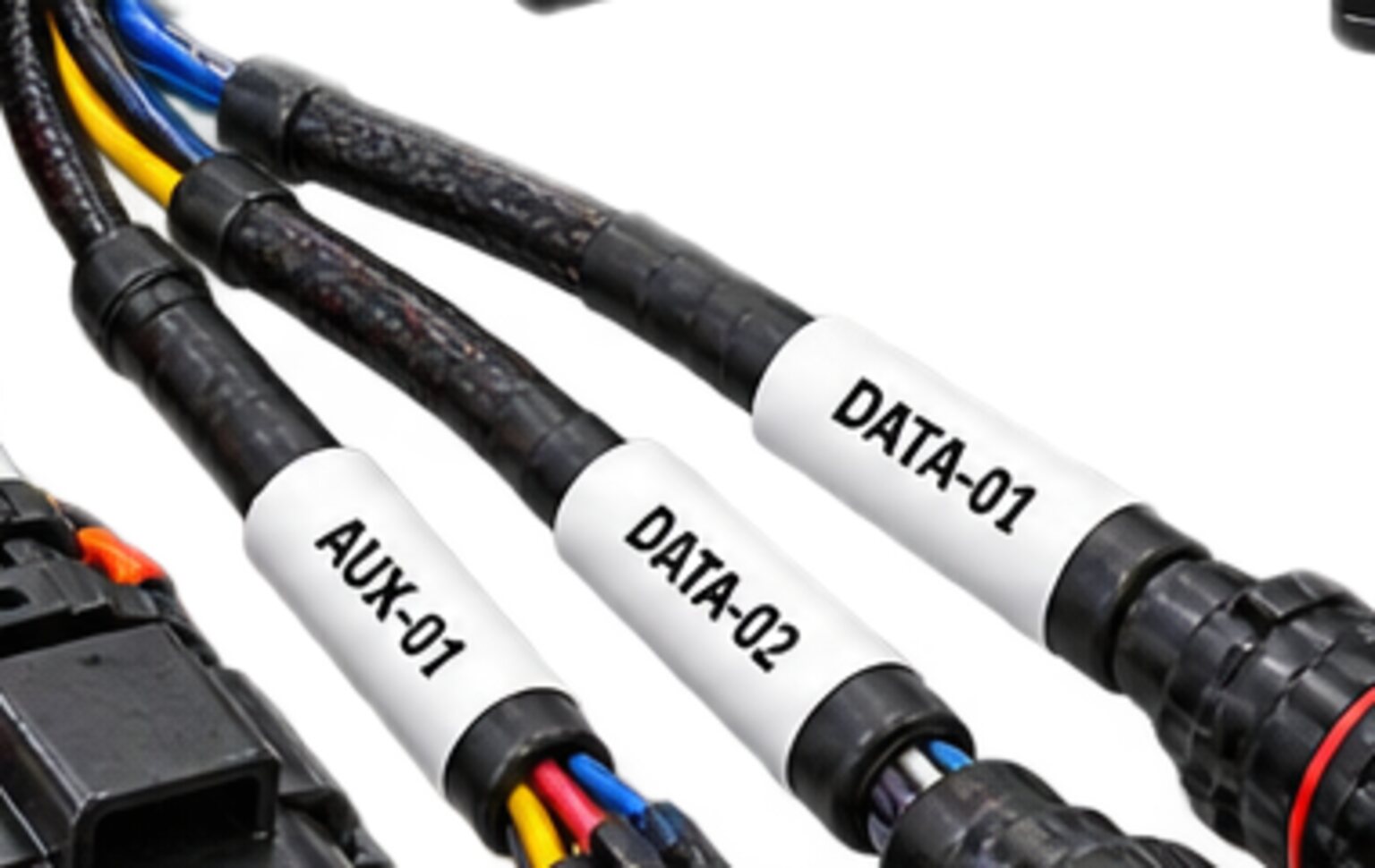
Every conductor carries its circuit identity, end to end. That is the whole discipline in one sentence. Everything below is the work of making it true on a loom that leaves the shop, lands on a machine, and is opened by a stranger years later with no drawing in hand.
A conductor with no identity is a piece of copper. It has a colour and a size, and so does every other conductor in the bundle. The drawing knows which one it is. The copper does not. The label is the only place the drawing and the copper meet, and it has to hold that meeting through everything the machine does for the rest of its life.
The seam
Two things meet at a label, and neither of them can see the other.
The first is the circuit. It lives on the drawing as a line with a name: the emergency-stop return, the feedback for one actuator, the negative feed to the logger. The second is the conductor itself, cut, stripped, crimped and inserted, physically indistinguishable from its neighbour. The drawing cannot reach into the bundle and point. The conductor cannot say what it is for. The label joins them, and the two sides age differently. The drawing is revised. The conductor is not. The label has to be right for the revision the loom was built to, and say so.
There is a second seam, and it is the one you have lived through. The shop builds with the drawing on the bench. The field lands the loom without it. The person terminating the far end is on a ladder, or under a machine, or at a remote site where the drawing is a photograph on a phone. What they have is the wire in their hand and the label on it. The label is built for that person, not for the shop.
Both ends and every break
A circuit runs from a source to a load, and on a machine of any size it does not get there in one piece. It passes through a connector at the enclosure wall, a bulkhead feedthrough, a splice where two branches join, a terminal strip in a junction box, and the plug that lets the whole loom come off the machine for service. Each of those is a break, and each break is two ends. The identity is carried at every one of them.
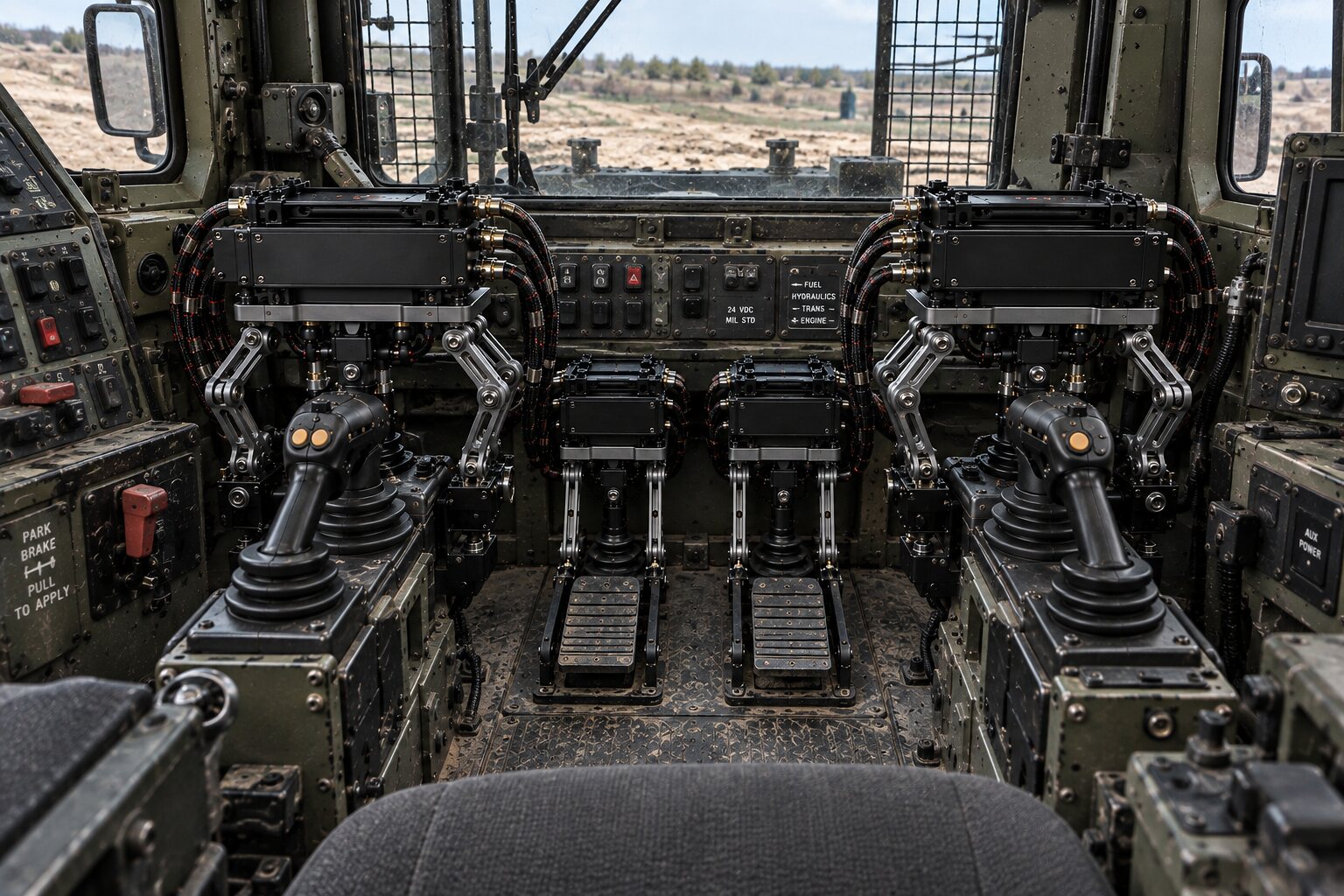
When a connector is de-mated, the circuit that was continuous a moment ago is two separate wires in two separate hands. If only the connector carried an identity, the wires behind it would be anonymous the moment the shell came apart. So the identity is on the wire, on both sides of the break, and the connector carries its own reference designator on top of that.
What the identity says is decided by the drawing's convention, and the shop follows it rather than imposing one. Some sets number every conductor segment uniquely. Some carry the circuit's name across every segment of the same node, so the emergency-stop return is the emergency-stop return on both sides of every break it passes through. The strongest convention carries both the circuit and the far end: this wire is this circuit, and its other end lands at that connector, in that cavity. Where a customer's set has no stated convention, the shop proposes one in the shop pack and has it signed before a single marker is printed.
Some conductors need more than a name. A shielded pair carries its identity on both cores and on its drain, and the drain's marker says which end terminates it, so nobody grounds the other end on a good instinct and builds a loop. A spare is a real conductor with a real identity that says it is a spare, terminated and capped at both ends.
The loom, each branch and each connector carry their own identities on the outside of the bundle. The conductor identities sit inside it, on every wire, at every end.
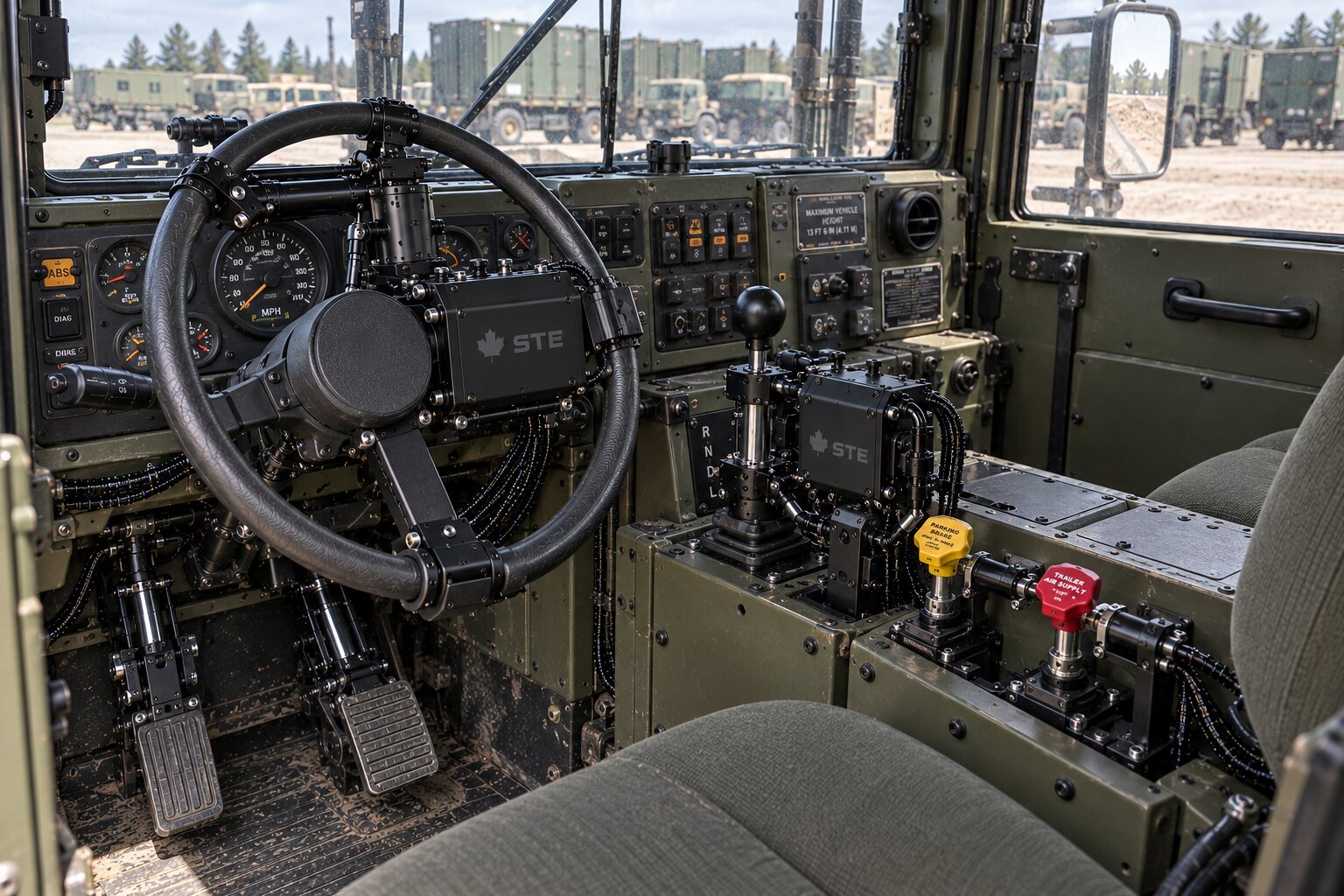
Every conductor carries its circuit identity, end to end.
The per-end cut sheet
The document the operator builds from is the cut sheet, and it is written per end, because the two ends of one conductor are two different jobs.
One end may land in a sealed circular connector: a crimp contact of one type, a specific cavity, a wire seal, a strip length that suits that contact and no other. The other end may land on a screw terminal under a ferrule, or in a rectangular housing with a different contact and a different tool. A cut sheet written per end puts the differences on the page instead of in the operator's head.
For each end, the sheet states what the drawing calls that conductor, its type and size as the drawing calls them, the connector and cavity or terminal it lands in, the contact or terminal to be applied, the tool and die that apply it, the seal or boot that goes over it, the label text for that end, and where on the wire that label sits. The cut length comes from the formboard, which takes it from the walked route and not from the schematic, because a schematic has no geometry.
The cut sheet also fixes the order of operations, and the order matters more here than anywhere else in the build. A sleeve marker is threaded onto the wire before the contact is crimped, because it cannot pass over a contact afterwards. Cut, mark, strip, crimp, insert. An operator who crimps first and reaches for the marker second has lost the sleeve for good, and the only recovery is a wrap-around label of a different material class on a wire that was supposed to carry a sleeve. That is a deviation, and it is recorded as one. The cut sheet exists to make the wrong order hard to fall into.
One source, two views
The wire list is extracted from the customer's issued drawing set. The label schedule is generated from the wire list. The cut sheet is generated from the wire list. The file that drives the printer is generated from the label schedule. Nobody types a label.
This is the interface between the shop and the drawing, and the promise runs both ways. The customer's set is the design authority: it decides what every circuit is called, where every end lands, and what convention the identity follows. We build to a customer's issued set and we return the manufacturing detail. Nothing is fabricated until the drawing is signed, and nothing is printed until it is either. In return, the shop promises that every label on the loom reads exactly what the signed set says, character for character, and that the schedule which produced it is in the shop pack that comes back to the customer.
The reason for one source is that two sources disagree. A wire list kept in one file and a label schedule kept in another drift the first time somebody corrects one and forgets the other. The operator builds to the cut sheet. The printer prints from the schedule. Both look right. The loom is wrong, and it is wrong in a way that only appears when a field crew reads a label that no longer matches the drawing they were sent.
When the drawing changes, the list is re-extracted and compared against the previous extraction. The comparison shows every conductor whose identity, landing or type has changed, and every downstream document is regenerated from the new list rather than edited. That is what lets a loom already in progress be dispositioned one by one: these markers are still right, these are cut off and replaced, these conductors are new.
What a label has to survive
A label on a bench survives anything. A label on a machine has to survive the machine, and the environment decides the material before the text is chosen.
| Where the loom lives | What reaches the label | What the marker has to do |
|---|---|---|
| A chassis rail, a grommet, an edge | Abrasion, every time the machine moves | Hold its print, and hold its grip on the wire |
| An engine bay, a fuel line, a hydraulic fitting | Fuel, oil, heat | Stay legible after a solvent rub, and not soften or shrink further |
| A machine that is hosed down | Detergent, pressure, standing water | Shed water without lifting, with no adhesive edge for a jet to catch |
| An uncrewed platform in the open | Sunlight, cold, thermal cycling | Not yellow, not embrittle, not fade to blank |
| Anywhere a person works on it | A gloved hand, poor light, a headlamp | Read from any angle without being turned, and not peel when grabbed |
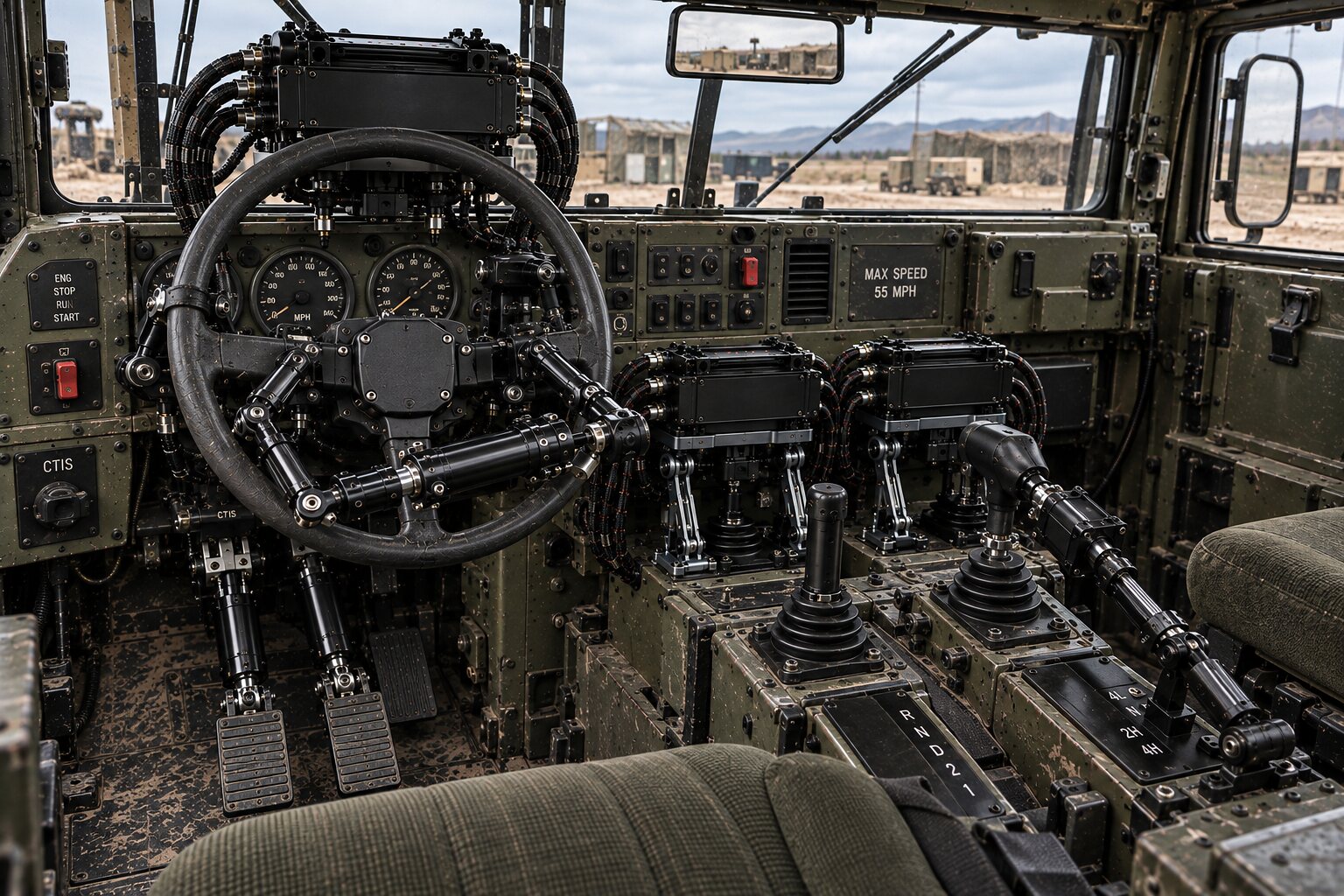
The sleeve marker is the default. It is a heat-shrink tube, printed by thermal transfer before it is shrunk, and once shrunk it grips the wire and moves with it. The grade is chosen for the environment: a polyolefin sleeve for a dry enclosure, a fluoropolymer sleeve where fuel and heat reach it, a sunlight-stable grade where the loom sits in the open. The text is repeated around the circumference so that it reads from whichever side is facing up when the loom is installed, which is never the side that was facing up on the board.
The wrap-around self-laminating label has its place, and its place is a cable with an overall jacket, or a re-termination in the field where a sleeve can no longer be threaded on. The print sits under a clear tail that wraps over it. Its weakness is the adhesive. Heat, oil and a pressure jet all attack the bond. It is not used on a bare conductor in a wash-down area or an engine bay.
Flag labels stand off the wire so they can be read in a dense bundle. They also catch, on a glove, on a panel edge, on a tie. They are used where the bundle is dense and static, and not where a hand passes or the loom flexes.
Hot-stamping the jacket is not done on thin-wall wire. The die that presses the character in presses into the insulation as well, and the nick it leaves is where the insulation eventually fails.
The assembly tag and the branch tags are engraved or laser-marked, on stainless or on a laminated plastic that does not fade, and tied to the trunk of the loom rather than stuck to it.
The print method is chosen with the material. A resin ribbon on a thermal-transfer printer lays down a print that holds under fuel and solvent; a wax ribbon does not, and looks identical on the day it is printed. The check is a rub with the thing the machine actually spills, done on a sample sleeve from the same batch before the loom's markers are run.
Where the label sits
The marker sits back from the termination, at a consistent set-back along the whole loom, and the set-back is chosen so the termination can be cut off and remade without losing the label.
The reason is the life of the loom. A contact gets damaged, or is extracted and found bent, or a crimp has to be redone. The field technician cuts the end off, strips, crimps a new contact and inserts it. If the marker was sitting hard against the contact, it went into the scrap bin with the old crimp, and the re-terminated wire is now the only anonymous wire in the connector. So the marker leaves enough wire between itself and the contact for that job to be done at least once.
- The marker is never inside the backshell or under the strain-relief boot, never under a heat-shrink transition, never under the tie that dresses the breakout.
- It sits just outboard of the boot's grip, where the wire emerges into the open and can be read with the connector mated.
- On a run long enough that neither end is in reach, the identity is repeated along the wire at intervals.
- On a bulkhead connector, the identity is visible on both sides of the wall.
- On a gland, it sits on the enclosure side.
- On a splice, there is a marker on each side, because a splice is a break and a break is two ends.
Orientation is consistent along the loom: the text reads the same way on every wire, so a person reading down a row of terminations reads them the way they read a list, not by turning each wire in turn.
A cable with an overall jacket carries two levels of identity. The cable's own identity sits on the jacket, at each end and at each side of every break. The cores carry their conductor identities on sleeves, applied where the jacket has been stripped back, before they fan out to their terminations.
The connector's reference designator sits on a marker at the neck of the connector, on the loom side. The loom's identity and serial are on a tag at the trunk, near the primary connector, where a person opening the machine finds it first.
The record for one assembly
A loom ships with a record, and the record is built for the day the loom is opened by someone with no drawing and no memory of it.
| What the record holds | Why it is there |
|---|---|
| The assembly identity and its serial | The key that matches the physical loom to everything below |
| The drawing set and revision it was built to | So a later drawing can be told from the one on the machine |
| The shop pack for that revision: wire list, cut sheet, label schedule, formboard | So every label on the loom can be decoded without the drawing |
| Material traceability: wire reel and lot, contact and connector batch, sleeve batch | So a bad batch can be traced to the looms that carry it |
| Tooling: the crimp tool and die for each termination, and their calibration state that day | So a crimp can be traced to the tool that made it |
| The sample crimp inspections done on that assembly | So the state of the tooling when these terminations were made is on the record |
| The continuity and isolation results for the finished assembly | What the tests proved on this loom, before it left |
| Inspection sign-off, by role | Who built, who inspected, who released |
| Any deviation or nonconformance, its disposition, and the customer's concurrence | So the loom on the machine is the loom on paper |
| The approval-route confirmation for that assembly | Where that assembly sits, decided before it was built |
The tests in the record are the ones described on the test and acceptance page. A continuity test asks whether every conductor lands where the schedule says it lands. An isolation test asks whether two circuits that must never meet are in fact separate. Both are run on every finished assembly before it leaves, and both are recorded against that assembly's serial.
An assembly for sale or installation in Canada is built under CSA and the Canadian Electrical Code, and the approval-route line shows which route that assembly took. Where that route is confirmed, and when, is set out under CSA and the Code.
The assembly is matched to its record by the serial and nothing else. The serial is on the tag at the trunk, in text a person can read and in a machine-readable mark a phone can, and the same serial is the record's filing key. It is not filed under the project name, the customer's part number or the machine, because a person at a machine years later may know none of those. The serial on the tag is the one thing they are guaranteed to have.
That is how the record is found again. A technician opens a machine, finds the tag, reads the serial, and asks for the record by it. The customer holds a copy, because the record is part of the manufacturing detail returned with the shop pack, and the shop holds a copy, both filed by the same serial. A serial is never reused. A loom rebuilt after damage gets a new serial, and the new record points at the old one. The full shape of what is kept is on the record page.
How a mislabelled loom fails
An unlabelled loom fails on the day it is installed, and it fails expensively but visibly. The field crew has to ring out every conductor before landing it. That needs the drawing, a meter, two people, and access to both ends at once, and on a machine both ends are rarely accessible at once. The crew improvises: a strip of tape and a marker at each end, written from what the meter says. Those tape labels are right on the first day and lying by the second, because tape does not survive the machine and handwriting does not survive the next technician. The machine ends up carrying a set of labels that nobody generated from anything.
A mislabelled loom fails later, and it fails because it is trusted. Nobody rings out a labelled wire. They read the label and land it. So a transposed pair of markers lands two circuits on each other's terminals, and what happens next depends on what the circuits were.
If one of them was power, the fault is loud and immediate: a supply into a signal input, a blown fuse, a damaged board, a machine that does not start. If both were signals on a bus, the fault is quiet and intermittent, a pair that reads correctly at rest and errors under a particular load or at a particular temperature, on a machine that is only ever wrong while it is running. If one of them was in the safety chain, the fault is the worst kind, because it can pass commissioning. An emergency-stop return landed on a spare, or on a jumper, reads continuous on a bench check. The chain looks whole. The machine runs. It fails to stop in the one condition the chain was designed for, and by then the loom has been on the machine for months and the person who landed it is on another site.
A label from an old revision fails in a different way. It matches a drawing that no longer exists. The person holding the current drawing cannot find the circuit on the loom. The person holding the old drawing lands it where the old drawing said, which is now wrong. Both of them did their jobs.
Who pays is the part you already know. The field crew pays in hours. The programme pays in schedule, because the machine does not commission until the loom is right, and the loom is not right until someone has found the wire that lies. A remote site pays in a truck roll to bring a person and a drawing to a machine that was supposed to have arrived ready to land. And where the circuit was the safety chain, the person standing next to the machine pays, in the currency nobody wants to name. The label that would have prevented all of it prints from a schedule that already exists.
The panel directory
Every electrician has stood in front of a panel whose directory card is blank, or worse, wrong. A blank card hides nothing. You know you are going to flip breakers one at a time while somebody shouts from the other room, and you budget for it. A wrong card is the one that hurts, because you trust it. You pull the breaker it names, the lights stay on, and you find out how much you trusted it when you touch the conductor. Every trade has a version of the directory card, and the lesson is the same in all of them: a blank label costs you time, and a wrong label costs you whatever you were trusting it to protect. A loom is a panel that moves, and its directory has to go with it, on every wire, at every end.
What we refuse
We do not hand-type a label. If a marker is not on the schedule, it is not printed, and a marker that appears on a loom without a line in the schedule that produced it is a nonconformance whether or not it reads correctly.
We do not label from memory, and we do not label after the fact. A conductor that has lost its identity on the bench, because a sleeve was missed or a marker was crimped over, is not rung out and re-labelled. It is cut out and replaced, from the cut sheet, with its markers on, in the right order. A label deduced from a meter is a guess, and a guess on a wire is the thing the whole discipline exists to refuse.
We do not print from a draft. A drawing set that is not signed produces no schedule, no cut sheet and no markers.
We do not put a label where a re-termination eats it. A marker under a boot, inside a backshell, or hard against a contact is a marker on the wrong side of the first repair.
We do not use a label material nobody has checked against the assembly's own environment. A sleeve that looks right and fades in a season is worse than no sleeve, because for a season it is trusted.
We do not ship an assembly without its serial tag, and we do not ship one without its record. A loom without a tag cannot be matched to anything, and a loom without a record cannot be decoded once the drawing moves on. A serial is issued once.
And we do not accept a wire list from one source and a label schedule from another, from anyone, including you. Two documents that can disagree will disagree. We take the signed set, extract one list, and generate everything else from it, and that is the only way we know the label in a stranger's hand, years from now, says what the drawing said on the day the loom was built.