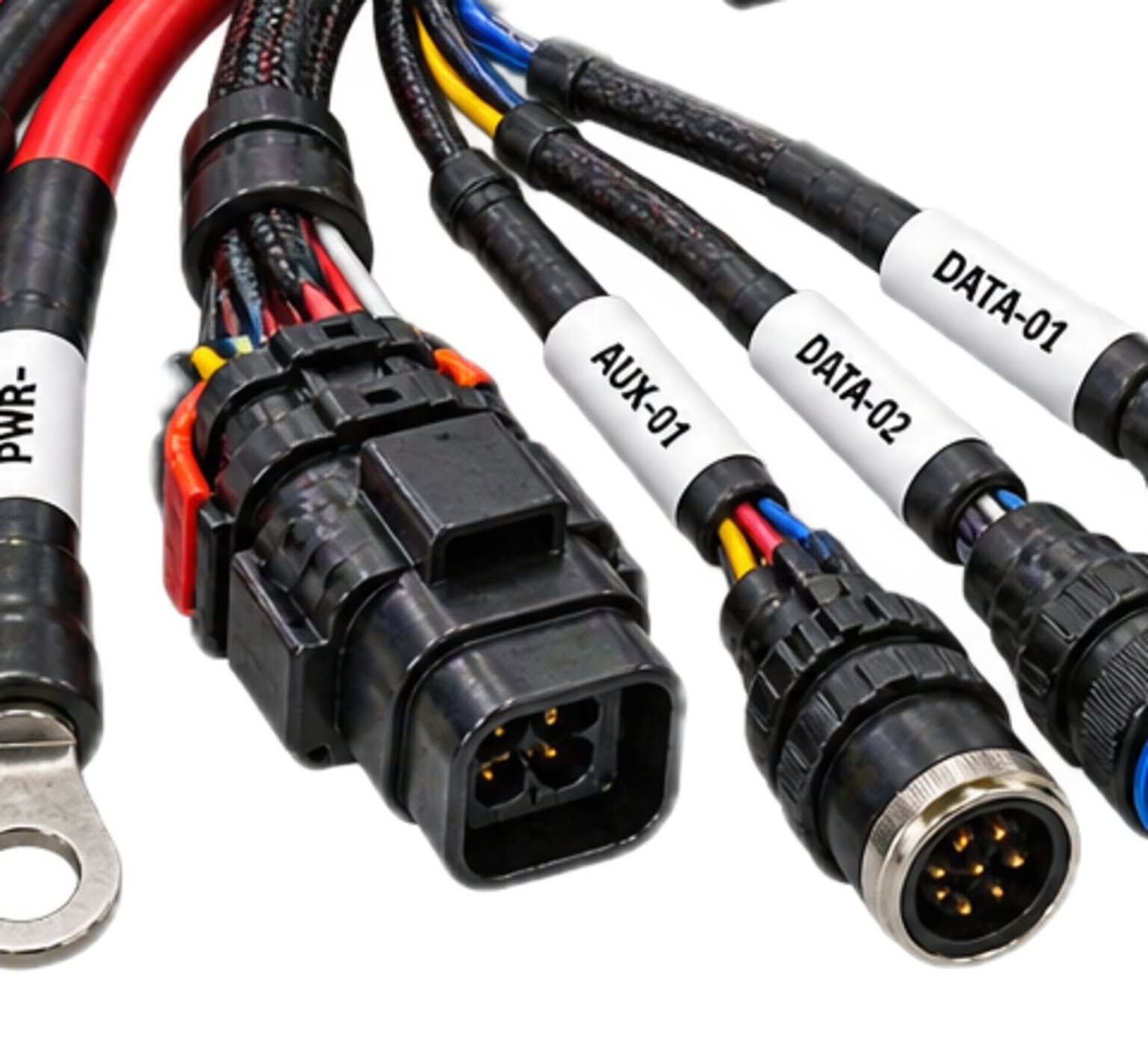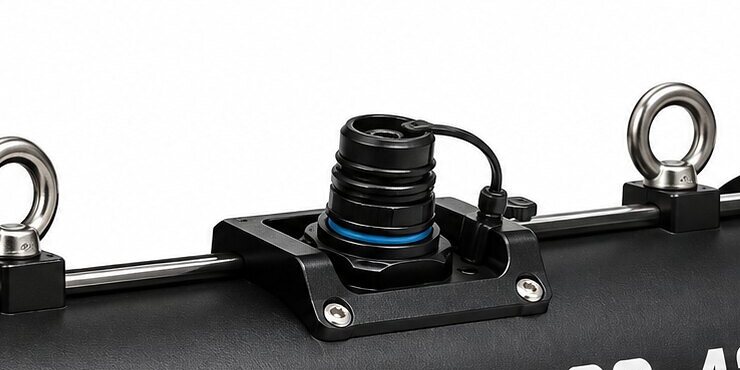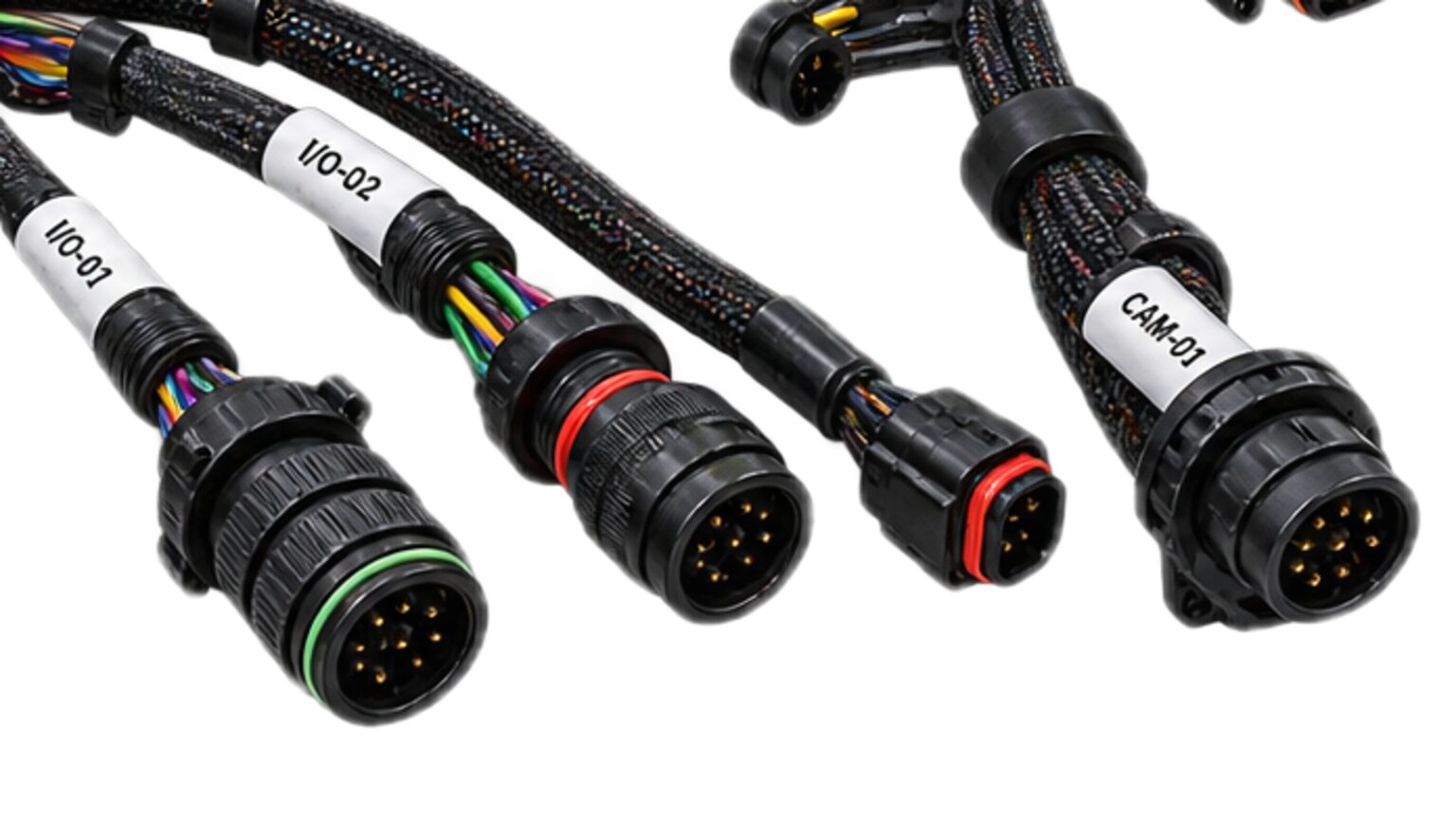
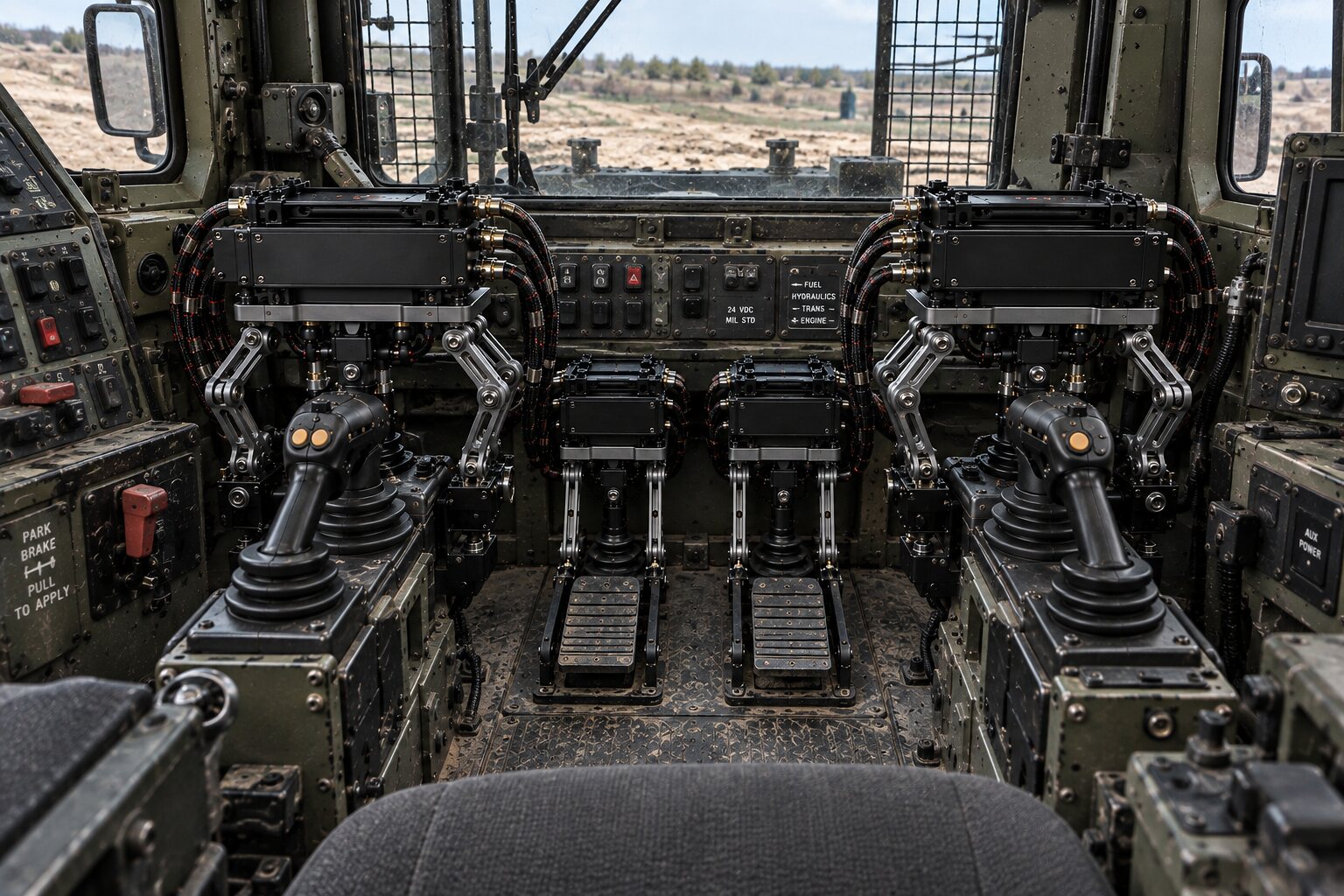
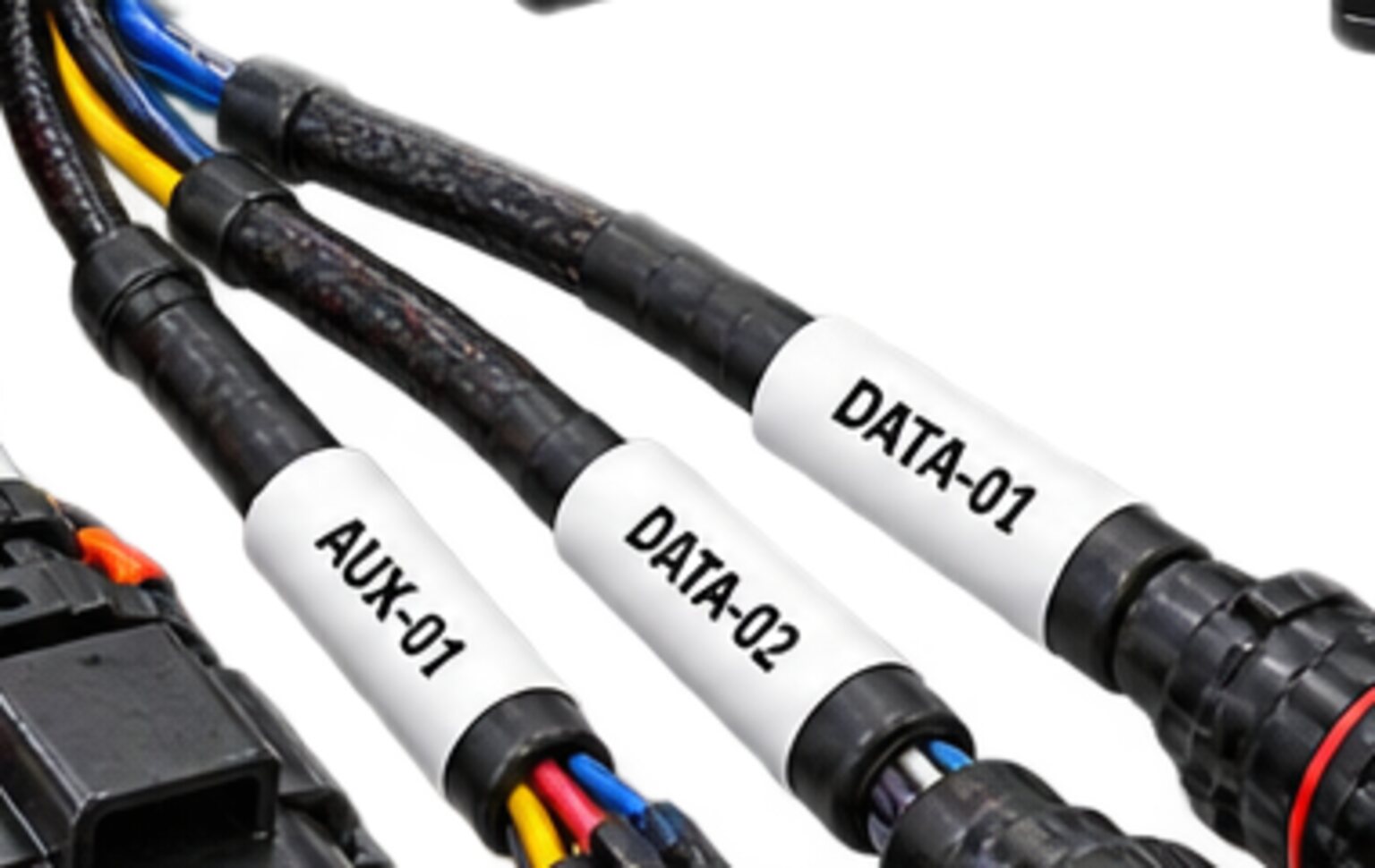
Every conductor in a harness carries its circuit identity, end to end. The record is where that identity is written down. A harness leaves the shop as two things: the assembly, and the file that says what the assembly is, what it was made from, who did each step, and what each test proved before it left. The assembly goes to you with a copy of the file. The file itself stays behind, kept under the identity marked on the loom, so that a stranger to the harness can open it on a day when nobody who built it is in the building.
A harness is a set of decisions made physical. The drawing decides the circuits. The wire list decides which conductor carries which circuit. The cut list decides the length of each run. The connector decides which contact sits in which cavity, and the tooling decides how well it is held there. None of those decisions is visible on the outside of a finished loom. A sleeved bundle with a shell at each end looks the same whether it was built to the signed revision or to the one before it, whether the crimp tool was checked that morning or not. The record is the only place the difference exists.
What the record holds
The record for one assembly is opened when the drawing is signed, takes the assembly's identity when that identity goes on at the board, and is closed when the last test is written up. Nothing is fabricated until the drawing is signed, so the first entry is the signature and the revision it was applied to. Everything after that is filed against the same identity. The file is the evidence behind every claim on quality.
| What is filed | What it answers later |
|---|---|
| The drawing, at the revision it was signed | Which harness this is, and what it was meant to be |
| The interface specification it was built to | What each end promised the other side of the seam |
| The wire list and the label schedule, generated from the same source | Which conductor carries which circuit, and what is printed on it |
| The cut list, as built | What each run was cut to, including anything corrected on the board |
| The material lots for conductor, contact and shell | Where the copper, the contacts and the shells came from |
| The tooling and its setting check | Which tool made each termination, and what it read when it was checked |
| The first-article proof | That the first assembly off the board matched the drawing |
| Every in-process check | What was looked at between steps, by whom, and what was found |
| The test sequence, with what each test proved | Which circuits were shown to be whole, and which were shown to be separate |
| The keying proof | That each plug refuses every receptacle on the assembly but its own |
| Who did each step | The person responsible for each termination, check and test |
| The disposition of anything that failed | What was found wrong, what was done about it, and who decided |
The wire list and the label schedule come from the same source. Generate the list of circuits and the list of labels separately and they drift, and a drifted label is worse than a blank one, because it is believed. Produced from one file, the identity printed on the sleeve and the identity written in the list cannot disagree. The label's side of the same discipline is on labelling and traceability.
The cut list is filed as walked, not as issued. The list that goes to the board is the design's list. The list that comes off it is the built list, with every corrected run marked and initialled. The difference between the two is where the design owner learns that a nominal length did not survive contact with the routing.
The tooling and its setting check are filed per termination, not per job. A crimp is a controlled deformation. The tool has a setting, the setting is checked against a sample before the tool touches a harness, and the record holds which tool, which setting, and what the sample showed. A crimp made with an unchecked tool is a crimp nobody can vouch for, and it looks identical to a good one.
The test sequence is filed as what each test proved, not as a pass stamp. A continuity test proves that a circuit is whole from one end to the other. An isolation test asks whether two circuits that must never meet are in fact separate, and it is run on every finished assembly before it leaves. The record holds the sequence in the order it was run, each result, and who ran it. The value a test is set to is the engineer's, stated on that assembly against its own specification, and written in the record for that assembly and nowhere else. What each test is for is on test and acceptance.
The disposition of anything that failed is the entry most often missing and the one most worth having. A termination that failed, was cut back and was remade is not a mark against the harness. A failed termination with no disposition is a question the harness carries for the rest of its life.
The approval route is filed here too. The components we specify carry their own certification. The approval route for a finished, project-specific assembly is confirmed with the certifying body for that assembly before it is built, and we tell you where yours sits before we build it, not after. That confirmation sits in the record beside the drawing it was confirmed against. How the route is decided is on CSA and the Code.
The identity on the loom
A record is only useful if the thing in your hands leads to it. Every assembly carries an identity marked on the loom itself, at the trunk, on a marker that survives the same handling the harness does. It is the key to the file. Each branch carries its circuit identities on the conductors, and the assembly identity says which wire list those circuit identities belong to.
The identity is applied at the formboard, before the first termination, and the record takes that identity at the same moment. Nothing is terminated on a loom that has no name. An identity applied at the end of a build is applied by someone matching a finished bundle to a pile of paperwork, and that matching is the first place a record and a harness part company.
A loom that arrives with no identity is treated as unknown. It is not "probably the one off the second machine". If the loom was made here, its conductors still carry their circuit identities, and those are read back against the wire lists on file until the assembly is matched. The match is made by reading every circuit, not by recognising the bundle. If the loom was not made here, or cannot be matched, it has no record and the shop will not write one for it. It can be tested from scratch as an unknown assembly, but it does not inherit a file it cannot prove is its own.
A value nobody measured never reaches a wire.
What leaves with the harness
You receive the harness and a copy of its record. The copy is the same file the shop keeps, not a summary of it. It shows the revision the harness was built to, the label schedule that matches what is printed on the sleeves, the material lots, the test sequence with what each test proved, and who signed each step.
The drawing's owner receives the manufacturing detail. We build to a customer's issued set and we return the manufacturing detail, and the record is part of that return. The design and the drawing master belong to the programme that issued them. What the shop generates from that set is owed back to the drawing master: the wire list, the label schedule, the cut list as walked, the formboard layout, the tooling settings, the test sequence and the dispositions. It goes back so that the next revision is drawn against what was built, and so that any competent shop could build the next harness from the same pack. A record kept private from the drawing's owner makes the harness depend on the shop that built it. A harness should depend on its drawing, not on its builder.
The shop keeps the original under its identity for as long as the assembly can be in service, as the drawing's owner states that period, and the owner can call for it at any point in it.
Finding it again
The day the record earns its keep is the day a machine stops in the field and the person opening the loom is seeing it for the first time. That person has no drawing with them, does not know who built the harness, and is working with a headlamp and a meter. The record is written for that person, not for the shop.
They find the identity at the trunk and a circuit identity on the conductor they suspect. The assembly identity opens the file. The file names the drawing revision, and the revision pins the wire list. The circuit identity on the conductor appears in the label schedule, and because the schedule and the wire list came from one source, the label in their hand and the line in the list agree. Before a meter has touched anything, they know what the conductor is for, where it goes, what contact is on the end of it, what tool made that termination, what the setting check read that day, who made the crimp, and what the test proved about that circuit before the harness left.
That changes the question. Without the record, the first question is what this thing is. With it, the first question is what changed. If the file shows the circuit was whole and isolated when it left, the fault arrived afterwards: in transport, in installation, in a mating cycle, in service. The search moves to the field, where the fault is.
The record is kept under the identity on the loom and under nothing else: not a job name, which the field does not know, not a customer's project, which may have changed hands, and not a person's memory, which leaves when they do. The identity is on the harness and the harness is on the machine. That is the only chain that still holds years later.
A record written afterwards
A record written after the fact is worse than no record, and the reason is what each one does to the person reading it.
No record says unknown. The technician treats every circuit as unknown and tests accordingly. Slow, but not wrong.
A record written afterwards says known, and it is wrong at exactly the points where being wrong matters. A record written from memory records what should have happened: the tool that is usually used, the setting it is usually at, the lot that was on the bench. It does not record the substitution made on the second day when the first reel ran out, the termination that was cut back and remade, or the run that was corrected on the board. Those are the entries a technician is looking for years later, and they are the entries memory smooths over, because they were exceptions and memory keeps the rule.
A value nobody measured never reaches a wire. It never reaches the record either. A setting check written in from what the setting should have been is a figure nobody measured, and it sits in the file beside figures that were. The reader cannot tell them apart. An after-the-fact record does not add a little uncertainty to a file. It removes the reader's ability to know where the uncertainty is.
So each entry is written at the step where it happens, by the person doing it: the setting check when the tool is checked, the lot when the reel is loaded, the disposition when the failure is found. Nothing is filled in at the end from the board.
How a missing record presents, and who pays
A missing record does not present as a missing record. It presents as a harness that cannot be trusted.
A machine has a fault and the harness is a suspect. It cannot be ruled in or out from paper, so it has to be rung out from scratch: every circuit checked, every isolation re-tested, every connector opened to see what is in each cavity. The machine is down for the length of the re-verification, not the length of the repair. If the harness turns out to be fine, that time bought nothing but the knowledge that should have been in a file.
The design owner pays too. Without the manufacturing detail returned, the drawing master cannot say whether the harness in the field matches the drawing. A fault found and fixed in the field is invisible to the drawing, and the next harness is built to a revision that does not match the one that works. The missing record spreads. It becomes a drawing that cannot be trusted either.
Where the harness carries a safety chain, the currency changes. An emergency stop circuit that is on the drawing, but that nobody at the shop showed to be whole, is a circuit nobody knows is whole. The person who pays for that is the one standing next to the machine when it does not stop.
And the shop pays. A harness that cannot be trusted was built by a shop that cannot be trusted, whether or not the harness was any good.
The bill arrives as a truck roll, a day of downtime, a drawing revision drawn against a harness nobody can describe, and a hazard nobody can find on paper.
The service book
A truck with its service book sells for more than the same truck without one. The book did not change the truck. It lets a stranger know what was done, when, and by whom, without pulling the engine to find out. A buyer without the book is not buying a worse truck. They are buying a truck nobody can vouch for, and they price it that way.
A harness with its record is the same object as a harness without one. Same copper, same crimps, same shells. It is worth more for the same reason the truck is. Everything anyone will ever need to know about it can be known without cutting it open.
What we refuse
We do not release a harness without its record. A finished assembly with a file that is not closed is not finished, and it stays on the bench.
We do not write a record after the fact. Each entry is made by the person doing the step, at the step. A record that would have to be reconstructed is not reconstructed. The gap is left as a gap, and the assembly is treated as one with a gap in its record: checked again where it can be, and not released where it cannot.
We do not keep a record private from the drawing's owner. We build to a customer's issued set and we return the manufacturing detail, and the record is part of the detail. A shop that keeps it back has made the harness depend on the shop, and we refuse to be that dependency.
We do not enter a figure that nobody measured. A value nobody measured never reaches a wire, and it never reaches the file. If a check was not done, the record says so, and the harness does not leave until it has been done. We refuse to guess, and we refuse to let the file guess for us.