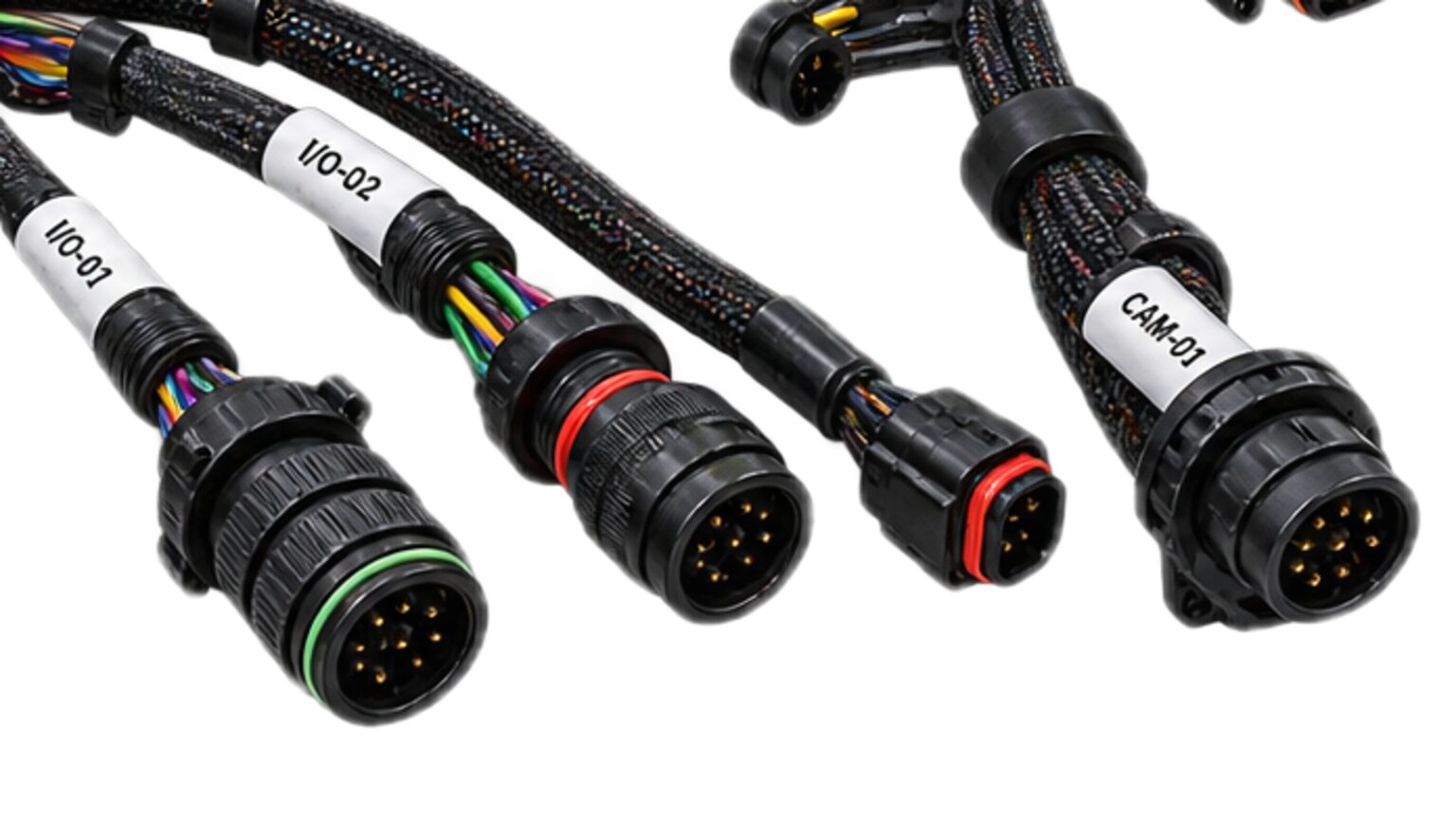
A harness is built twice. The first time is on the machine, by a person with the signed drawing, a tape and a marker, walking the route the bundle will take from one connector to the next. The second time is on the board, by a person laying wire to the marks that walk produced. The second build cannot be better than the first.
Where the drawing meets the copper
A drawing set describes a harness in two ways that do not, on their own, add up to a build. The wire list says what is connected to what: this circuit, from this connector and cavity to that connector and cavity. The routing says which way the bundle goes: along this frame member, through that grommet, under this clamp, out to the device. Neither says how long any wire is.
Length is the thing the shop has to supply, and the thing it is least entitled to invent. A wire is cut once; it can be shortened afterwards and never lengthened. The seam here is the meeting between a drawing, which is an abstraction of a route, and a piece of copper, which is a physical length that has to lie in a real machine around real steel. The drawing is right in every way except the one a pair of cutters needs, so the shop's first act on a new set is not cutting. It is walking.
The route is walked before the cut list is written
The cut list turns a wire list into a set of lengths, and it cannot be written from the drawing alone. A routing drawing is a projection. A branch that climbs a frame member and comes back down over a bracket looks, in plan, like a short line; in the machine it goes up, over and down. Every branch that leaves the flat of the drawing is longer than the drawing shows. A dimension scaled off a drawing is a guess wearing a ruler.
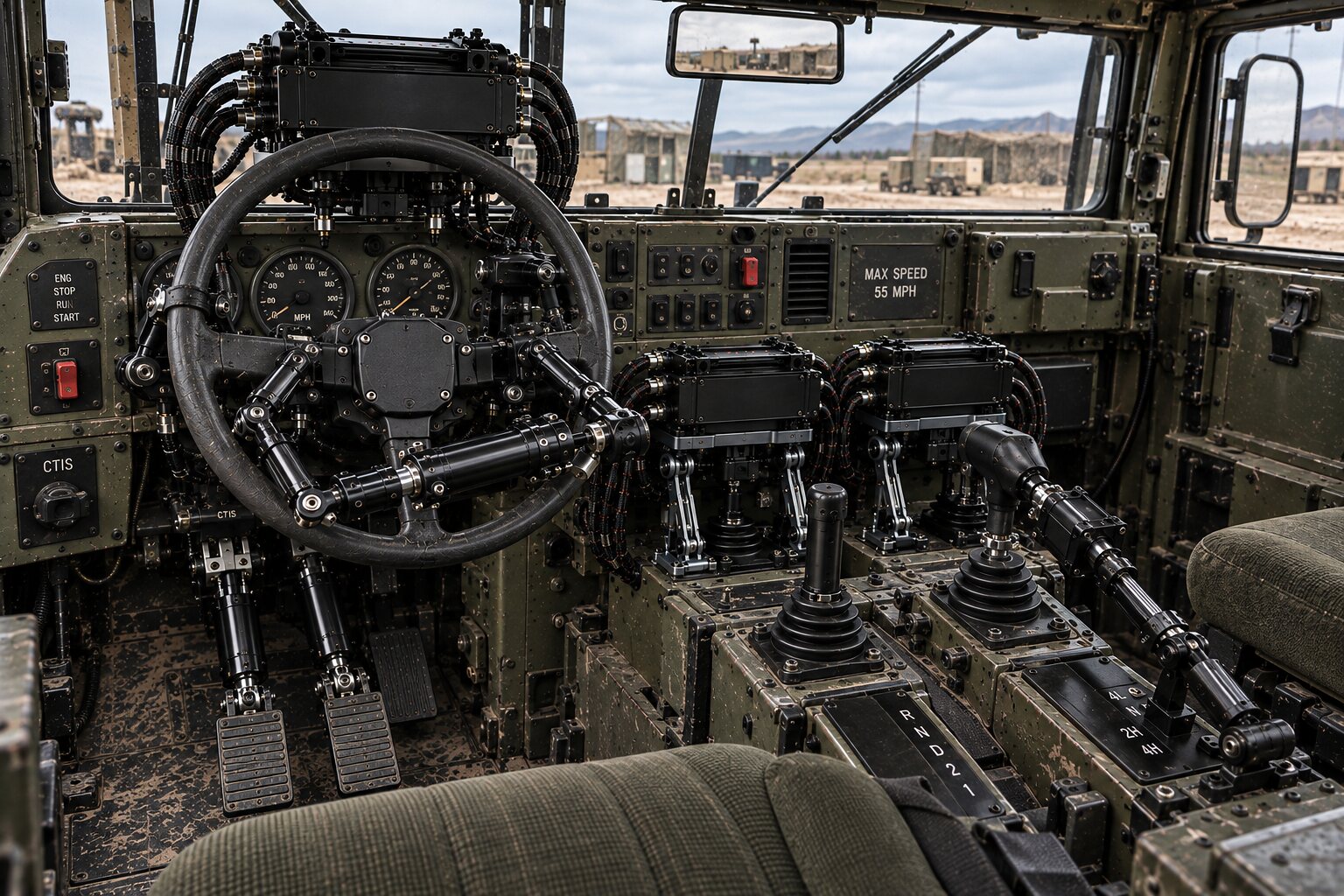
So somebody walks the route. It happens on the machine where it exists, or on a mock-up or fixture the design authority has accepted as standing for it. A person follows the routing drawing with the connectors held in their mated orientation and measures the path the bundle will actually take: through each clamp and grommet, around each edge with the bend the wire will really make, out to each device. Anything that moves is moved through its full travel while the measurement is taken, because a harness that crosses an articulating joint has to be long enough at the far end of that travel. Where the drawing calls for a service loop, the loop is walked too.
A value nobody measured never reaches a wire. Every length on the cut list is traceable either to a measurement somebody took on the route or to a dimension the design authority issued on the drawing. There is no third source. A length that is neither measured nor issued is not on the cut list, and a wire that is not on the cut list is not cut. The routing discipline has its own page at routing; the cut list is downstream of it, and nothing is downstream of the cut list except copper.
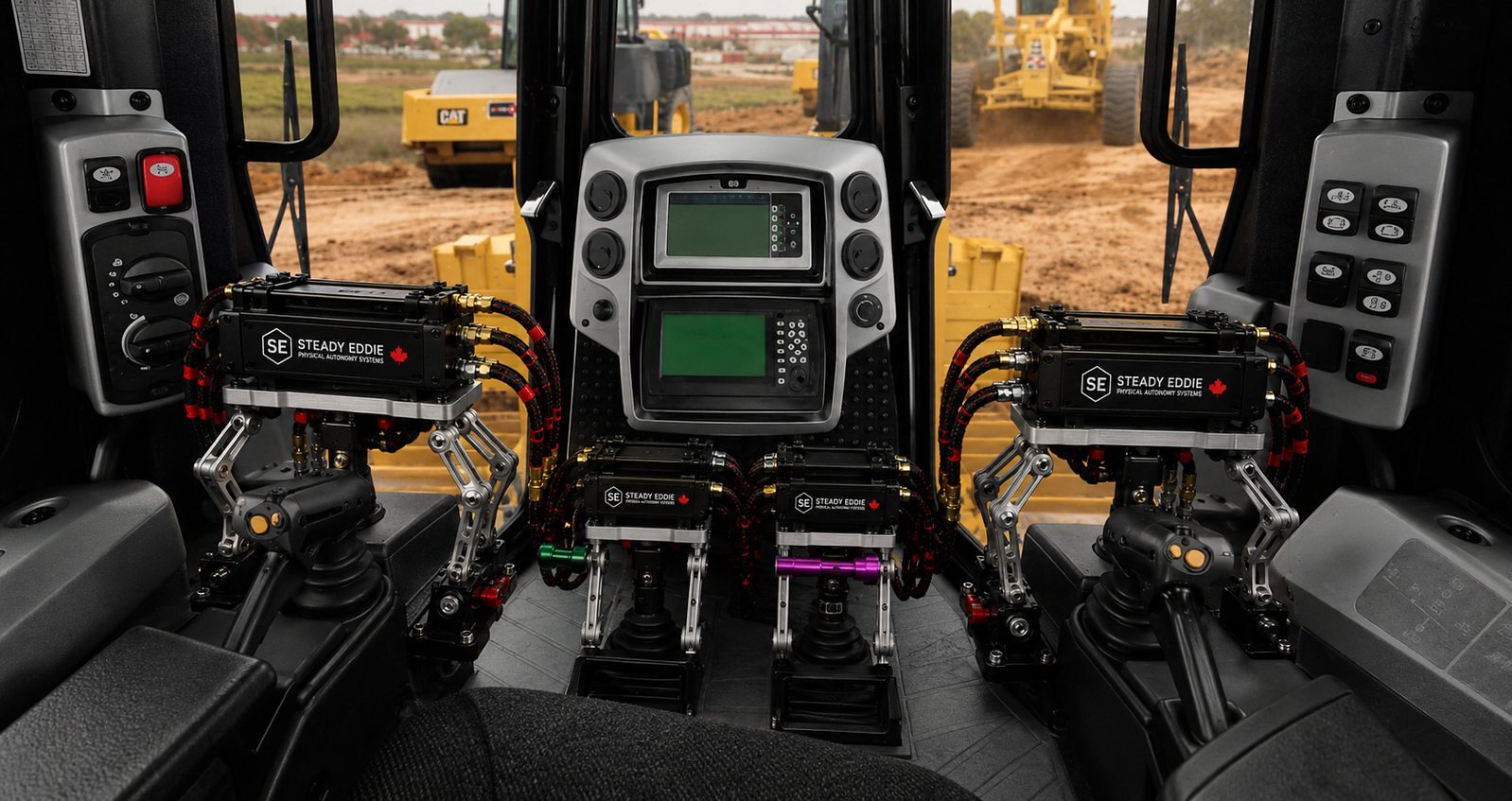
A value nobody measured never reaches a wire.
What the cut list carries
A harness is a tree. The trunk runs where the clamps are and a branch leaves it where a device is, so the drawing decides where every split sits and the walk measures it. Each line of the cut list develops one conductor into a length: the trunk distance from where the wire enters the bundle to where its branch leaves it, the branch distance out to its connector, and the allowance each termination needs for the strip, the crimp barrel, the depth the contact seats in its cavity, the room a backshell takes and the service loop if the drawing gives one. Then the corrections a bundle imposes on every wire inside it. A wire on the outside of a bend travels further than one on the inside. A twisted pair consumes more length than its straight path. None of these is a number the shop invents. Each is a relationship, applied to a measured route one conductor at a time.
The cut list also carries what is not wire. Every sleeve is material with a length, and it has to be threaded on before the second connector is terminated, so the lay-up sequence writes itself backwards from the last termination. A cut list is written to a drawing revision. When the drawing revises, the cut list is re-issued for every conductor that passes through the changed section, which on a trunk change is most of them. There is no cut list that outlives its drawing.
Kitting, where a drawing becomes material
A kit is picked against a signed drawing revision. Nothing is fabricated until the drawing is signed, and kitting is where that sentence is enforced, because the kit is the first act that consumes stock. Each conductor is cut to its developed length and marked with its circuit identity at cutting, so that the wire carries its own name from the moment it exists as a separate piece. The marking discipline is on the page for labelling and traceability.
What a kit refuses to leave stores without is the whole harness in pieces. Every conductor, cut and marked. Every contact the wire list calls for, with the extra contacts and offcuts the crimp tool needs for the setup crimps that prove it before the first production crimp. Every connector body, backshell, seal and cavity plug for the cavities the pin list leaves empty. Every sleeve, tie, boot and label. The kit list, stating the drawing revision the kit was picked to. And the traceability: the spool each wire was cut from and the lot each contact and connector came from, recorded against the kit, so that a harness can be traced to its material and its material to every harness it went into.
The kit is picked to the specified part. A substitute for a specified contact, seal, wire type or connector is not a shop decision; it is a change, and it goes back to the design authority as one. CSA and the Canadian Electrical Code govern what can be installed here, and the kit is where the certification of every component in it is checked against the drawing. The components we specify carry their own certification. Where the finished assembly sits for approval is set out under CSA and the Code.
A kit that is short one item waits, because a board that starts on an incomplete kit produces a harness with its bundle tied over the place the missing part needed to go. Holding a kit is cheap. Opening a tied bundle is not.
The formboard is the master jig
The formboard is the harness drawn at full size in the flat, fixed to a board, with pegs, nails or forks at every point where the bundle has to be held to the line. It is the jig the harness is built on, and once it is proven it is the master every unit of the run is built to match.
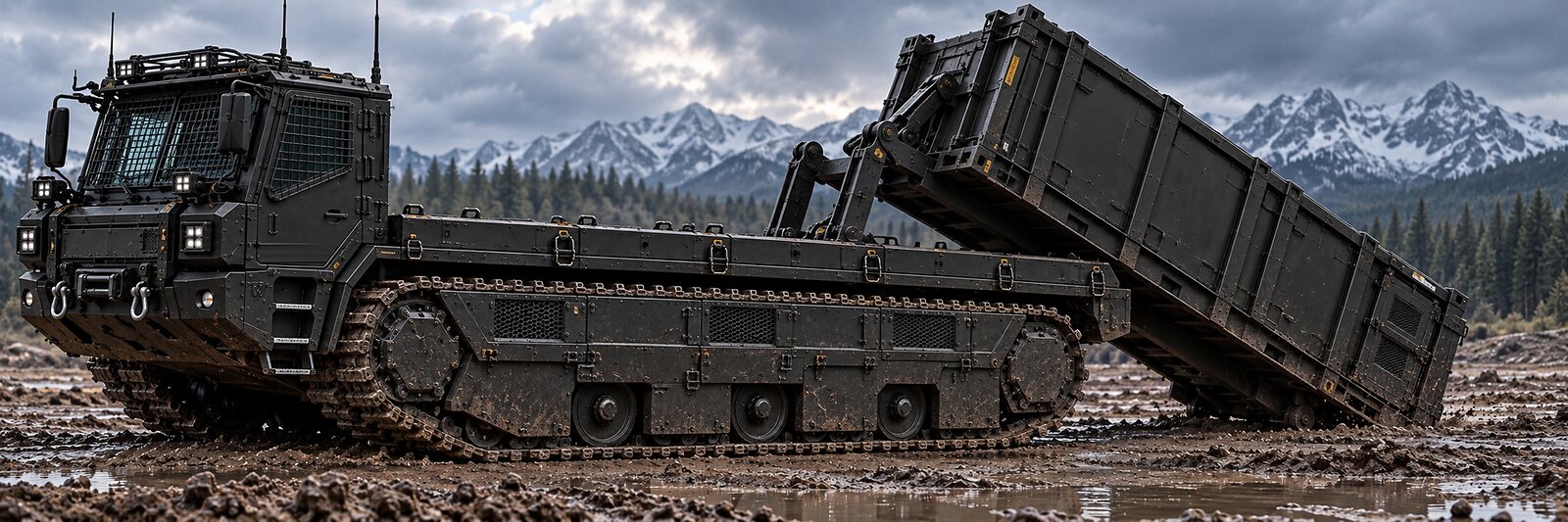
Drawing a board is the act of flattening a tree. A harness in a machine occupies three dimensions; on the board it lies flat. The trunk is drawn at its developed length, not its plan-view length. Each breakout is placed at its developed distance along the trunk, the distance walked and not the distance seen. Each branch is drawn at its developed length, in a direction chosen so that branches do not cross. Connector positions are drawn with their orientation, so that the bundle leaves the backshell in the direction the machine needs and a person mating that connector with gloves on and no line of sight is not fighting the set the bundle took on the board. Where the drawing keeps a safety circuit out of the power bundle, the board carries that separation physically: a separate lane with its own pegs, joining the main trunk only at the clamp marks where the drawing allows the two bundles to be held together. Safety circuits never share a bundle, a splice or a shell with power, and on the board that rule is a second row of nails.
Pegs go in at the breakouts and bends, and holders at the connector positions hold the connector bodies at the drawn position while the wires are terminated into them, so that the length from the last peg to the contact is the drawn length. The board is labelled with the harness identity and the drawing revision it is built to.
The board is the shop's document, not the customer's. The customer's programme owns the design and the drawing master. We build to a customer's issued set and we return the manufacturing detail: the cut list, the formboard drawing, the kit list, the lay-up sequence and the first-article record go back to the programme as its shop pack.
The first article proves the board
The first harness laid on a new board is not the first unit of the run. It is the test of the board. It is built fully, tied and sleeved as production units will be, because a loose lay-up proves nothing about a tied one.
Then it is checked. Dimensionally, against the drawing: every breakout position, branch length, connector orientation, tie and sleeve mark. Electrically, as every unit is checked before it leaves: a continuity check asks whether every conductor lands in the cavity the pin list says it does and nowhere else, and an isolation check asks whether two circuits that must never meet are in fact separate. What those checks are set to is stated on the specific assembly by the engineer responsible for it, against that assembly's own specification, and not here. Then, wherever the machine or an accepted fixture exists, the first article is offered up into the route it was measured on. Every connector has to reach its mate with the service loop present and without tension. Every clamp has to close on a tie or sleeve mark. Nothing that moves may touch it through its full travel.
What the first article finds goes into the board, and the cut list moves with it, recorded against the board's revision. Where it finds that the drawing and the machine disagree, the shop does not resolve it by moving a nail. It raises it, and the design authority decides which is right and revises the drawing. A nail moved quietly produces a run of harnesses built to a board that matches no drawing. Only when the first article fits is the board released. The acceptance discipline is on the test and acceptance page.
What a board's length does to a building and a schedule
A harness is as long as the route it lies in, and a formboard is as long as the harness. A board can be inclined, but a long bundle on a steep board drags off its pegs under its own weight, so a long board sits nearer flat than upright, and a flat board is floor. Floor is the resource a harness shop runs out of first. Boards not in production are racked flat and dry, because a plotted drawing cockles with moisture and a board that has moved has to be proven again.
A route can be folded on the board only where the fold changes neither a developed length nor the geometry of a breakout, and because a fold hides itself from the eye, it is marked and the board drawing says where it is.
The schedule consequence is stated before anyone asks for a date. The board is on the critical path of the first unit. Nothing is laid up until the board is drawn and built. The board is not drawn until the cut list is written. The cut list is not written until the route is walked. The route cannot be walked until there is a machine, or an accepted fixture, to walk it on. And the board is not proven until a first article has been built on it and offered up. The first harness of a run carries all of that in its lead time; every harness after it carries only lay-up and test. A customer who needs a harness before the machine it lies in exists is asking for a board drawn from a guess, and the shop says so at the start rather than at the truck.
Lay-up on the board
Lay-up is the wire going onto the board, and the order it goes on in is part of the drawing. The deepest wires, the ones that run the full trunk to the furthest breakout, are laid first along the pegs, and the shorter branches are laid over them. Which wire lies on the inside of a bend and which on the outside is decided by that order, and the cut list's allowances assumed an order, so it is not improvised. The safety lane is laid on its own pegs.
- A breakout is held at its drawn point by a fork or a pair of pegs while it is tied.
- A breakout tied too tight crushes insulation at the point that will carry every flex the branch ever sees.
- A breakout tied too loose lets the branch migrate along the trunk in service, and a branch that migrates has changed its own length at both ends.
- The tie at a breakout is the tie that matters most on the harness, and it is inspected first.
Spot ties go on at the marks, placed so that no tie sits under a clamp position, because a clamp will not close on a tie. Tie tails are cut flush, because a tail is a blade that finds the neighbouring insulation the first time the bundle moves. Sleeving goes on in the sequence the cut list forced, threaded before the connector that would block it is terminated. A sleeve over a breakout is a branched sleeve or a shrink boot, never a straight sleeve slit to fit.
Terminations are made with the connector held in its holder at the drawn position. The crimp tool is set up on sample crimps from the kit's offcuts, examined and pull-tested before the first production crimp; the pull test proves that the crimp holds the conductor, and the crimp-height check beside it proves the tool is set for the contact and wire in front of it. Contacts are inserted to the pin list and each is checked for retention. When the last termination is made the harness is tied, and only then is it lifted from the pegs, into a tray with its connectors capped, so that it arrives at test and then at the machine in the shape the board gave it.
What each side promises the other
The drawing promises the shop a route, a wire list, clamp positions, connector orientations, segregation and service loops. The shop promises back a cut list and a board that reproduce it in copper, and a shop pack.
When the drawing changes, the change runs the whole length of this page. A clamp that moves along a frame member changes the developed length of every conductor that passes under it. A connector that rotates changes the way the bundle leaves the backshell, which changes a breakout angle, which changes the board. So a revision is met by walking the changed section again, re-issuing the cut list for every affected conductor, revising the board, and proving the changed section on a new first article. A revision that is small on paper is not necessarily small on the board.
When the machine changes and the drawing does not, the shop does not follow the machine. A harness built to chase an as-built deviation nobody has drawn matches nothing on record. The drawing catches up first, or the harness is built to the drawing and the discrepancy is on the table before the truck leaves. That is the boundary between building to a customer's issued set and taking the customer's design authority, and the shop stays on its side of it.
How a guessed length fails
A wire built to a length nobody measured fails in a small number of ways, and anyone who has installed a harness has lived through all of them.
| The error | In the shop | In the field |
|---|---|---|
| Cut short | Reaches its cavity on the board only under tension, and the crimp is made anyway because the run is waiting | Reaches on the machine under tension, the contact works against its retention with every vibration cycle, and opens intermittently months later, on a machine that is already in service |
| Cut long | Bunches in the bundle, and the extra has to be tucked somewhere the drawing did not plan | The tucked loop chafes on the frame, or lies across something that moves and fatigues at the tuck |
| Breakout placed wrong | Every wire on the branch is short or long at once, and every clamp mark past it is out of position | The branch crosses a moving joint at the wrong angle, or a clamp lands on bare bundle and becomes the wear point |
| Service loop omitted | Nothing; the board does not know the loop is missing | The connector cannot be unmated without pulling the harness, so the technician pulls, and the contacts take it |
| Termination allowance guessed | The strip is wrong or the contact seats short, and it looks acceptable from outside | Strands work loose in the barrel and the joint heats under load |
| Scaled off the drawing | Every branch that leaves the flat of the drawing is short before a wire is cut | The whole run does not fit, and it is found on the assembly line |
The most expensive row is the first one, because a wire cut short does not fail in the shop. It fails later, on a machine that moves, as an intermittent, and it is found by replacing every other part first. The error was a length. Nobody suspects a length.
Who pays, and in what
A wire cut wrong in the shop is scrap, and it is the cheap kind. The shop pays that, in copper and an hour, and pays it once.
A harness that leaves the shop wrong is paid for by everyone. It is found at installation, where the assembly line stops or the machine sits open until a replacement arrives or somebody on site makes it fit. Making it fit in the field means a splice nobody drew, a wire stretched over an edge or a connector mated under tension, and that field fix is the one that fails in service. The customer pays in schedule. The site pays in a truck roll. The shop pays in its name.
On an autonomous or uncrewed machine the currency changes. An intermittent in a lighting circuit is a nuisance. An intermittent in an emergency stop chain or a safety interlock is a hazard: the machine stops when it should not, or fails to stop when it should, and there is nobody in the seat to notice first. The length error behind it is no bigger than the one in the lighting circuit, which is why a length on a safety conductor gets the same discipline as the crimp that terminates it.
Because a guessed length is paid for by the customer, the shop will not accept one from the customer either. A dimension the design authority has issued on a drawing is a source. A message that says to call it about this much is not, and the shop walks the route or asks who did.
The template on the cabinets
A countertop is not cut from the kitchen drawing. The fabricator comes after the cabinets are set, lays strips across the actual run and fixes them into a full-size template of the real thing: the wall that is not straight, the corner that is not square, the sink cut-out where the sink actually sits. The template goes back to the shop and the slab is cut against it. The drawing was for the cabinet-maker. The template is the truth, because stone does not stretch and a slab cut to the drawing arrives in a kitchen that never matched it.
Copper does not stretch either. The walked route is the templating visit, the formboard is the template, and the first article is the dry fit before the adhesive goes down.
What we refuse
- We do not cut to a length nobody measured on the route or issued on the drawing.
- We do not scale a dimension off a drawing.
- We do not add length to be safe; a length that is not on the cut list is not on the harness, and a wire that has to be trimmed on the machine is a termination made outside the shop, which we do not do.
- We do not kit against an unsigned drawing or an unsigned revision.
- We do not release a kit that is missing an item, and we do not substitute a component in it without the design authority's change.
- We do not cut from a spool that cannot be traced to the kit.
We do not move a peg on the board without a drawing change behind it, and we do not build a second unit before the first article has been proven on the board. We do not accept a first article that nearly fits; it fits, or the board changes.
We do not follow a machine that has walked away from its drawing. We build to the issued set, we say where the machine and the set disagree, and we return the shop pack to the programme that owns the design. And we do not give a date for the first unit of a run whose route cannot yet be walked without saying that the date is a guess.