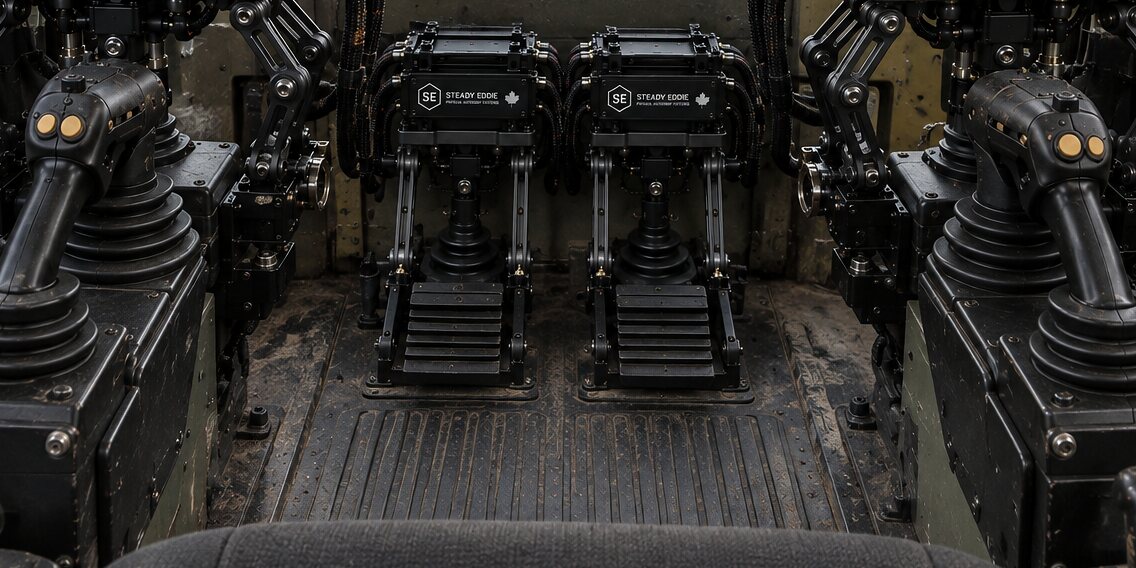
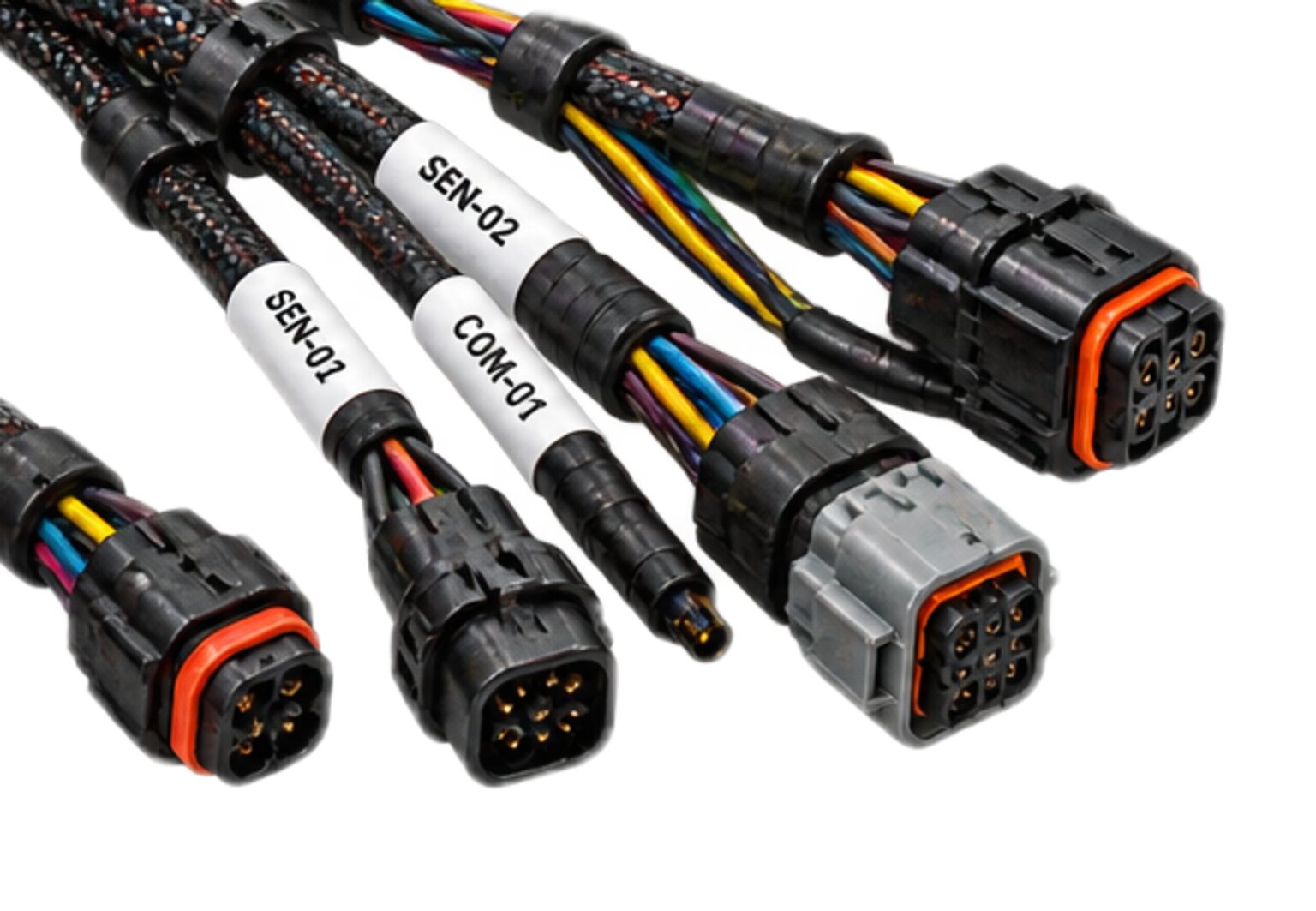
A capture rig records a person working a machine. Some of what the person does is a matter of degree, and the sensor loom reads that: how far a lever went, how hard a pedal was pressed. Some of it is a matter of fact. The lever crossed the detent or it did not. The foot came off the pedal or it stayed. The switch-witness set is the harness that records those facts. Each fact is seen by a witness, and each witness is wired as a signal to the rig's logger and never as a switch in the machine's own circuit.
A witness reads a movement. It never carries a load. That decides how the set is built.
The mechanism
A witness changes state when a control moves past a point: a non-contact element wherever the feel of the control matters, and a contact only where nothing else fits. It sits on the rig, on a bracket beside the control, aimed at the control rather than fixed to it. Whatever the element is, it carries the logger's own sense current and nothing more. There is no load on the far side of a witness, no lamp, no relay and no solenoid, so the contact is chosen for what it senses and not for what it could switch.
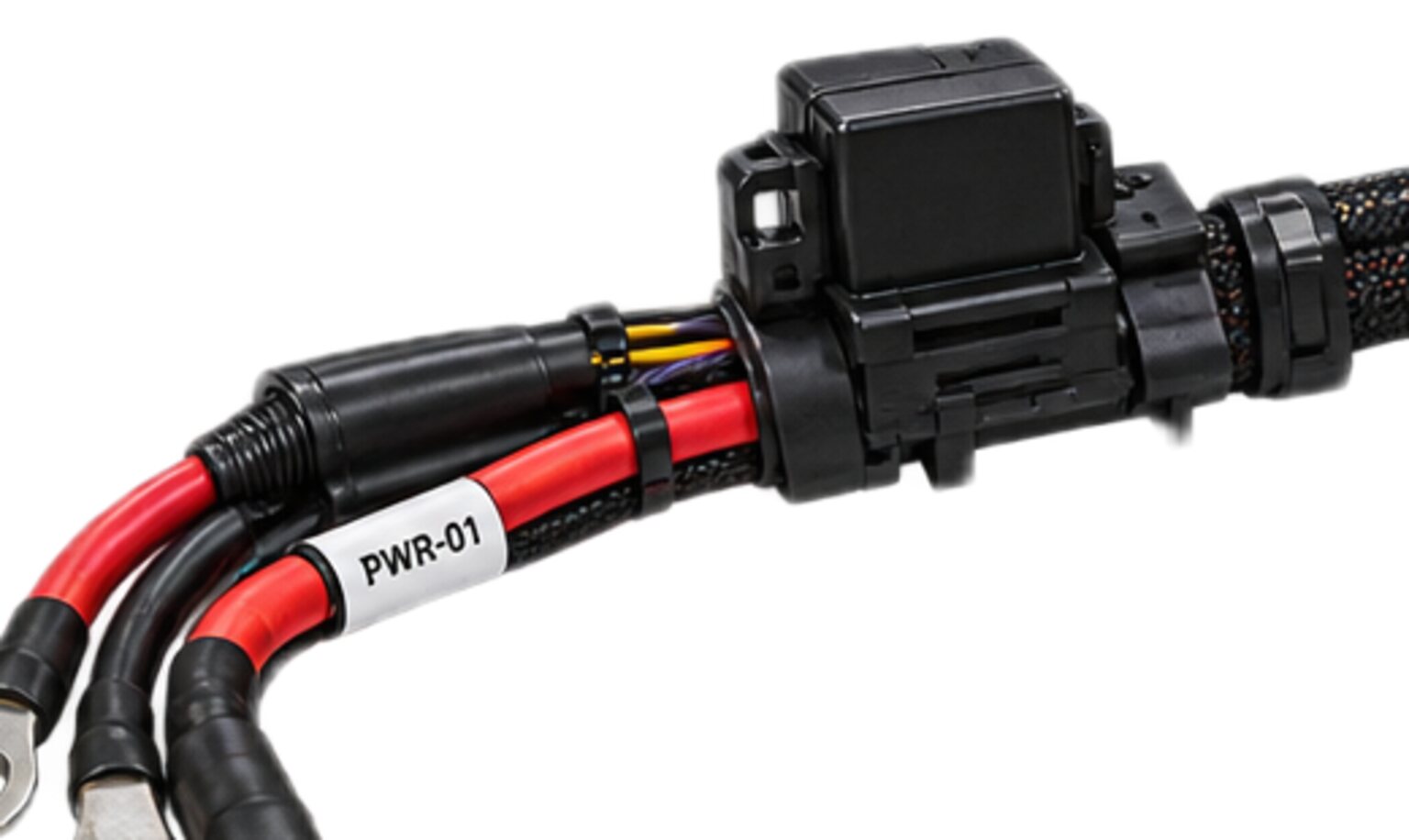
Each witness is wired as its own twisted pair, the contact and its return, with the identity printed on the sleeve at the witness, at each break and at the logger. The pairs from one station gather into a branch, and the branches gather into a trunk that ends at the logger in its own keyed shell. That shell fits the logger's discrete inputs and nothing else. It does not fit an analogue socket, so a witness pair cannot land where a sensor line belongs.
The set shares its bundle with nothing on the machine. It is tied to the rig and not to the machine's harness. It has no tail, no spare conductor and no shell that could reach a machine circuit. Its reference is the rig battery's negative, on a wire, not the rig's frame and not the machine's chassis. Where a witness needs a supply to sense with, it comes from the rig's battery down the same jacket, never from the machine.
The set is conductors, contacts, sleeves and shells. There is no component inside it that is not on the drawing. A contact bounces when it changes state, and the logger deals with that. Nobody adds a part inside a boot to make a witness look cleaner at the input, because a part inside a boot is a value nobody measured, on a wire, where nobody will find it.
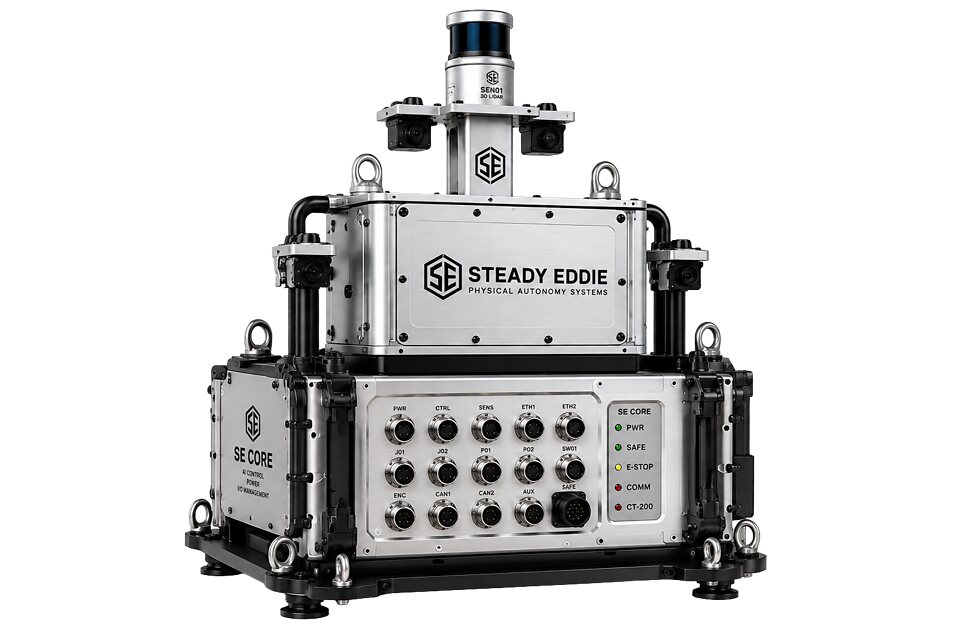
The logger is fed by the rig's battery through the logger and power harness, and the analogue lines travel in the sensor loom. The three harnesses meet at the case face and at the junction block on the rig (the full rig wiring set), and their channels meet only at the logger, on one clock and one reference.
What it is engineered to
The seam this set is engineered to is empty by design. On a machine, a switch is a part of a circuit. A witness is not a switch. It is a second contact, on the rig, moved by the same movement, and it belongs to a different circuit that shares nothing with the first. The rig promises the machine that its switches remain its own: no witness is wired in series with a machine contact, across one, or from one to the logger. The machine's own seat interlock, brake contact and door switch do what they did before the rig was fitted, and carry no extra path while it is on.
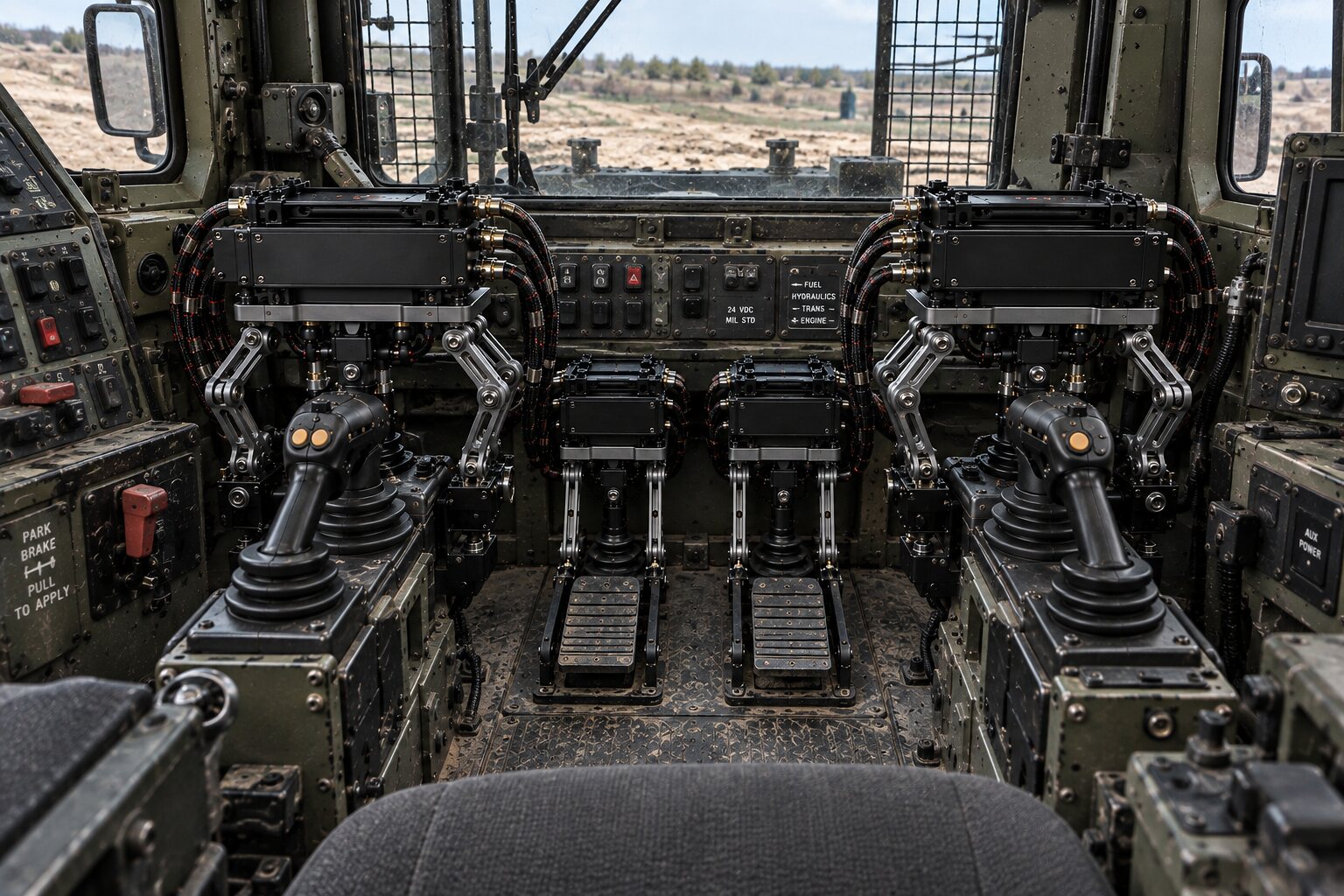
The rig also promises the machine that nothing is added to a control without being drawn. A contact that has to be pressed to close returns its spring to whatever pressed it, and the person feels that spring in the pedal. So a witness on a control the person feels is a non-contact one wherever the drawing allows it, and where only a contact witness fits, its operating force is declared on the drawing beside the control's own.
The logger promises the lines three things. One input per witness: no two witnesses are commoned into one input to save a channel. One clock: every state change is stamped against the same clock as every sample from the sensor loom. And a state at every instant: the logger records that a witness is open or closed continuously, so an interval with no events is an interval in which nothing moved. Where the programme needs an unplugged set to be visible in the record, the drawing says how, because a plain contact cannot tell the two apart.
The joint has to survive a person climbing past it and a machine running under it. The door witness is beside a door that slams, the seat witnesses ride on a seat that travels on its suspension with a person's weight on it, and the pedal witnesses are where a boot lands. So the strain relief for every witness is on the rig's bracket and not on the contact's body, and every moving station has a service loop that runs the full travel with slack to spare. Under it all is the running machine, with its vibration, its dust and its damp, and each of those is a condition on the drawing for the assembly. When either side changes, the set changes with it, drawn before it is cut.
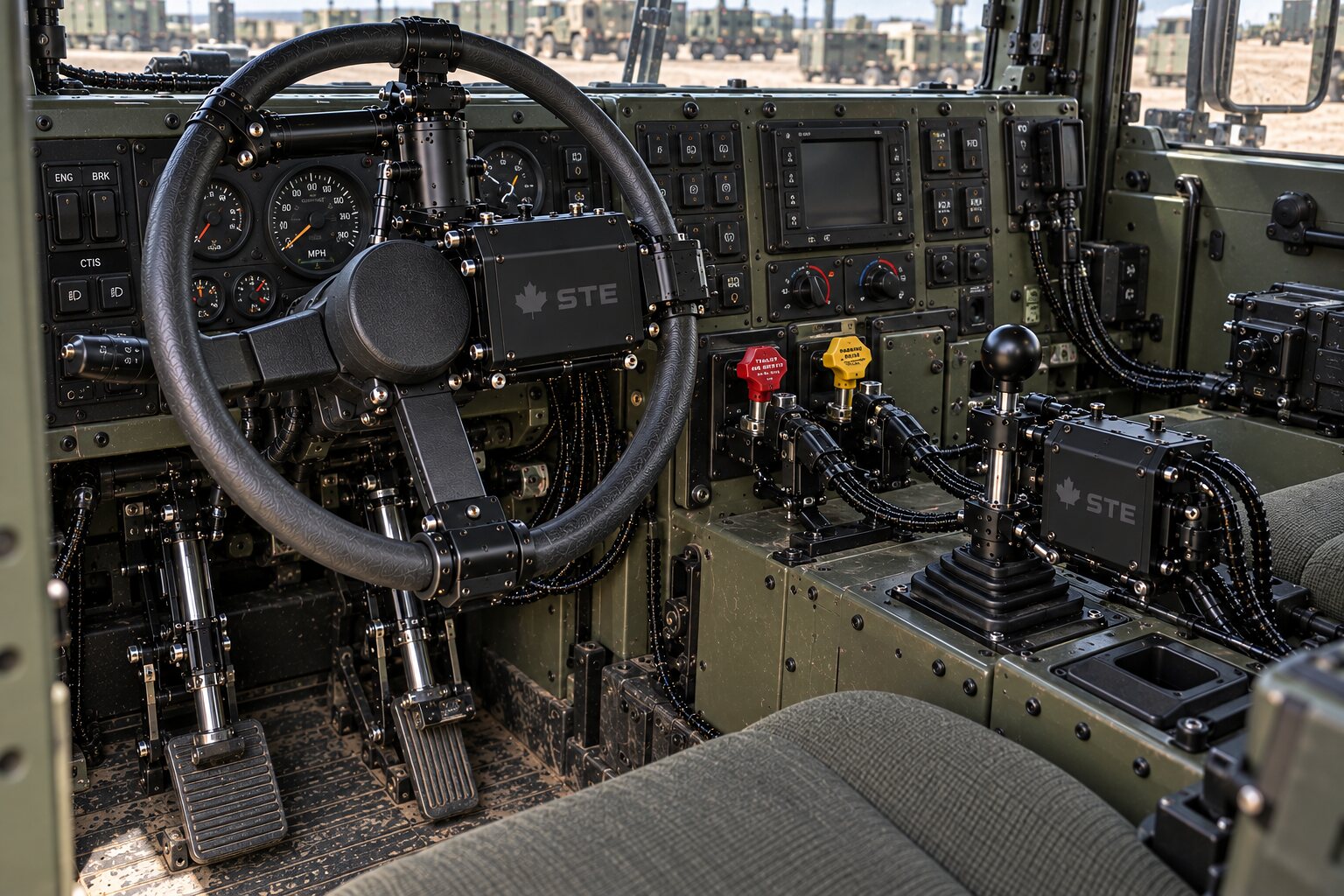
Every conductor carries its circuit identity, end to end.
The discipline applied to this harness
Safety circuits never share a bundle, a splice or a shell with power. That house rule has a sibling on this line: a witness never shares a bundle, a splice or a shell with the machine, because each of those is a way to end up sharing a conductor. Two circuits that share a conductor are one circuit, and if one of them is the machine's, the rig has become a part of the machine.
Segregation on this set is physical. It is never run through the machine's grommet because the grommet is there. A witness pair that shares a grommet with the machine's loom shares its chafe, its heat and its switching, and a witness close enough to the machine's loom to hear it will report a state change that no hand made.
A witness pair is a signal and it is treated as one. Where the rig's design calls for a shield on a station, the shield is drained at the logger end only and floated at the witness, bonded to nothing on the way and never to the machine. No structure on the rig or on the machine carries the set's current, on purpose or by accident.
The shells are the rig's. No connector family on the set appears on the host machine, so there is no socket on the machine that a witness plug fits. Routing puts the set where the person is not: the pedal branch crosses the floor behind the pedal hinge, and the door branch crosses the hinge line with a loop that opens and closes with the door. Every tie is on the rig, so the set comes off with the rig, whole.
Each pair carries its identity end to end, because a witness with the wrong identity records a fact about the wrong control: the record says the foot left the pedal when the hand left the lever. The sleeves and the logger's discrete map are printed from one list, and continuity is checked pair by pair against it.
The bench finds the path a witness would reach the machine by, before the set ever reaches a cab: an undrawn tail, a spare conductor, a shell that could mate with something that is not ours. Every pair is checked to its own input and to nothing else: not to another pair, a shield, the reference or the shell. The conductor count and the tail count are checked against the drawing, so a tail that is not drawn is found before it is terminated. With the rig on the machine, the check is made the other way, from every conductor on the set to the host machine's chassis, its cab structure and every point the rig's mounts touch, and it returns nothing. An isolation test asks whether two circuits that must never meet are in fact separate, and it is run on every finished assembly before it leaves.
- Done badly, a witness set does not fail.
- It lies, and it can do harm.
- A witness wired into the machine's seat interlock carries the machine's own current, which its contact was never chosen to carry, and when it fails closed the machine believes a person is in the seat.
- A witness wired across the machine's brake contact records when the machine noticed the brake instead of when the foot moved.
- Every one of those produces a record that looks complete.
- A witness in the machine's circuit records what the machine did.
- The rig exists to record what the person did.
A witness in a courtroom is not a party to the case. It says what it saw and takes no part, and the moment it takes part, its account is worth nothing. A witness on this set is held to the same rule.
The shop refuses one shortcut on every set of this kind. The machine already has a contact on the seat and on the brake, and someone always suggests taking the witness from there. We do not. A witness is a second contact, on the rig, wired to the logger and to nothing else, or it is not a witness.
How it is bought
The rig programme owns the design and the drawing master. We build to a customer's issued set and we return the manufacturing detail. The issued set for a switch-witness set is the list of controls to be witnessed, the logger's discrete input map and the rig's mechanical arrangement, and the takeoff is performed from that set, counted item by item against the drawing and sourced against the count.
From the takeoff we produce the shop drawing: the formboard layout, the cut list, the pin map, the identity list and the blank test record. The drawing is signed before anything is cut, because a set built from a sketch is a set with a tail nobody drew, and a tail nobody drew is the path into the machine.
The lengths are fixed on the machine. With the rig fitted, we walk every route with a person in the seat, the seat at both ends of its travel, each pedal at both ends of its stroke and the door open and shut. Every run, every loop and every breakout takes its measurement from the walk, and the cut list carries nothing else. A value nobody measured never reaches a wire.
Every assembly leaves with its own record: the identity of the assembly, every pair's continuity to its own input, every pair's isolation from every other, and the proof that nothing crosses to the machine, which is the continuity check from the set to the host machine's chassis, its cab structure and every point the rig's mounts touch with the rig fitted, recorded as returning nothing, with the isolation test between the two recorded beside it. The record goes with the set.
What returns to the rig programme is the manufacturing detail: the as-built lengths from the walk, the cut list, the pin map and the test record, so that the drawing master is updated by the people who own it. We hold no design authority over the set. We build the shop pack and owe it back, and we keep each assembly's record under its own identity, for as long as you tell us the assembly can be in service.
CSA and the Canadian Electrical Code govern any electrical assembly manufactured for sale or installation in Canada. The components we specify carry their own certification. The approval route for a finished, project-specific assembly is confirmed with the certifying body for that assembly before it is built, and we tell you where yours sits before we build it, not after.
To start, send the list of controls to be witnessed and the logger's discrete map, or the issued set if it exists, through enquiries. We answer with what the takeoff needs, and with what the walk has to see before a length is cut.
We do not build a witness that carries a load, and we do not build a set with a socket for the machine on it. A witness that can be wired into the machine will one day be wired into the machine, and on that day the rig stops witnessing the person and starts witnessing itself.