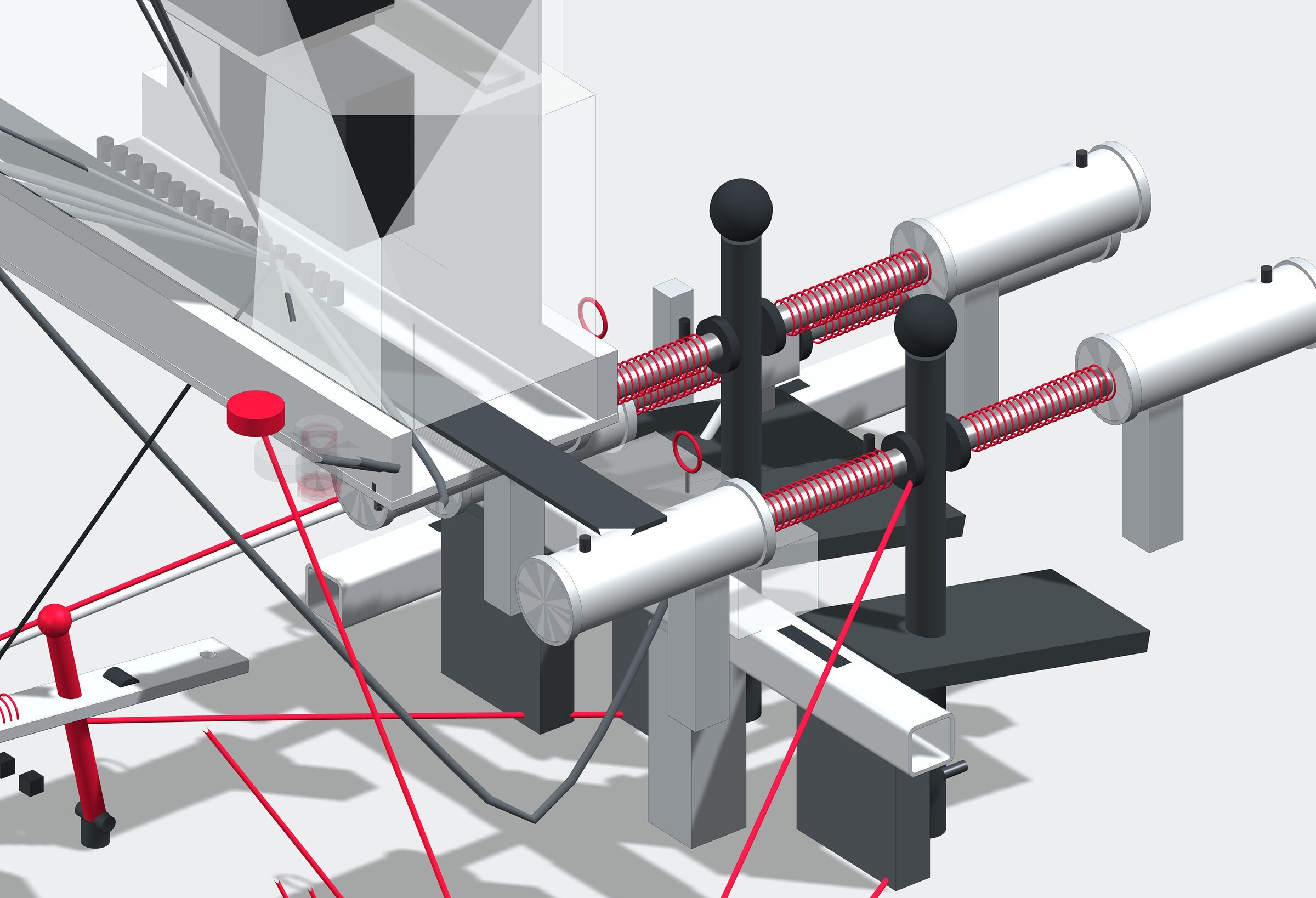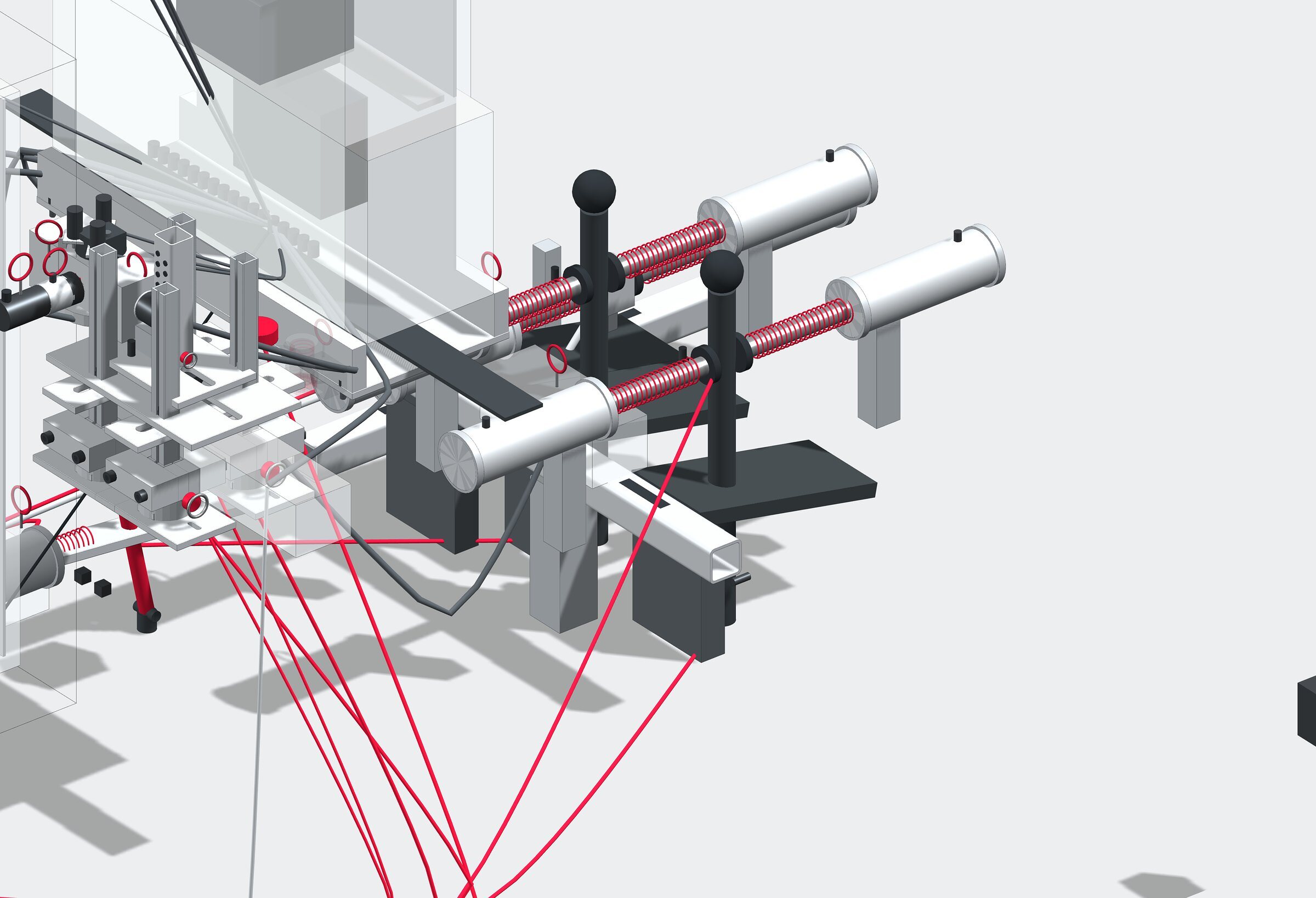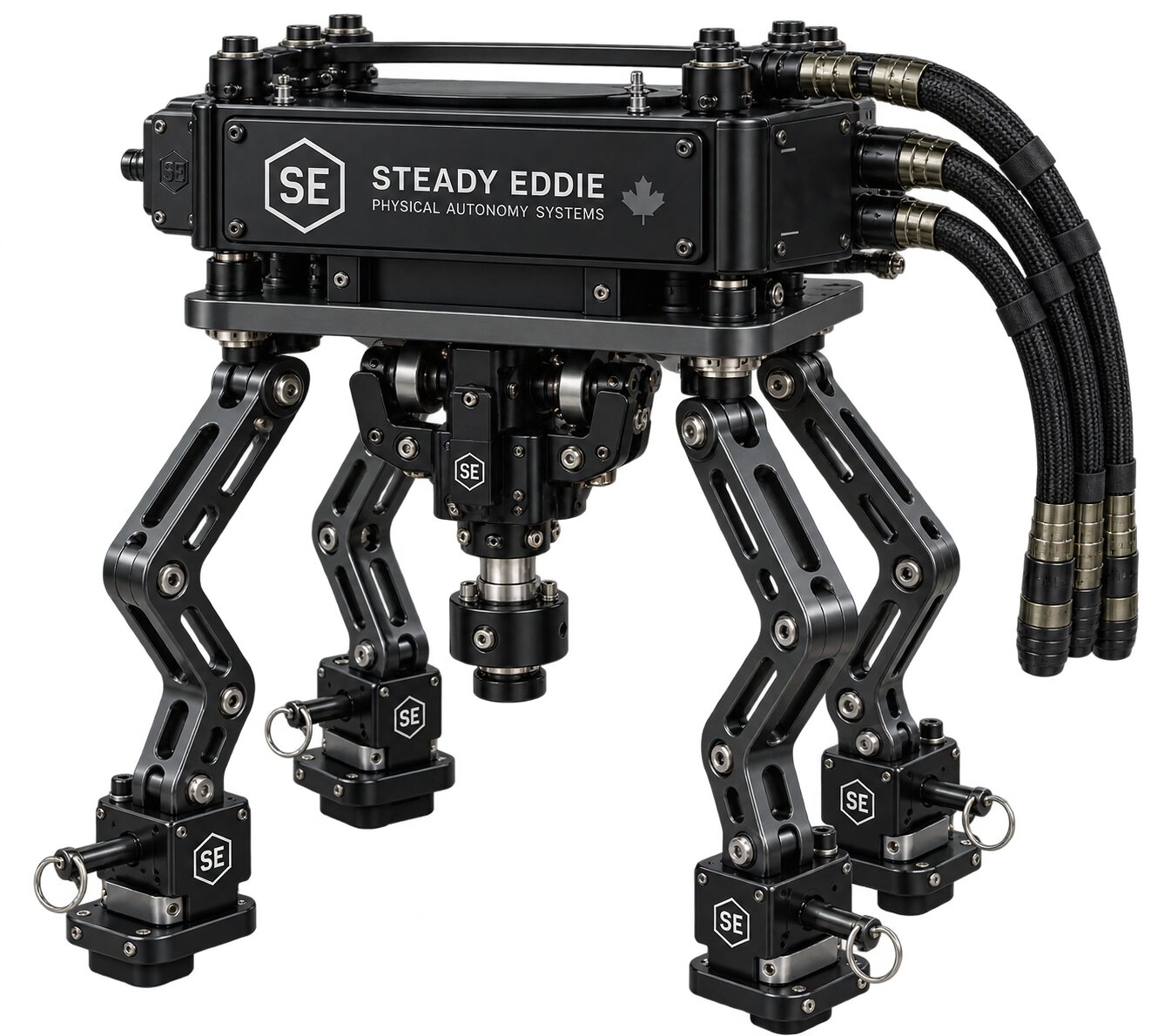
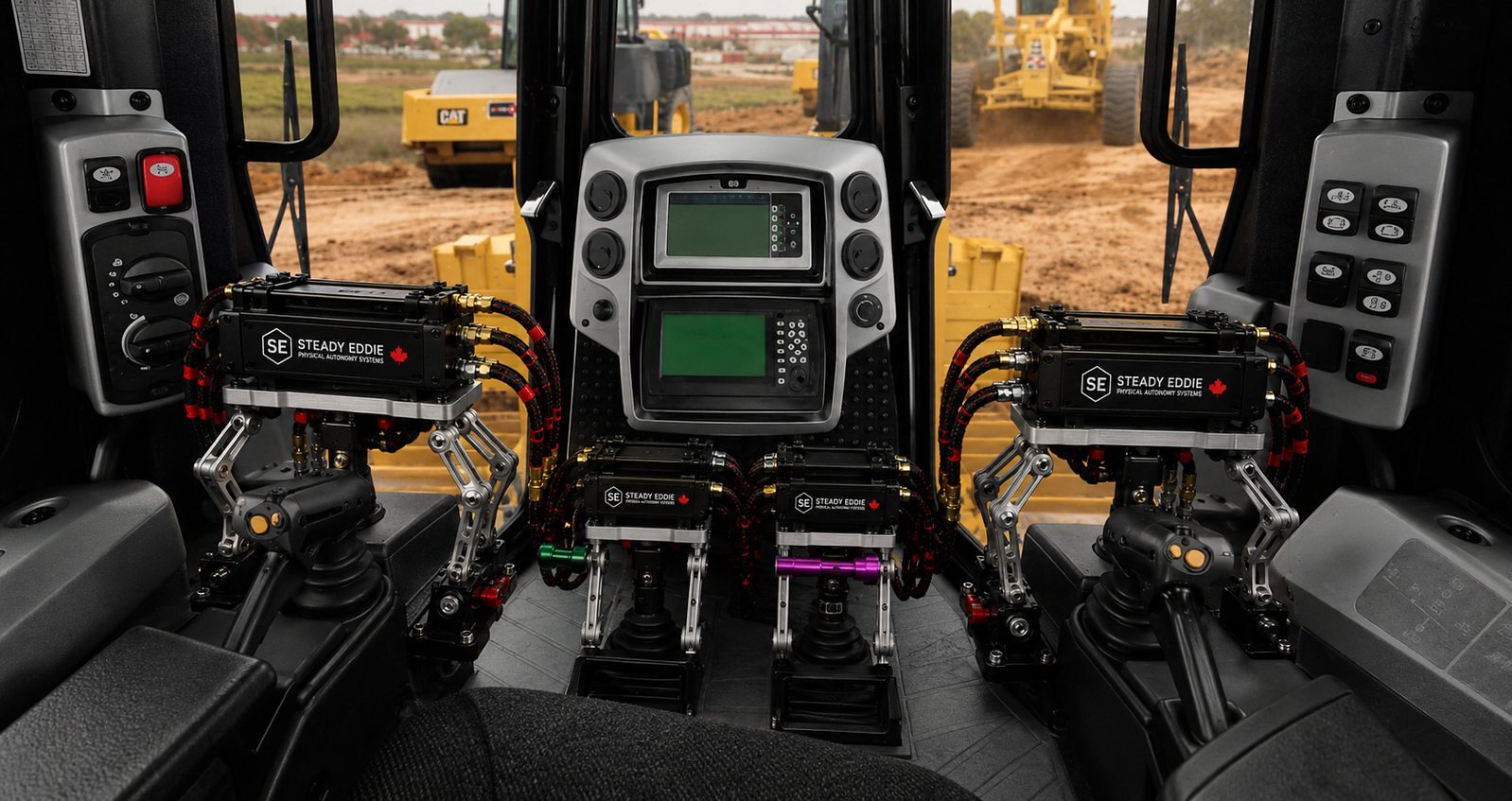
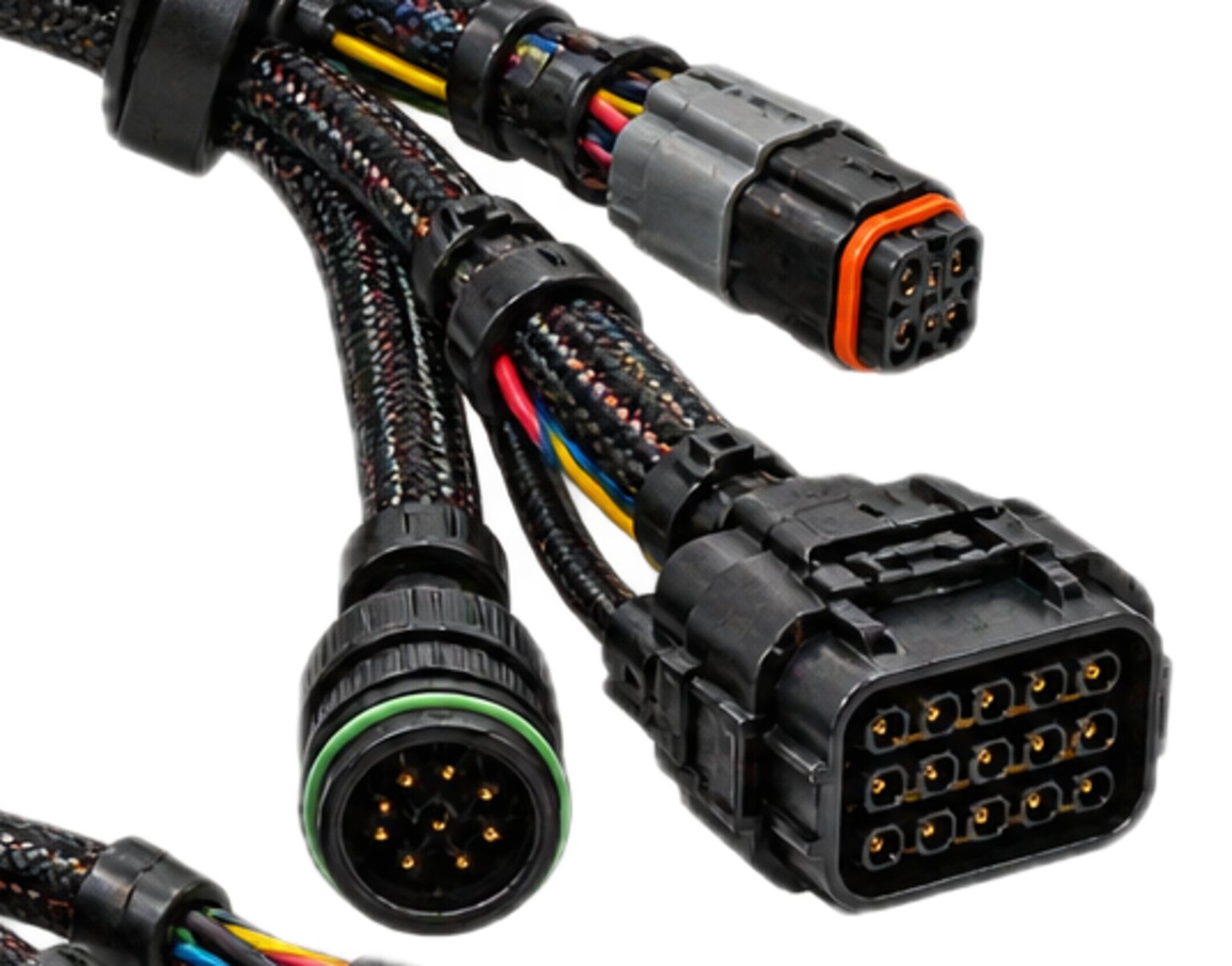
A capture rig is three harnesses, and it is one instrument only if they are built as one. The sensor loom carries what the person's hands and feet do on the controls. The switch-witness set watches each switch the person throws without touching the circuit behind it. The logger and power harness gives the rig its own supply and the one reference every channel shares. Built by three shops to three drawings, they are three sets of lengths, three keyings and three ideas of where the reference sits. Built as a set, they share one clock, one reference, one keying and one walk on the machine, and they come off in one visit leaving nothing behind.
The mechanism
The set is one case, three looms, a junction block and the hardware that holds them to the rig frame. The case holds the battery, its protection, the distribution point and the logger, and presents one face of keyed bulkhead shells. Every conductor on the rig ends at that face. Behind it are the logger's channels and the reference bar. In front of it are the three looms.
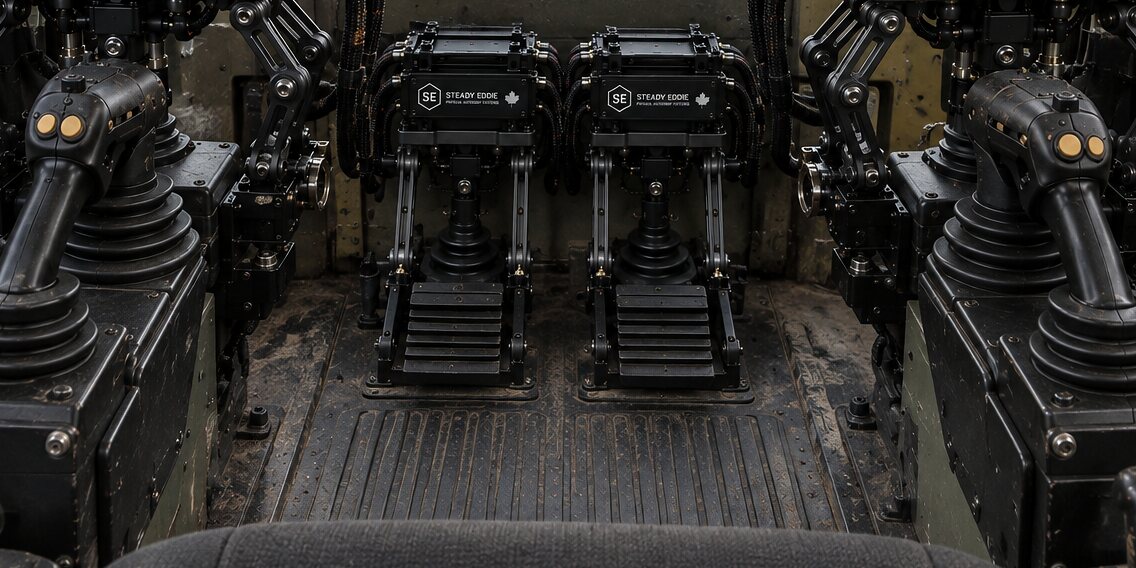
The sensor loom runs from the case face to the junction block near the seat and branches from there to each control the person's hands and feet reach: levers, pedals, wheel or sticks. Each branch carries that station's sensing pairs and, where a sensor needs it, a protected feed and return, held apart from the signal by the bundle's own construction. The sensors read the control's movement from mounts on the rig beside it, and every clamp that reaches the machine is insulated, so nothing on the rig becomes a bond to it.
The witness set runs from the case face to the switch banks and lands a witness beside each switch the person is expected to use: the isolator, the stop, the selectors, the lights, the horn. A witness is a non-contact element wherever the feel of the control matters, and a contact where nothing else fits, mounted on the rig side of the switch; it changes state when the switch does, and it is wired to the rig only. The switch's own circuit is the machine's, and the witness never touches it.
The logger and power harness is the supply side: the battery in its cradle, the protection at the source, the feed to the logger, and the power trunk to the junction block where the other two looms pick up their feeds. Its detail is on its own page.
The topology is a star from the case. One trunk for power, one for signal and one for the witnesses leave the case face in their own shells and their own bundles. The junction block, on the rig, is the only place where a bundle is opened. Every branch beyond it is one station's lines, so a station can be unplugged without opening another's bundle.
The reference is one point, the bar in the case. Every return, every shield drain and the case shell land there, and nothing on the machine does. The clock is the logger's, and every channel across the three looms is stamped against it, because every channel lands on the same logger, in the same case, from the same battery.
The kit is what lands on the machine: the case, the three looms, the junction block, the mounts and clips that hold everything to the rig frame, a second battery, and the record. Nothing in the kit is for the machine. There are no brackets for its frame, no taps for its harness, no adhesive for its panels. Every clip and tie in the crate is counted, and the count is in the record so the same number comes off.
What it is engineered to
The seam this set serves is the space between an instrument and the machine it measures. The seam every autonomous system has is where safety, power and data cross one boundary and must never touch. The training rig has the sharpest version: its three groups must never touch each other's bundles, and none of them may touch the machine at all.
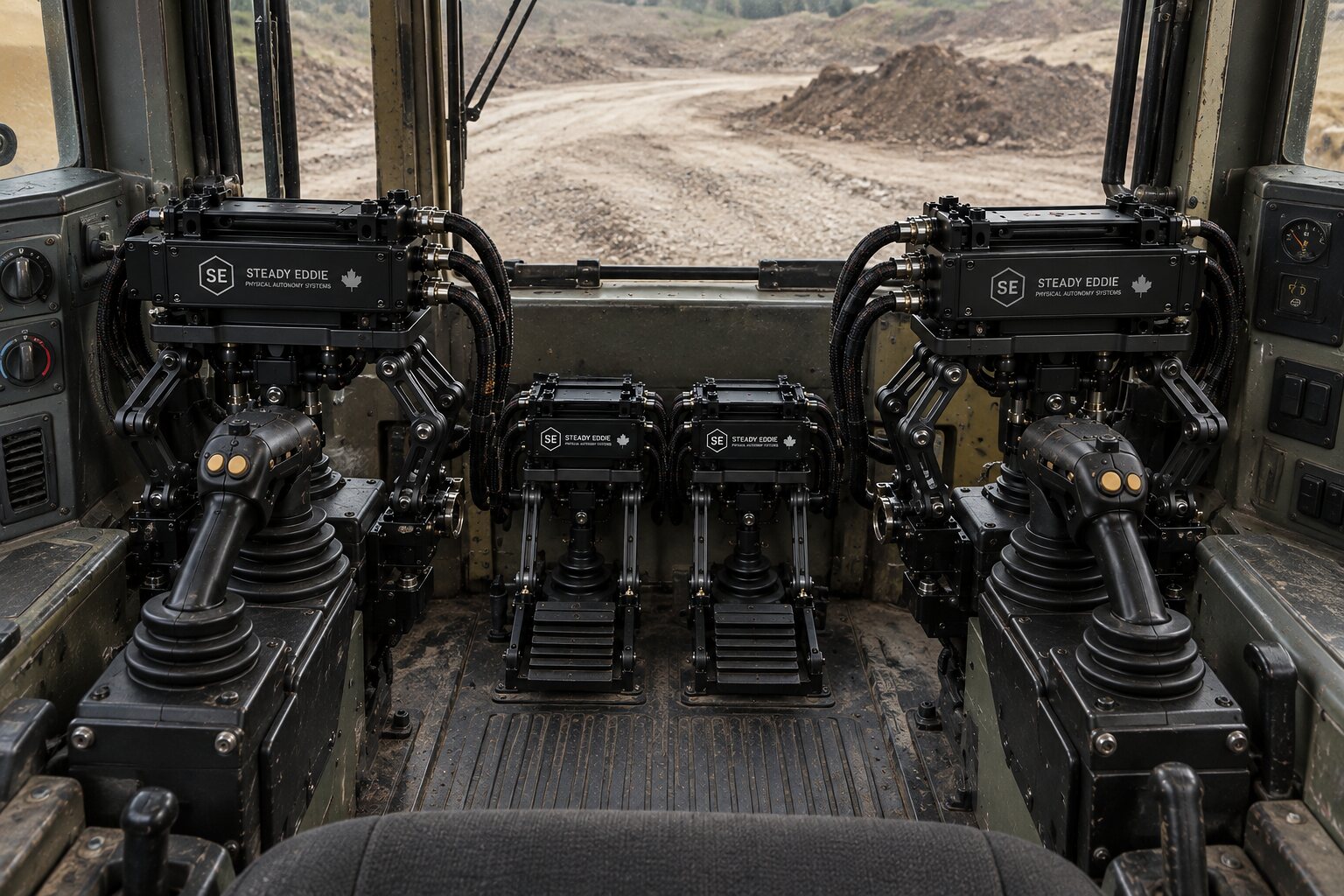
The rig promises the machine four things: no force a person can feel added to any control, no power drawn, no conductor shared, and nothing left behind. The sensor loom carries the first: its mounts sit on the rig, its sensors ride the control's movement, and a control with the rig fitted moves under the same hand as without it. The witness set carries the third, because the easiest way to know a switch was thrown is to tap the switch, and the witness refuses to. The logger harness carries the second, because the easiest place to power a rig is the machine. The set carries the fourth, because a kit built as one comes off as one.
The logger promises the lines one clock, one reference and a quiet supply, and it keeps them only if all three looms are built to the same reference and the same case face. A loom built to a different idea of where the reference sits lands its returns in a second place, and the second place is a loop. One issued set, one takeoff and one bench build prevent it.
What the joints have to survive is a person and a machine together. The person climbs past the case, stands on the trunk, kneels on the junction block, and gets out fast when something on site needs them. The machine vibrates through the rig frame and swings from cold to hot across a shift. So the mounts hold under vibration without loading the control. The witness stays beside its switch after a shift of being hit by the same hand that hits the switch. Where a line goes to the person rather than to a control, it passes a breakaway at the seat, so a person leaving in a hurry is never tethered. A sensor off its mount reads a control that is no longer moving. A witness knocked away from its switch reads a switch that is never thrown. Each is a wiring fault that presents as a person doing something they did not do.
Nothing is fabricated until the drawing is signed.
The discipline applied to this harness
Every conductor carries its circuit identity, end to end. On a set that is what makes three looms one instrument: a channel's identity on the sensor loom, its shell on the case face, its pin on the logger and its name in the record are the same identity, and a witness line cannot be confused with a sensor line anywhere along the way.
Segregation here is three groups in three bundles, never merged; they cross at the case face and at the junction block in separate shells and separate ports. There is no safety group, because the rig has no safety function. It cannot stop the machine and must not be able to. The machine's stop is the machine's own, and the rig only watches the hand reach for it.
Shielding and bonding are single point, in the case. Every shield across the three looms drains to the reference bar at the logger end and nowhere else; the junction block passes drains through and bonds nothing. The case sits on insulating mounts, so whatever the rig frame touches, the case shell touches only the reference bar.
Connectors are three keying families, one per group, so a witness cannot be plugged where a sensor goes and a sensor cannot be plugged where a feed goes, because the shells will not enter. Within a group, each station's shell is keyed to its own branch. No shell on the rig mates with any shell on the machine. The breakaway at the seat parts under a pull and re-mates without a tool.
Routing is one discipline for three looms. The trunks leave the case on one face, run together along the rig frame in their separate bundles, and break out at the junction block to their stations along the rig's own members. Every clip is the rig's. No bundle is tied to a machine harness, run alongside one, or passed through a machine grommet.
Every conductor, shell, station and clip is labelled. The case says it is rig equipment, the junction block says what each port is, and each witness carries the name of the switch it watches, so a technician who finds one does not take it for part of the switch.
Test is done as a set. The three looms are laid out on a bench formboard in the shape of the rig, mated to the case, and checked as one: continuity and identity on every conductor, isolation between the three groups, the reference single point, and the keying, by trying every wrong mate. Then, on the machine with the rig fitted, the continuity check from every rig conductor and shell to the machine frame and harness, which must return nothing, before the first record and after the last. The values are the rig programme's engineer's and appear on the record.
Removal is part of the test. The set comes off in one visit, every clip and tie counted off against the count that went on, with no hole, no adhesive, no tap and no mark. It comes off the way a scaffold comes off a wall: every clamp and board back on the truck, and the wall as it was.
Done badly, a set corrupts what it measures in ways one harness cannot. Shared keying lets a witness land on a sensor channel, and the record shows a lever moving when a switch was thrown. Separate routes put one loom beside a machine harness, and that loom carries the machine's switching while the other two stay clean, so the fault looks like a sensor. A missed count leaves a clip on the machine, and a clip left on a machine is a conductor cross waiting for a chafe.
How it is bought
The rig programme owns the design and the drawing master. We build the full shop pack to its issued set and we return the manufacturing detail. The set is bought as a set: one issued set, one takeoff, one shop drawing per loom and one of the whole, signed before anything is cut.
The walk on the machine with the rig fitted fixes every length across all three looms at once, from the case face to the last witness, and replaces every guess taken from a drawing of a cab with a measurement made in the seat with the door closed.
Each set leaves with its record: pin-by-pin identity across every loom, the reference single point, the isolation between groups, the protection as fitted, the hardware count, and a blank row for the continuity check to the host, signed at the machine on the day the rig goes on, signed by the person who ran it. What the drawing master receives back is the manufacturing detail that lets the next set be built by us or by anyone: the formboards, the cut lists, the pin-outs as built, the label schedule, the material list with each component's certification carried through, and the test record. The drawing master stays the programme's.
CSA and the Canadian Electrical Code govern any assembly built for sale or installation in Canada. The components we specify carry their own certification. The approval route for a finished, project-specific assembly is confirmed with the certifying body for that assembly before it is built, and we tell you where yours sits before we build it, not after.
To start, send the issued set through enquiries. If it is not complete, send the interface specification and the control layout, and we answer with what the takeoff needs, and with what the walk has to see before a length is cut.
- We do not build one loom of a rig without the drawings of the other two.
- We do not tap a switch to witness it.
- We do not power a rig from the machine.
- We do not leave a clip on a machine.
- We do not give the rig a stop.
- And we do not cut before the drawing is signed.