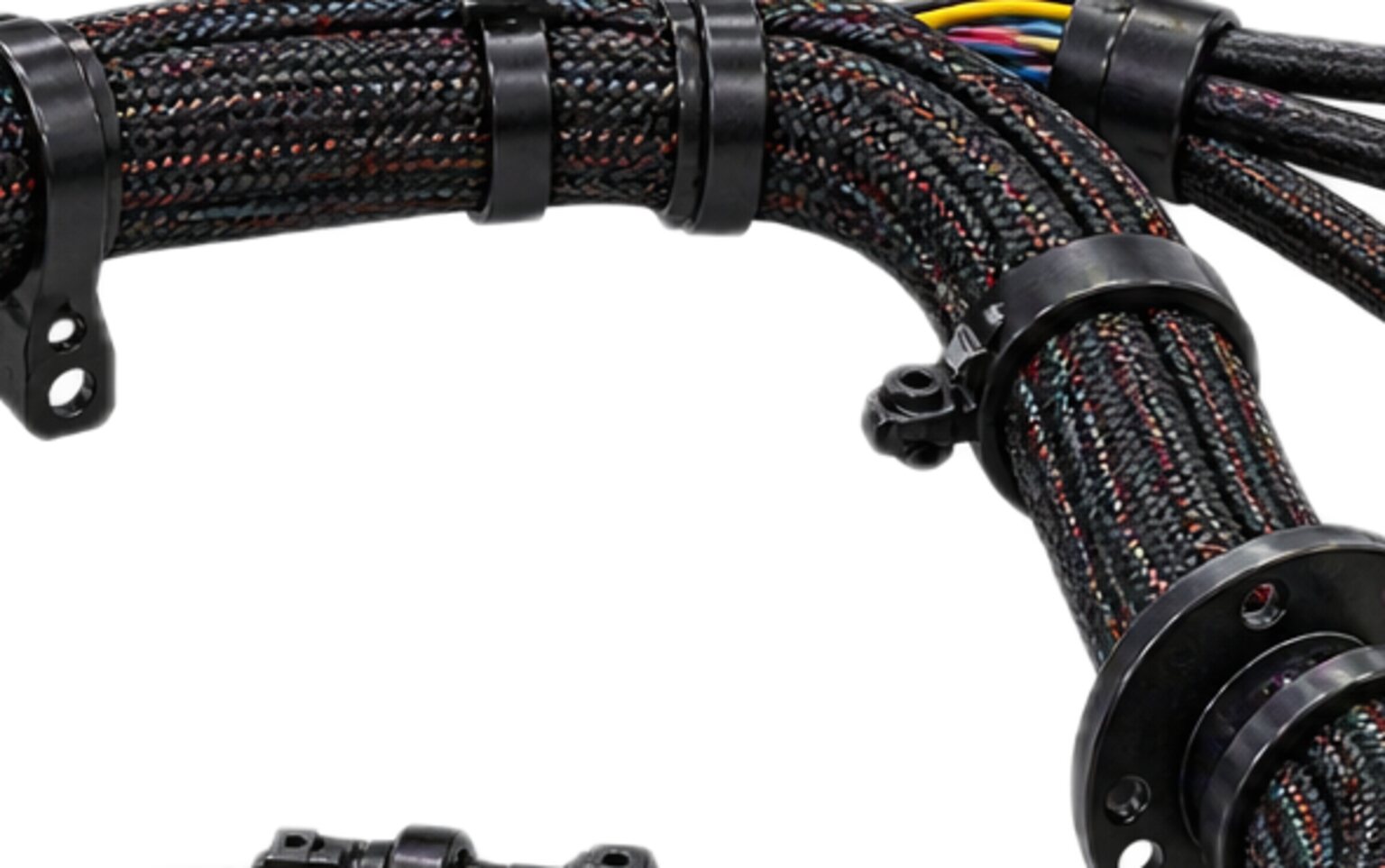
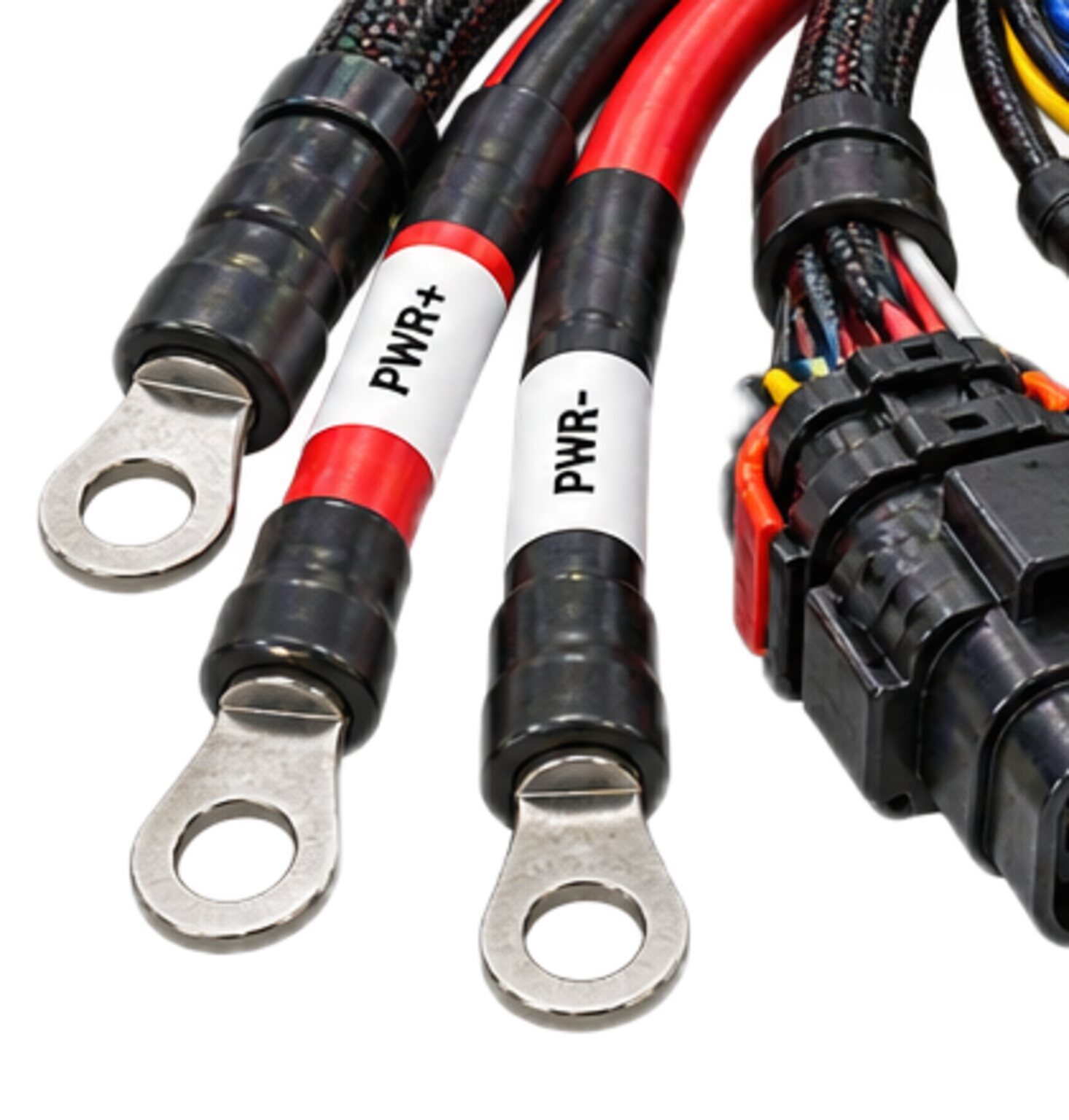
The easiest place to power a capture rig is the machine it sits in. That is the wrong answer, and this harness is the reason the rig never has to ask. It is the rig's own supply: one battery, its protection at the source, the feed to the logger, a feed to every sensor that needs one, and the one reference every channel shares. It is wired to nothing on the host machine. The moment a conductor crosses to the host, the rig stops being an instrument on the machine and becomes a load on it, a fault path into it, and a channel for the machine's switching back into every line the rig records.
On the training systems line, the sensor loom and the switch-witness set bring the measurements in. This harness is what they are measured against.
The mechanism
The battery is one pack, the rig's only source. It sits in the case in a cradle that holds it against the machine's vibration by its body, not by its connector, and it mates through a keyed shell that goes on one way. Its terminals go nowhere except to the protection.
The protection is at the source. The first thing after the battery terminal is the protective device, on the terminal lead, before the first branch, so a fault anywhere downstream is cleared at the battery and not by a conductor heating in the loom. Below it sits a distribution point, and every feed that leaves it carries its own protection, chosen for that conductor and stated on the issued set. The ratings are the rig programme's values, measured on the rig's real loads. None of them is ours to choose.
The feed to the logger is its own pair from the distribution point to the logger's supply input, with no tap, no splice and no second load on it. The logger's clock and its record depend on that pair staying quiet while everything else on the rig draws and releases.
The feeds to the sensors serve only the sensors that need them. A contact follower needs nothing, a bridge needs excitation, an inertial unit needs a supply. Each powered branch gets its own protected feed and return, so a fault on one sensor's feed takes that sensor off the record and leaves the rest of the rig running.
The reference is one point. Every channel on the rig is measured against the battery's negative side, brought to a single reference bar at the logger. Every return, every shield drain and the case shell land on that bar and nowhere else. Nothing on the machine lands on it.
The status light is a lamp on the case lid, fed from the rig's own supply through its own protection. Lit means the rig is alive; its pattern says whether the logger is recording or idle. A person reads it from the seat or from the ground without touching anything. It is not on the logger's feed, because a lamp that flashes on that feed puts a dip on every channel each time it flashes.
The case holds the battery, the protection, the distribution point and the logger under a sealed lid. It sits on the rig's frame on insulating mounts, so the shell, bonded once to the rig reference, is not also bonded to whatever the frame touches. Its connections are on one face: the capped charge port and the bulkhead shells the trunk and the looms mate to.
The harness that leaves it is one trunk: a protected feed and a return for every branch that needs one, and the reference, in their own bundle, to the junction near the seat where the sensor loom and the witness set pick up their power. Signal never rides in this trunk; it comes back in the loom's own bundle.
Charging happens off the machine. The battery lifts out of its cradle on its keyed shell and charges on the bench, and a second pack drops in. There is no lead to the machine's accessory outlet, no clip to its battery, no strap to its frame. Nothing on the case accepts a machine conductor, so a crew can charge and swap for a whole shift without one ever crossing to the host.
What it is engineered to
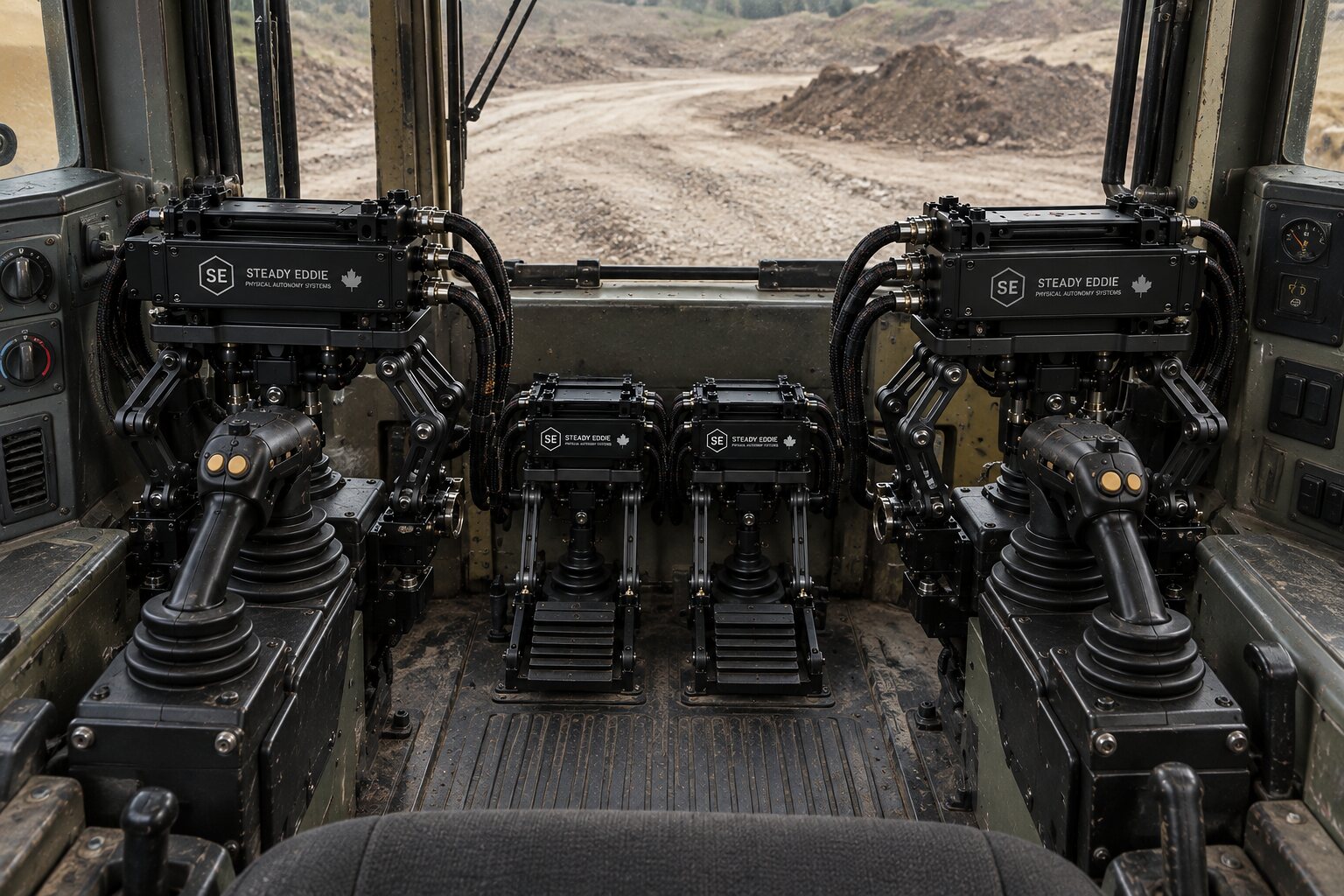
The seam this harness serves is empty, and it is engineered to stay empty. The rig and the machine share a cab, a seat, a set of controls and a person. They share no conductor. The only things that cross are hands, feet and eyes.
The rig promises the machine four things: no force a person can feel added to any control, no power drawn, no conductor shared, and nothing left behind. This harness carries the second and the third. They are the easiest promises to break, because a supply is the one thing every instrument needs and the machine has one right there.
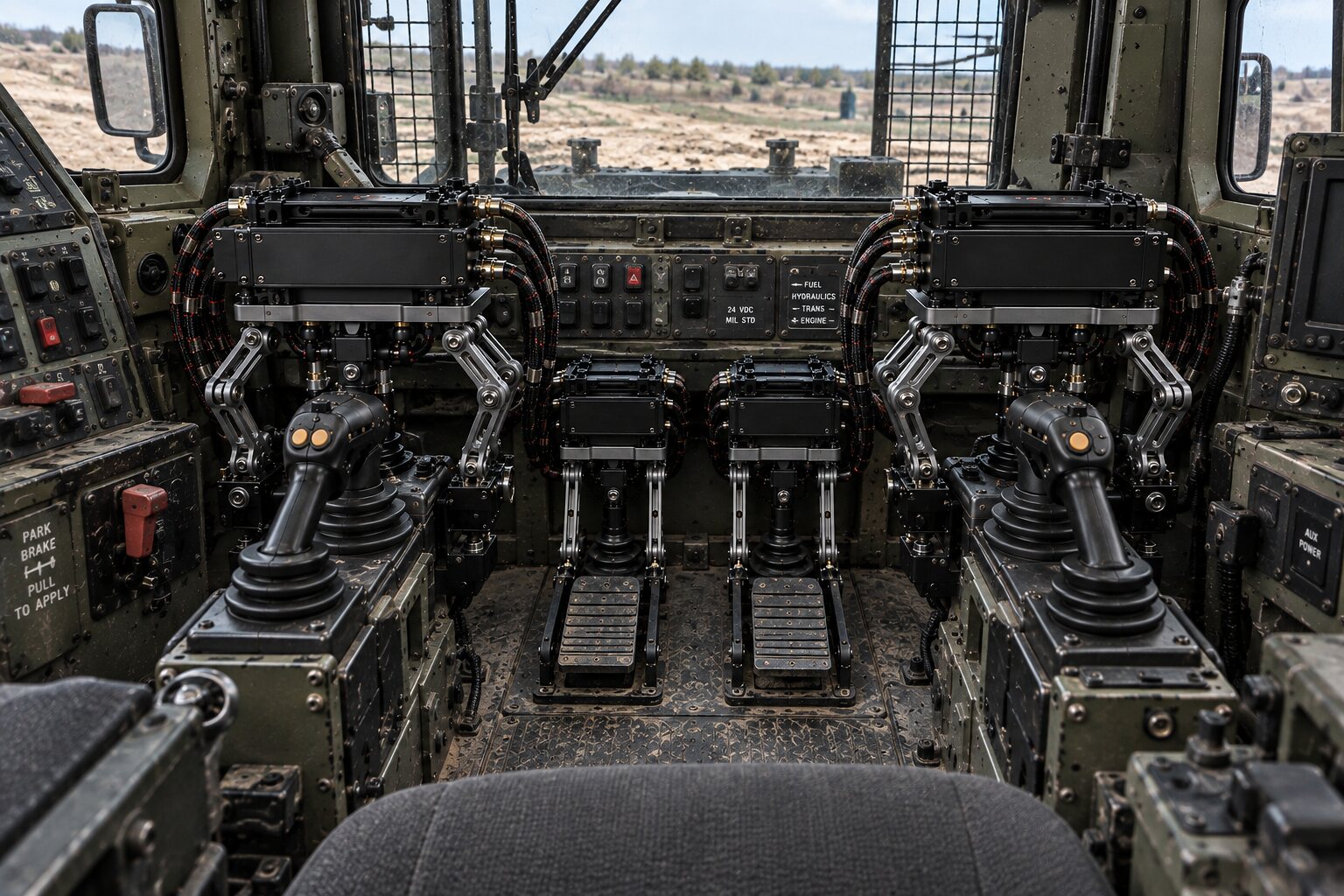
The logger promises the lines one clock, one reference and a quiet supply to every powered sensor. A machine's electrical system is not a quiet source. An alternator's ripple, a solenoid's kick and a valve driver's switching are each a step on the supply rail and a shove on the frame return. Tie the rig reference to the machine's negative and every channel is measured against a point that moves with the machine's return currents. The record becomes the person's action with the machine's electrical life added to it, in a form nobody can subtract afterwards. The meter in your bag runs on its own cell for the same reason. Nobody trusts a reading from a meter fed by the circuit it is reading.
What the joint has to survive is a person. The rig sits in a cab that a person climbs into and out of past the case, in boots, in a wet coat, sometimes in a hurry. The trunk passes the seat, and a boot lands on it, then a knee. The cab is cold at the start of a winter shift and hot by the afternoon, and the battery and the shells live through that. The machine's vibration reaches the rig through its frame, and the failure that matters most is the battery walking off its connector. When it does, the logger restarts, the record has a hole, and the hole looks like the person stopped working.
So the cradle retains the battery by its body and the connector carries current, not load. The bulkhead shells latch, and the strain relief behind them takes the pull so the pins do not. The trunk is sheathed where the boots land. The lid is not a step, and it is labelled so.
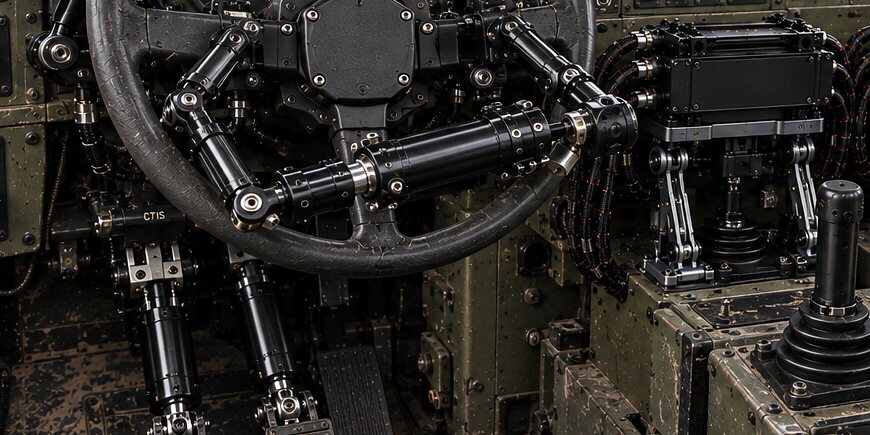
A value nobody measured never reaches a wire.
The discipline applied to this harness
A value nobody measured never reaches a wire. On this harness that sentence governs the protection. A protective device rated by guess fails one of two ways: it clears in the middle of a task and the record stops with no fault on the rig, or it sits there while a chafed feed heats under a seat. The ratings on this harness are the rig programme's, measured on its real loads by its own engineer, built as issued and never rounded.
Segregation on a rig means the feeds and the sensing pairs never share a bundle. The power trunk is its own bundle, the loom's signal bundle is its own, and they meet only at the case face, in different shells. A feed that switches beside a signal pair puts its edge into that pair, and the edge arrives in the record as something the person did.
Shielding and bonding on this harness come down to one point. Every shield drains at the logger end and only there. The case shell bonds to the reference bar once. Nothing on the rig bonds to the machine frame. A shield drained at both ends when the drawing drains one is a loop, and a loop in a cab carries whatever the frame return is doing into the channel it was meant to protect. A case bolted to the frame is the same fault by another route.
The connectors are chosen so that mistakes are physical. The battery mates one way. The bulkhead shells are keyed by family, so the power trunk cannot be plugged where a signal loom goes. No shell on the rig mates with any shell on the machine. That is chosen, not lucky.
Routing keeps the trunk on the rig. It leaves the case on the face away from the seat entrance, runs along the rig frame, and is clipped to the rig alone, never tied to a machine harness and never run alongside one. A parallel run couples the machine's switching into the trunk by induction. A tie-wrap around a machine harness is one chafe away from a conductor cross.
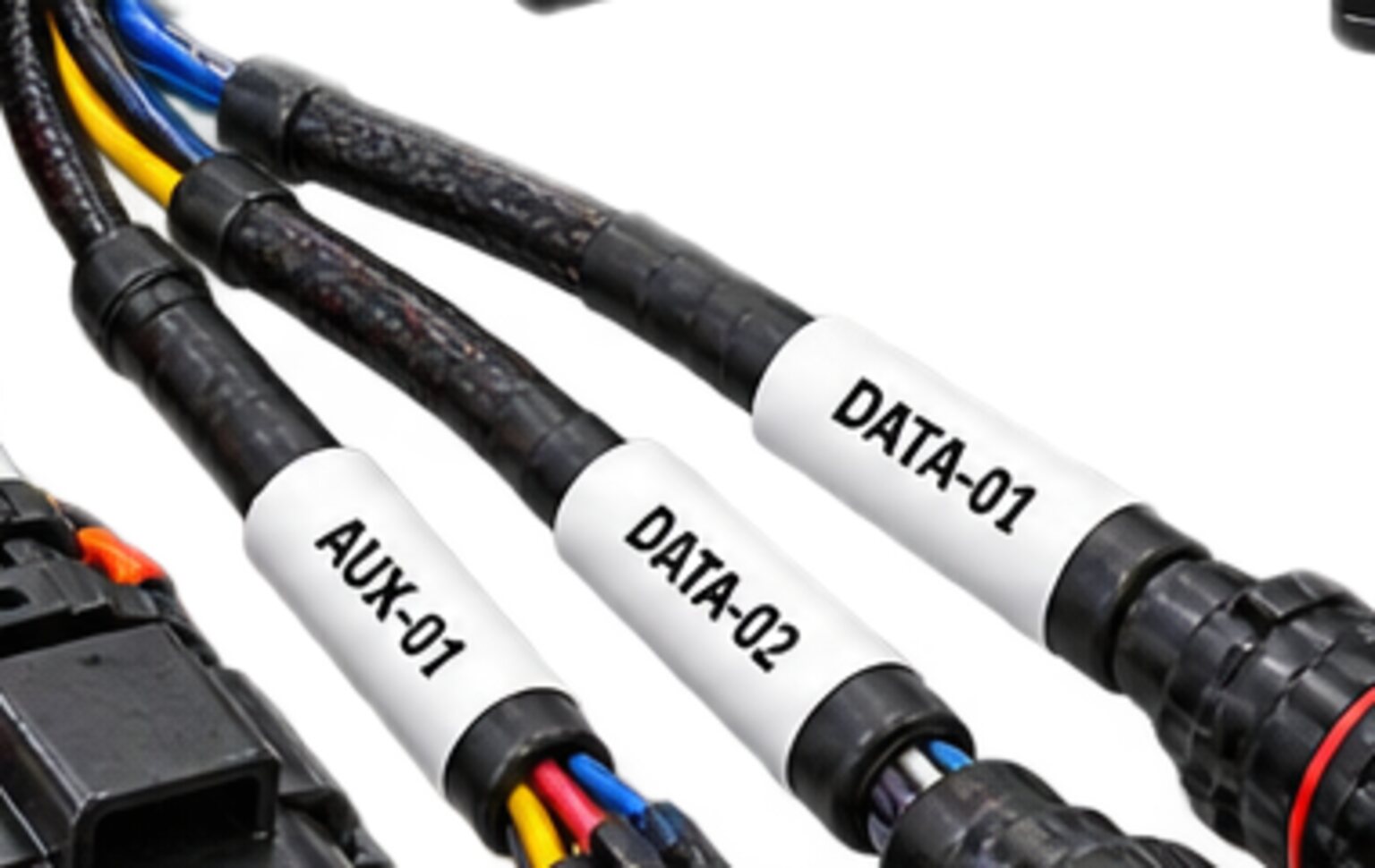
Every conductor carries its circuit identity end to end. The case is labelled as rig equipment so a technician who finds it later does not take it for a machine part, the lamp with what its states mean, and the charge port with the only thing that may be connected to it.
Test on this harness asks five questions of every assembly and records the answers. Whether continuity from every rig conductor and from the case shell to the machine frame and every point the rig touches returns nothing, run with the rig fitted, before the first record and again after the last. Whether the rig reference and the machine chassis are separate. Whether every feed has the right polarity before a sensor is connected. Whether every protective device fitted is the one the drawing names, in the position the drawing names. And whether the hole a battery swap makes on the bench is a hole the programme can recognise in the record. Test and acceptance describes what each check proves. The values are the rig programme's engineer's, and they appear on the assembly's record, not here.
Done badly, this harness corrupts the measurement quietly. A second bond puts the frame into every channel. A shared feed puts the machine's switching into every channel. A loose battery makes a hole in the record that reads as a person's pause. None of it looks like a wiring fault when the data is examined later. All of it is.
How it is bought
The rig programme owns the design and the drawing master. We build to its issued set and we return the manufacturing detail.
The work begins with the issued set. We perform the takeoff from it: every conductor, shell, protective device and mount. From the takeoff we produce the shop drawing, and nothing is fabricated until that drawing is signed. Then comes the walk on the machine with the rig fitted, where every length is fixed, and not from a model of the cab. A length taken from a drawing of a cab is a guess, a harness cut to a guess is scrap or slack, and slack under a seat is what a boot finds.
Each assembly leaves with its own record: the pin-by-pin identity of every conductor, the protection as fitted, the reference shown to be a single point, the polarity of every feed, and a blank row for the continuity check to the host, which is signed at the machine on the day the rig goes on. The manufacturing detail goes back with it: the formboard, the cut list, the pin-out as built, the label schedule and the material list with each component's certification carried through.
CSA and the Canadian Electrical Code govern any assembly built for sale or installation in Canada, and a rig's supply and its charging arrangement are assemblies like any other. The components we specify carry their own certification. The approval route for a finished, project-specific assembly is confirmed with the certifying body for that assembly before it is built, and we tell you where yours sits before we build it, not after.
To start, send the issued set or the interface specification through enquiries. We answer with what the takeoff needs, and with what the walk has to see before a length is cut.
- What we refuse is short.
- We do not build a rig supply that takes a feed from the machine, not as a backup, not as a convenience, not for a lamp.
- We do not bond a case to a frame.
- We do not rate a protective device to a value nobody measured.
- And we do not cut a conductor before the drawing is signed.