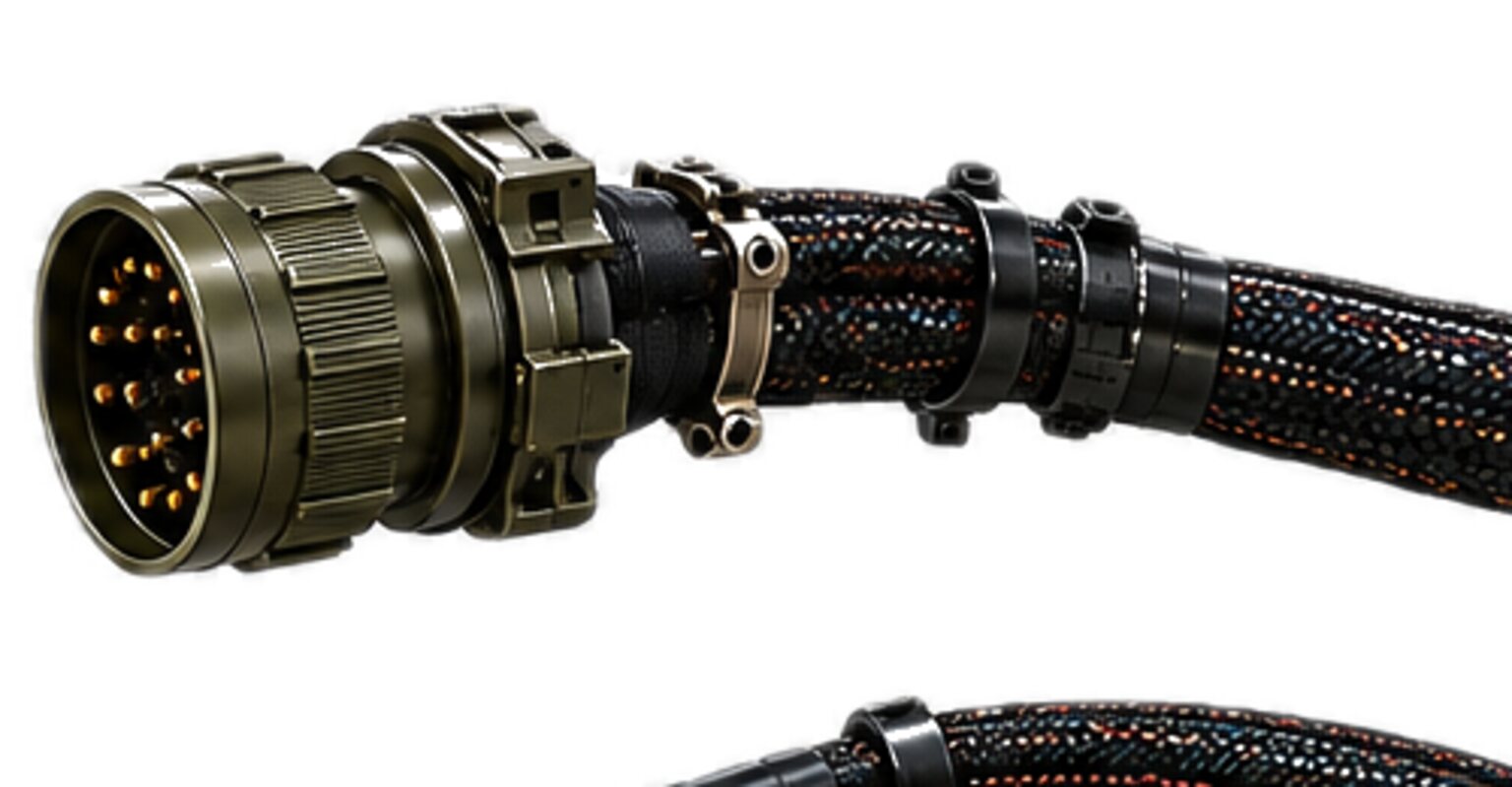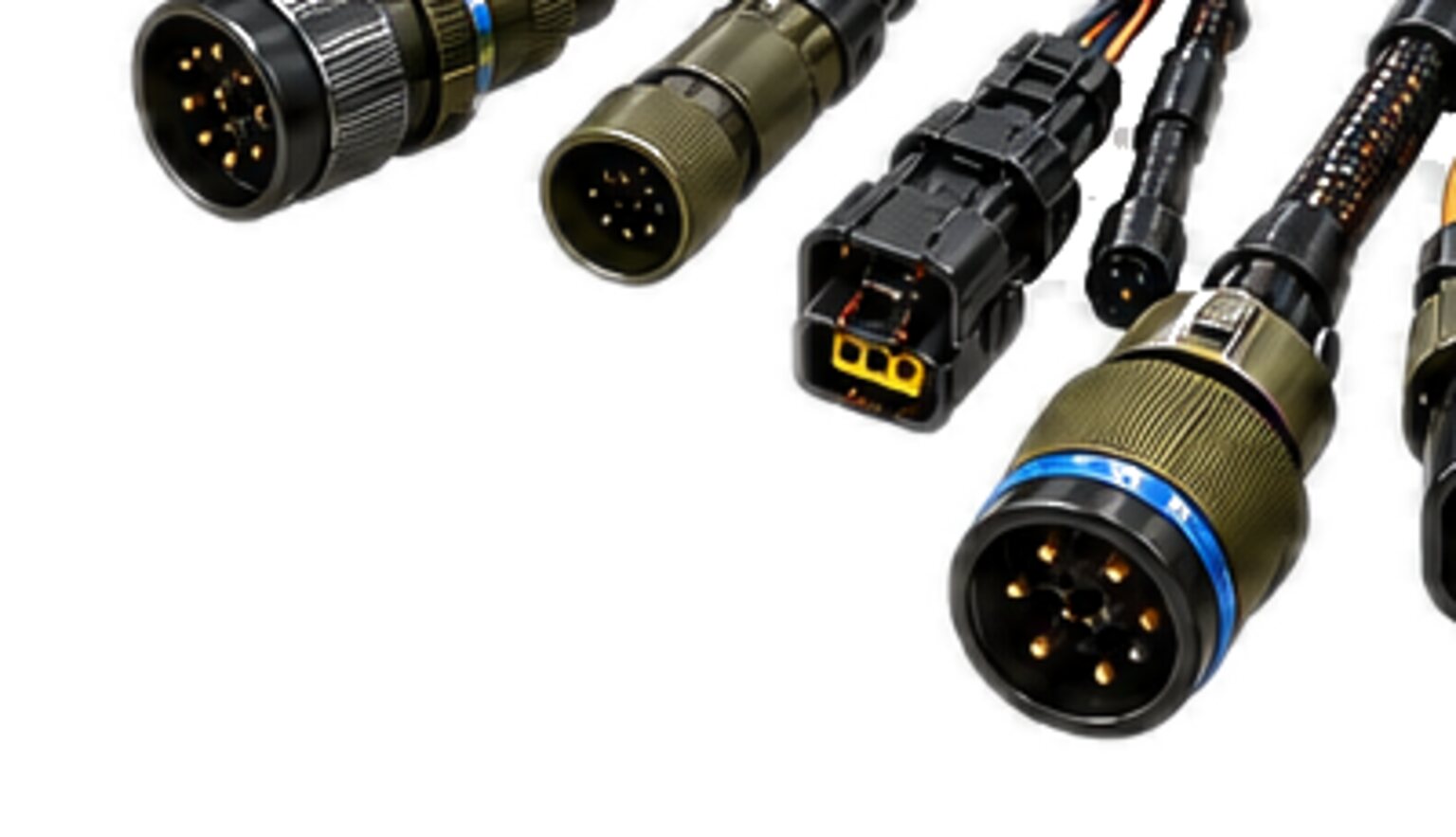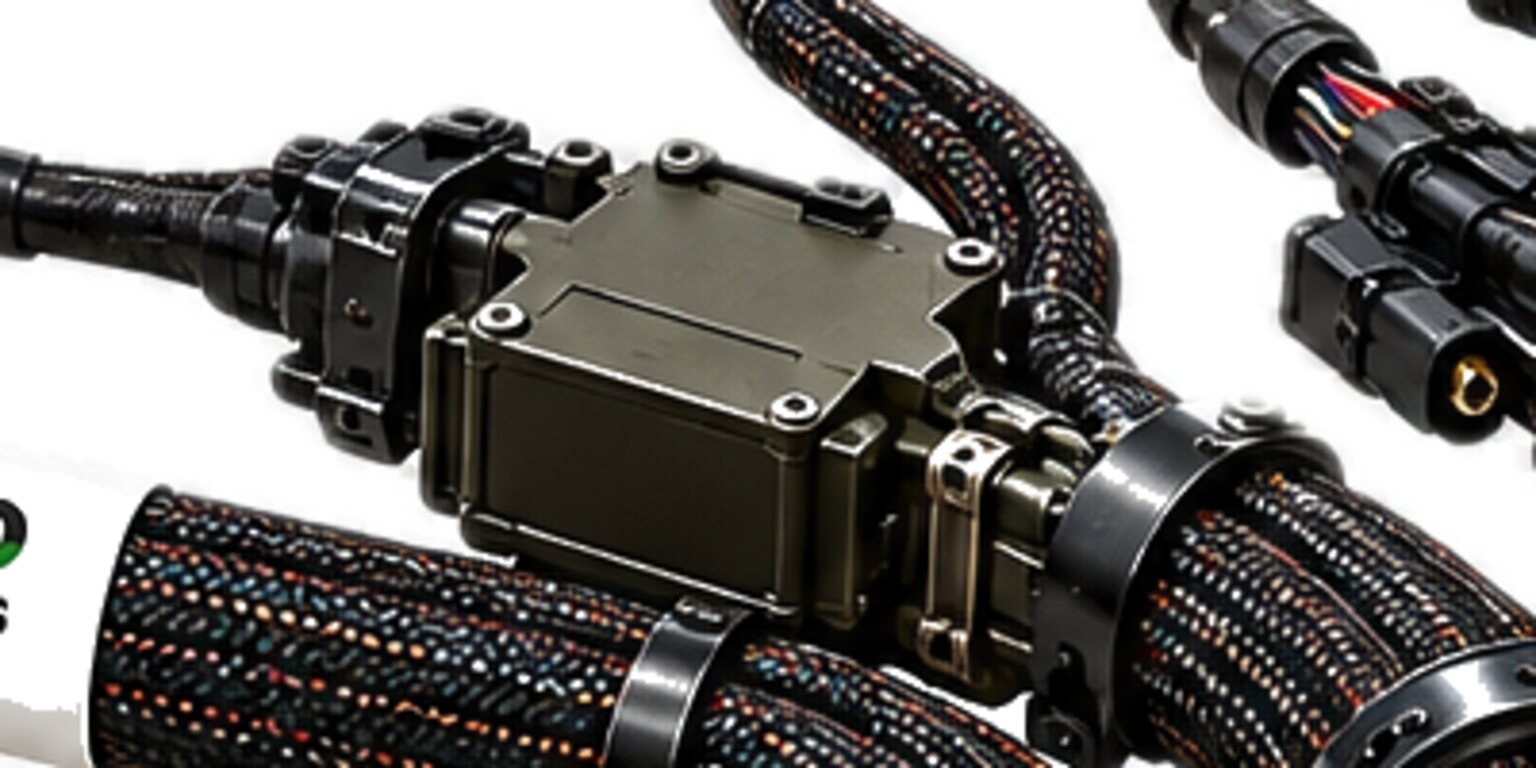
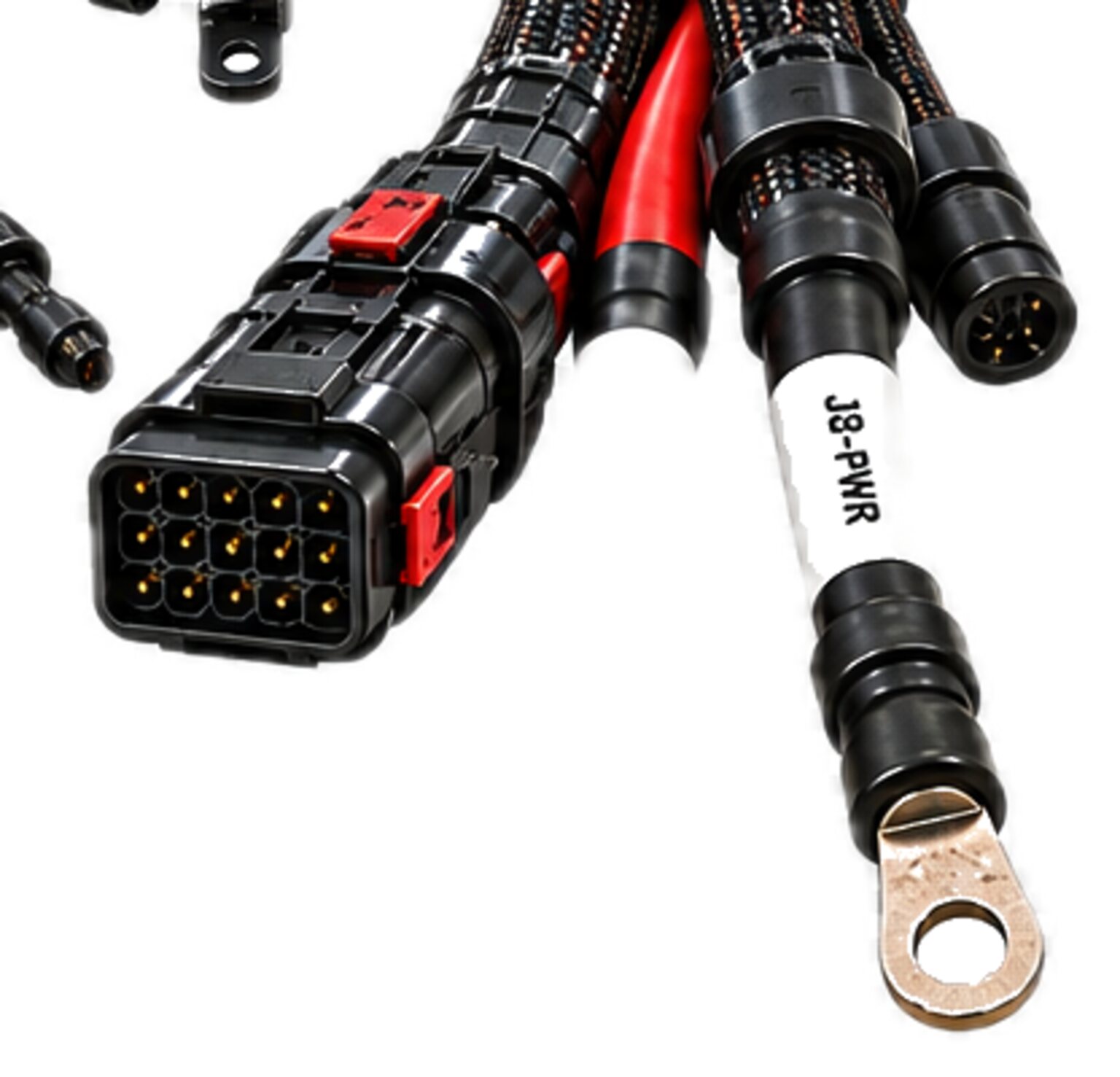
Every payload bolted to a carrier is already grounded. The bolt did it. Bare metal met bare metal under a fastener, and from that moment the payload's chassis and the carrier's structure are one conductor of unknown quality, whether or not anyone drew it. The ground and bond harness exists so that the ground the payload uses is the one on the drawing and not the one it found, and so that the bond the bolt made is either the bond, prepared and checked, or is deliberately prevented. There is no third state. A bond nobody decided is a bond nobody can find when it fails.
The mechanism
Two things travel in this harness, and they are not the same thing. The first is the return: the conductor that carries the payload's current back to the carrier, sized with the feed it returns, because what goes out on the feed comes home on the return. The second is the bond: a short, direct conductor or flat strap between a defined point on the payload's chassis and a defined point on the carrier's structure. Its job is to hold the two pieces of metal at one potential and to give fault current and noise current a path that is not the signal reference. The return is a circuit conductor. The bond is a mechanical fact about metal touching metal, made deliberate.
The return travels with its feed. The two are laid together so that the loop between them is as small as the bundle allows, which keeps the feed from radiating into everything beside it and keeps everything beside it out of the return. The return terminates in the power shell on a contact sized with the feed contact, and at the carrier end it lands at one point. The payload's returns come home to a single point, not to several, so that the payload has one reference, not a family of them that disagree by whatever the structure happens to be carrying.
The bond is separate. Where the interface puts it through the connector, it rides on the contact that mates first and breaks last, so that the payload's chassis is held to the carrier's before any power contact touches and after every power contact has parted. Where the interface puts it outside the connector, it is a strap: wide, flat, short and straight, terminated with a lug on prepared metal at each end. The strap is on the drawing with its two end points named, and the surfaces it lands on are on the drawing as prepared surfaces, because paint, anodising and primer are insulators, and a lug on paint is a bond on paper only.
The shields are the third group in this harness, and the discipline for them is a rule about ends. Each shield on the set's data and signal pairs is terminated to ground at the end the specification names and left open at the other, through a backshell or a drain contact as the specification directs. The drain wire is not a circuit conductor. It carries nothing that was designed to flow.
What it is engineered to
The carrier promises a return point and a bond point, and it promises where its own chassis meets its own return: at one place, on the carrier, and not at the payload. The payload promises that its return is isolated from its chassis inside the payload, or bonded to it at one defined point the specification names, and that it does not ground its return to its case anywhere else. The payload also promises that its shields are terminated on its side in the way the interface names, and where the interface names no termination, none is made. The harness promises to connect the drawn return to the drawn return, the drawn bond point to the drawn bond point, and nothing to anything else.
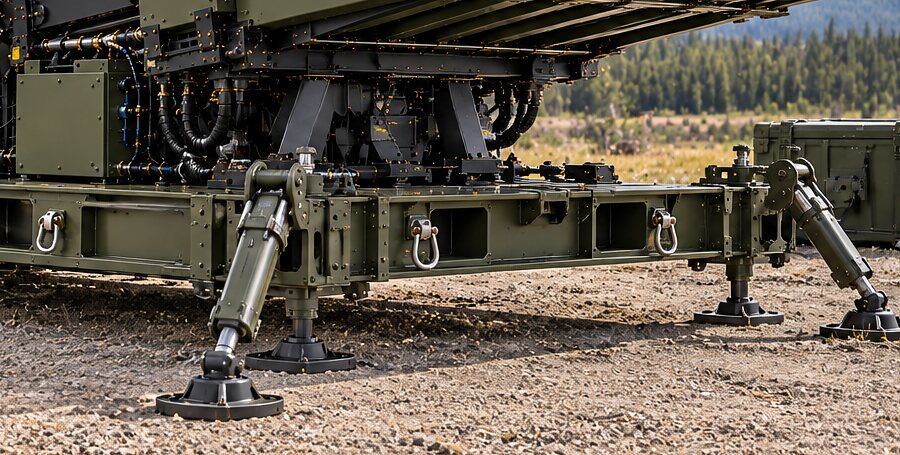
That last promise is the one the mounting bolt threatens. A payload on its mount is bonded through its fasteners, through a resistance that depends on paint, on plating, on torque and on how long it has been raining. Left undrawn, that bond competes with the drawn one. Current divides between paths in proportion to how easy each path is, and the bolt path changes with every service, so the payload's reference wanders. The drawing answers this in one of two ways. Either the mounting interface is the bond, with its surfaces prepared and the bond check run across it, or the mounting interface is isolated and the strap is the only bond.
The loop is the failure the shield rule prevents. Ground a shield at both ends where the drawing grounded one and the shield joins the payload's chassis to the carrier's, alongside the pair it was meant to protect. Whenever current flows in the structure, and on a machine with motors it always does, the two chassis sit at slightly different potentials and the shield carries the difference. It is now a conductor carrying current nobody designed, laid directly against the signal pair, and it couples that current into the pair as noise. A shield grounded at the end the drawing names is a shield against one thing. Ground the end the drawing left floating and you have built a loop.
A shield is never a return. The moment a shield carries return current its job is gone, because a reference that carries load current is not a quiet reference. Its drain wire becomes the smallest conductor in the circuit and therefore the first to open. And the return it is quietly providing is invisible, because no drawing shows it, so when it opens the circuit does not fail; it finds the next path, through the mounting bolt or through another shield, and the fault moves.
This is how a ground fault at the seam presents: as a data fault. A return that has gone home through a shield or through the structure lifts the payload's reference above the carrier's by whatever that path is dropping, and the bus sees the offset as noise. The symptoms are dropped frames, a link that renegotiates when the payload's motor starts, an error count that climbs with the throttle. The person chasing it replaces the data harness more than once before anyone puts a meter on the bond, and the data harness was never wrong.
Nothing is fabricated until the drawing is signed.
The discipline applied to this harness
Every conductor carries its circuit identity, end to end. On this harness that sentence does most of the work, because a return that is drawn is a return with a name and a return that is discovered has none. The return is marked as the return of its circuit at both ends, the strap as the bond, the drain of every shield as the drain of its pair. Nothing in it is a bare conductor of uncertain purpose that someone on a bench might land on the nearest convenient ground.
Segregation keeps returns with their feeds and keeps the bond apart from both. No return is shared between a power circuit and a signal circuit unless the specification defines a common reference and says so, in which case that reference is drawn as one and named as one. The interlock harness keeps its own return and is not bonded by this harness at all.
Shielding and bonding is the discipline this harness is named for, and it applies here in full. Shields ground at the end the interface names, and where it names both, the harness makes that true and the drawing says why. Shields are never a return and never a bond. Where the specification asks for a full circumferential termination at the backshell, the shield is terminated that way and not as a pigtail, because a pigtail gives back much of what the shield was for. Bond surfaces are prepared to bare metal, the lug lands on the bare metal, and the joint is sealed afterwards. Dissimilar metals are not mated bare.
Connectors carry return contacts sized with the feed. The backshell is bonded to the shell where the specification makes the shell part of the shield path, and isolated where it does not. Routing keeps the strap short and straight with no coil in it, keeps the return with its feed, and keeps the drain wires from being looped or doubled back.
Test on this harness has a name: the bond check. It asks whether the path between the payload's bond point and the carrier's bond point, through the harness and the mated joint, is a low path and the intended one, and it is run on every finished assembly. Beside it, continuity proves the return runs end to end. Isolation proves the return is separate from the chassis wherever the specification says they must be separate, which is how the shop proves a payload has not found its own way to ground. A check at the open end of each shield proves the shield is clear of its shell there, and a check at the other end proves it is landed where the drawing names. What the bond check proves is that the drawn bond is there today on this assembly. What it does not prove is that the mounting bolt will not corrode into a second bond in service, which is the reason the mounting interface is on the drawing and not left to the bolt. A value nobody measured never reaches a wire, and a bond nobody measured is not a bond.
Done badly, this harness fails quietly and in the wrong place. The shield used as a return works on the bench, where everything sits on one ground, and misbehaves on the machine. The strap landed on paint reads as a bond on the day it is built and opens as the paint creeps. The two-ended shield makes a sound data harness look faulty. None of these presents at the seam, and all of them are found there.
How it is bought
The ground and bond harness is built from an issued interface specification or drawing set, together with the power feed whose return it carries. The takeoff covers the return conductors, the strap or bond contact, the shield terminations and the bond points at each end, and it stops if the bond points are not drawn. A bond point is a named location on a named surface with a stated preparation. When a specification arrives without one, we draw one and return it for signature rather than build to a guess.
The shop drawing comes back to you before anything is cut, and nothing is fabricated until it is signed. The walk fixes the strap: its length and the position of its end points relative to the mounting, because a strap that is too long coils and a coil is an inductor, and a strap that is too short loads the lug and the lug is what fails. Each assembly then carries its own record: continuity, the bond check, the isolation check, the single-end shield check, the tools used, and who built and tested it. That record returns with the harness along with the shop drawing, the wire list and the cut list. We build to your issued set and we return the manufacturing detail.
The components we specify carry their own certification. The approval route for a finished, project-specific assembly is confirmed with the certifying body for that assembly before it is built, and we tell you where yours sits before we build it, not after. CSA and the Canadian Electrical Code govern any assembly built for sale or installation in Canada.
- We refuse to ground a shield at both ends because a bench read quieter that way.
- We refuse to let a shield, a backshell or the structure carry a return.
- We refuse to build a set whose bond point is wherever the bolt lands.
- If your interface specification draws the return and the bond, send it and we return a takeoff and a shop drawing.
- If it does not, we tell you which lines it needs before it can be built.